
Tzolis Sparks Anfield Debate After Liverpool’s Penalty Appeal Is Rejected
A controversial penalty appeal involving Christos Tzolis and Cody Gakpo became one of the main talking points at Anfield, as Liverpool and Arsenal met in the ninth round of the Premier League. The incident divided observers over whether the contact was enough to warrant a spot-kick—and whether Gakpo had any realistic chance of reaching the ball.
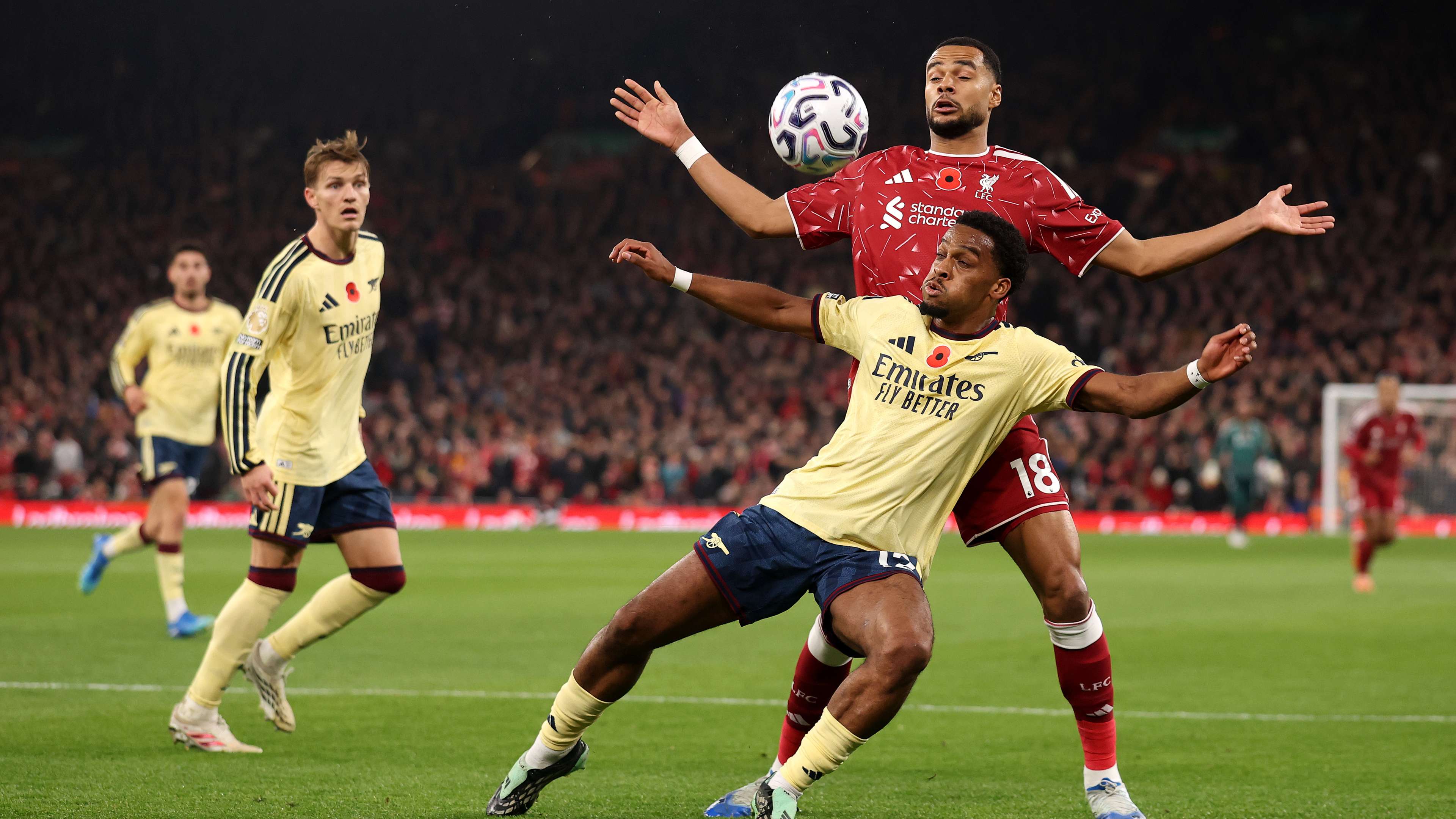
The flashpoint arrived in the 29th minute. As the ball moved into the penalty area, Tzolis placed his hands on Gakpo’s thighs. The Liverpool forward went to ground, prompting an immediate appeal from the home players. Referee Andy Madley was unconvinced, however, and waved play on.
Video Assistant Referee (VAR) officials reviewed the sequence before backing Madley’s decision. Liverpool were not awarded a penalty, and the match continued without a spot-kick. The ruling did little to settle the debate, with pundits offering different views on the defender’s actions and the likelihood of Gakpo getting to the ball.
Why Liverpool wanted a penalty
From Liverpool’s perspective, the contact appeared significant enough to affect Gakpo’s movement inside the box. Tzolis’s hands were on the forward as he tried to continue his run, and Gakpo’s fall gave the incident the appearance of a possible foul. In a high-pressure Premier League match, even a brief moment of contact can prompt an immediate reaction from players and supporters.
But a penalty decision is not based on contact alone. Officials must judge whether an opponent’s action unfairly impedes a player and whether the contact meaningfully affects the contest for the ball. That second question became central to the discussion at Anfield: even if Tzolis’s positioning was questionable, could Gakpo have reached the ball in the first place?
Sky Sports pundits split over the decision
Sky Sports reporter Laura Hunter described Tzolis’s action as “a little naive,” suggesting the defender had put himself in an awkward position by placing his hands on Gakpo. However, she also pointed to the defenders between Gakpo and the ball, arguing that the Liverpool forward would have struggled to reach it regardless of the contact.
That assessment offered a possible explanation for why VAR did not recommend that Madley change his on-field decision. If Gakpo was unlikely to get to the ball, the officials may have judged that Tzolis’s contact had not prevented a clear opportunity to play it. The available account of the incident does not provide a detailed VAR explanation, so the precise reasoning behind the review remains unclear.
Former Manchester United defender and Sky Sports analyst Gary Neville also felt the challenge was rash, but stopped short of calling it a penalty. He argued that a defender was already ahead of Gakpo and that the forward was unlikely to reach the ball. Neville suggested Gakpo may have recognised that his path was blocked and gone down as the contact occurred.
That interpretation was not necessarily shared by everyone watching. A player can be impeded even when reaching the ball is difficult, and the presence of a defender in front does not automatically rule out a foul. The key issue is whether the contact itself was sufficient and whether it changed the attacker’s ability to continue his run.
What VAR’s decision means
VAR is generally used to correct clear and obvious errors, rather than to re-referee every close call. Because Madley had a clear view and chose not to award a penalty, the review required officials to decide whether that call was plainly wrong. Their decision to uphold it shows they did not believe the evidence justified overturning the referee’s judgement.
That process often leaves room for disagreement. Penalty incidents are judged in context: the force and location of contact, the players’ movement, the ball’s position and the possibility of playing it can all influence the outcome. Two observers may agree that contact occurred while disagreeing about whether it crossed the threshold for a foul.
The Tzolis-Gakpo moment also illustrates why penalty appeals can become especially contentious in major fixtures. A decision inside the box can have a direct impact on the score, while slow-motion replays may make minor contact appear more dramatic than it felt at full speed. For supporters, the distinction between a clumsy challenge and a punishable foul is often difficult to accept when their team is denied a spot-kick.
A talking point beyond the final whistle
Although the appeal was rejected, the incident created a clear division among pundits and fans. One side focused on Tzolis’s hands and the risk involved in making contact with an attacker in the penalty area. The other emphasised the ball’s position and the defender already standing between Gakpo and a potential chance.
For Liverpool, the decision meant the team had to continue without the opportunity to take a penalty. For Tzolis, the episode served as a reminder that defenders need to be careful with their hands, particularly when an attacker is moving across the box. Even when officials decide that contact is not enough for a foul, it can still invite scrutiny and put a defence under pressure.
The incident may also shape future conversations about how referees assess marginal challenges. Fans often want a simple answer—penalty or no penalty—but these calls depend on a combination of factors rather than one isolated replay angle. The officials’ decision was clear, even if the debate over whether it was correct was not.
Football prediction: what to watch next
Attention now turns to the clubs’ upcoming European fixtures. Liverpool are scheduled to face Slovan Bratislava in the Champions League on November 5, 2026, while Arsenal are due to meet Slavia Prague later the same day. Those matches will offer both sides a chance to shift focus from the Premier League controversy and concentrate on their next challenge.
Any football prediction for the upcoming games should account for squad rotation, recent form and the demands of a busy schedule. Liverpool will want to turn their attacking pressure into clear chances, while Arsenal will aim to maintain their balance and defensive discipline. The Anfield penalty appeal may not decide either European contest, but it has added another layer to the rivalry—and ensured that Tzolis’s challenge and Gakpo’s fall remain part of the post-match conversation.