
Referees’ Committee Reviews Two Major Flashpoints in Barcelona–Real Madrid Clásico
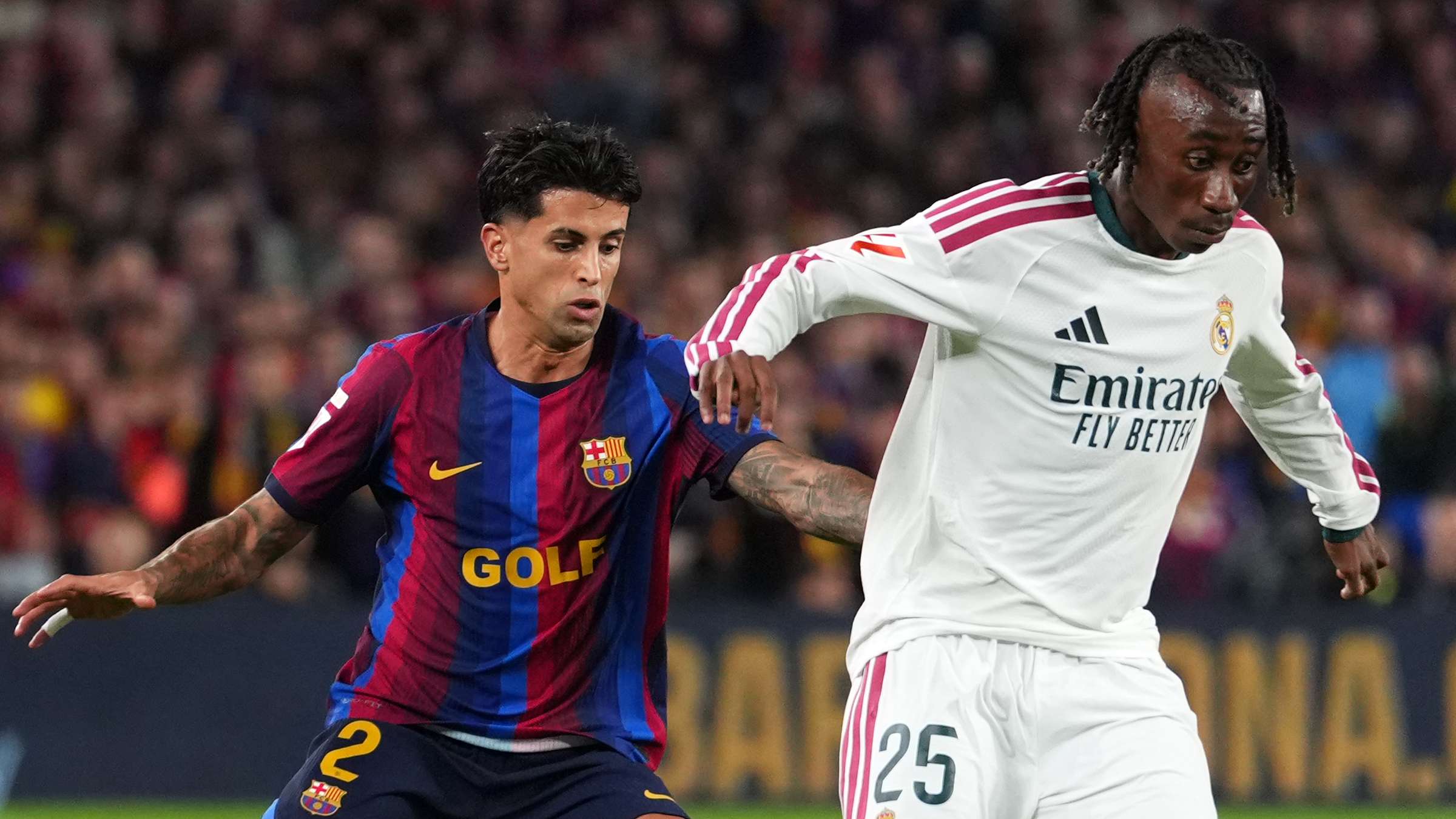
The Royal Spanish Football Federation’s Technical Committee of Referees has issued its assessment of two contentious decisions from Sunday’s Clásico, clarifying why Barcelona defender Alejandro Balde was not penalised for handball and why Joao Cancelo should have received a yellow card for a challenge on Yan Diomande.
Real Madrid claimed a 2-1 victory over Barcelona at Camp Nou, but the result was accompanied by debate over several key moments. Madrid players and supporters questioned both the decision to allow play to continue after the ball struck Balde’s arm and the referee’s response to Cancelo’s challenge on Diomande. The committee has now reviewed the incidents on its analysis programme, Review Time, offering an official explanation of each call.
Balde handball decision judged correct
The first controversy concerned a ball that hit Balde’s arm inside the penalty area. Real Madrid appealed for a penalty, arguing that the Barcelona defender had handled the ball. Referee Martinez Munuera did not award a spot-kick, explaining at the time that Balde’s arm was in a natural position and held down beside his body.
After reviewing the footage, the referees’ committee supported Munuera’s decision. Its assessment was that the ball made contact with Balde’s arm accidentally and that the defender’s arm position did not justify a penalty. In the committee’s view, the incident did not meet the criteria for punishable handball under the relevant interpretation of the rules.
That distinction is important in modern football, where arm contact alone does not automatically result in a foul. Referees must consider the player’s body position, the movement of the arm and whether the player has made their body unnaturally bigger. The committee concluded that Balde’s arm was in a natural position, rather than extended in a way that created an unfair advantage.
Why the decision matters
Handball calls are among the most debated moments in football because small changes in body shape or timing can lead to different outcomes. The committee’s review gives Barcelona supporters reassurance that the decision was consistent with its interpretation of the incident. For Madrid fans, however, the explanation is unlikely to end the debate, particularly given the match’s high stakes and the narrow final score.
The episode also illustrates the role of post-match referee analysis. Such reviews cannot change the result, but they can explain how officials interpreted a moment and help supporters understand the reasoning behind a decision. In this case, the committee’s position was clear: the contact was accidental, Balde’s arm was naturally placed, and no penalty should have been awarded.
Cancelo challenge should have resulted in a booking
The committee reached a different conclusion over Cancelo’s challenge on Diomande. During the match, Munuera allowed play to continue after the Barcelona player’s challenge. Diomande went to ground and appeared to be in discomfort, clutching his leg, but the referee did not show a card at the time.
On review, the committee said Cancelo should have been cautioned. It concluded that the defender made partial contact with Diomande’s leg, but did not use excessive force or commit an excessively rough challenge. Instead, the incident was classified as reckless, a category that warrants a yellow card under the laws of the game.
The distinction between a reckless challenge and serious foul play is significant. A reckless action involves a player acting without sufficient care for the consequences or danger posed to an opponent. It generally calls for a booking, while a challenge involving excessive force or endangering an opponent’s safety may justify a red card. The committee did not believe Cancelo’s tackle reached that more serious threshold.
No red card, but a missed yellow
Madrid had reportedly sought a red card for Cancelo, but the committee’s review did not support that demand. Its assessment was more measured: the challenge was careless enough to merit a caution, yet not severe enough to be treated as an expulsion. That finding means the referee’s decision to let play continue was not fully correct, even though the incident did not warrant the most serious punishment.
The review also highlights why a player’s reaction after a challenge cannot, by itself, determine the sanction. Diomande’s visible discomfort drew attention to the incident, but referees must assess the nature of the contact, the force used and the overall danger of the action. The committee’s conclusion focused on those factors, identifying a reckless challenge rather than excessive violence.
What the referee review means for the Clásico debate
The two rulings provide a mixed verdict on the officiating. Munuera was backed over the Balde handball appeal, while the committee said Cancelo should have been booked for his challenge on Diomande. Neither conclusion changes Real Madrid’s 2-1 win, but both add context to the post-match discussion around the Clásico.
For supporters assessing the performance, the distinction between a correct decision and a missed disciplinary action is worth noting. The handball call was judged to be right according to the committee’s review, while the challenge should have brought a yellow card. The committee did not endorse Madrid’s request for a red card, nor did it consider the Balde incident a penalty.
These decisions may also shape the conversation ahead of the clubs’ next fixtures. Barcelona are scheduled to face Alavés on November 1, while Real Madrid are set to play later that day. Both teams will be keen to move on from the Clásico, although scrutiny of refereeing decisions is likely to continue whenever football’s biggest rivalry produces close calls.
Clásico prediction and the wider picture
Looking ahead, the result gives Madrid a confidence boost, while Barcelona will be focused on responding in their next league outing. Any prediction about how the teams will fare in the coming weeks must account for more than one contentious match: form, player availability, defensive organisation and the ability to convert chances will all matter. The referees’ review may settle the official interpretation of these two incidents, but the football itself will ultimately determine what comes next.
For now, the committee’s message is straightforward. Balde’s handball was not punishable because his arm was in a natural position and the contact was accidental. Cancelo, meanwhile, should have been shown a yellow card for a reckless challenge, but the action did not meet the threshold for a red. It is a nuanced assessment that explains why two highly debated moments in the same Clásico received different conclusions.