
Michael Carrick Pushes Back on Questions About His Manchester United Future After Aston Villa Draw
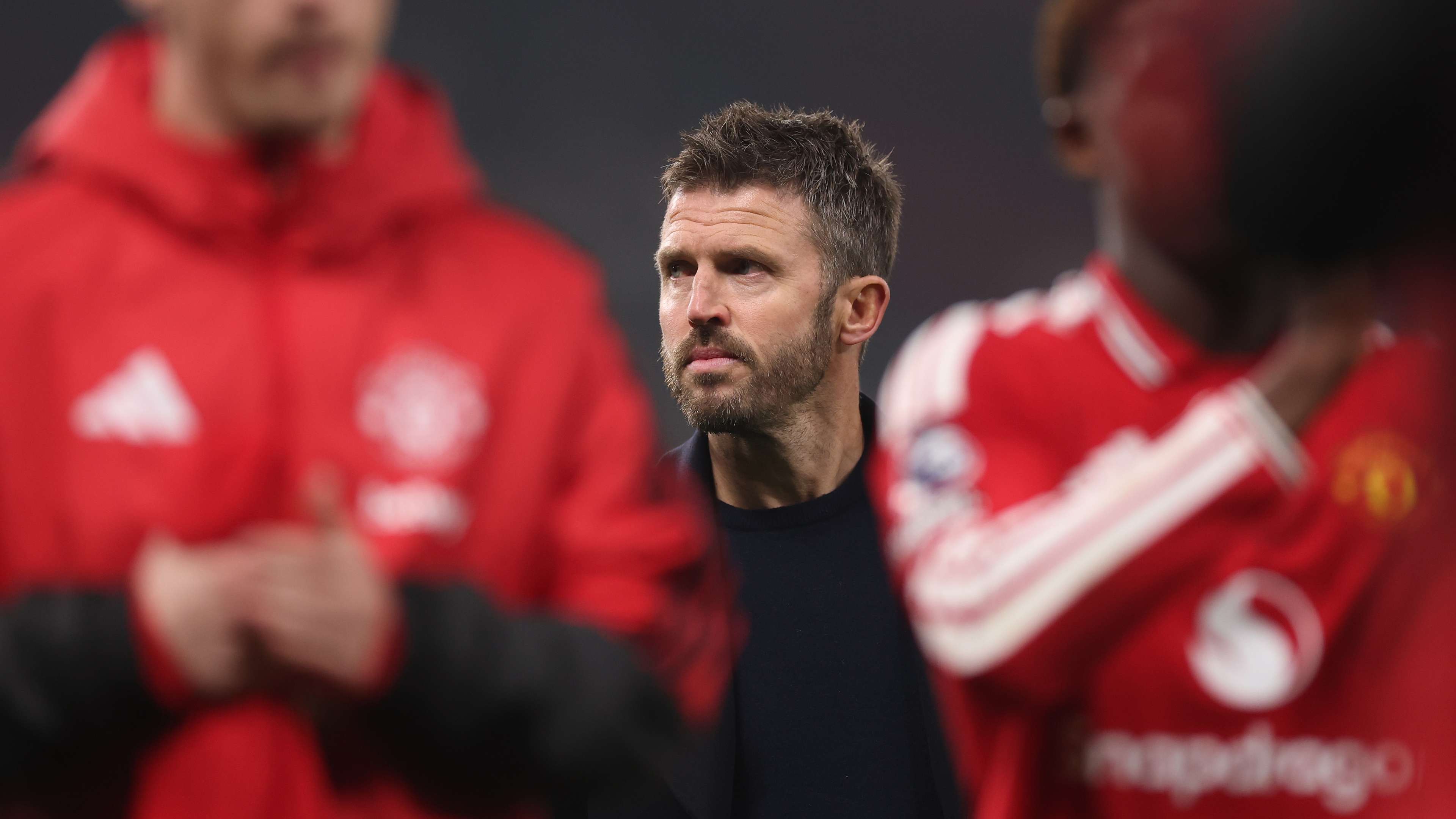
Michael Carrick’s future at Manchester United became the focus of a tense post-match exchange after a dramatic 4-4 draw with Aston Villa. The Old Trafford contest delivered late goals and a hard-earned point, but it did not ease the pressure on United’s manager, whose side remain short of the victories needed to build confidence and momentum.
Speaking to Sky Sports reporter Patrick Davison after the final whistle, Carrick was asked whether he might leave the club if he believed that would serve United’s interests. The question referred to earlier comments in which the manager had suggested he would consider stepping aside under those circumstances. Carrick responded firmly: “That’s not going to happen, no.”
The interview grew more uncomfortable when Davison followed up by asking whether Carrick expected discussions about his position in the weeks ahead. Instead of offering a direct prediction about what might happen, the United boss challenged the premise of the question, asking: “Will there be discussions?”
A tense exchange after a dramatic Premier League match
Davison repeated the question, prompting Carrick to reply, “Do you think that?” When the reporter asked Carrick to explain his own view, the manager pushed back again: “You’re telling me that, so what do you think?” Davison clarified that he wanted an answer from Carrick rather than his own opinion, but the exchange had already become a pointed moment in the post-match coverage.
The clash reflected the wider uncertainty surrounding Manchester United. A single draw does not settle questions about a manager’s future, especially when results have not met expectations. Yet Carrick’s response made clear that he was not ready to accept speculation as fact or discuss his job on someone else’s terms.
For supporters, the conversation was striking because it followed a match that offered both encouragement and concern. United showed determination by fighting back to secure a point, but conceding four goals and failing to take all three points left the team with plenty to address. The result captured the contrast that has shaped the club’s recent campaign: flashes of resilience alongside inconsistent performances.
United show character but still need more wins
The 4-4 scoreline gave the match a breathless finish, with United refusing to give up despite the pressure of falling behind. That response will provide Carrick with something positive to build on, particularly if the players can carry the same energy into their next fixtures. However, a comeback cannot conceal the importance of turning competitive performances into victories.
In the Premier League, points dropped can quickly affect a club’s position, confidence and ambitions. United need greater consistency across the full 90 minutes, not just the ability to respond when a game begins to slip away. Defensive organisation, decision-making under pressure and clinical finishing are likely to be among the areas under review as Carrick assesses what went wrong against Villa.
The manager acknowledged that United had not won enough, while also stressing the need to move forward. His post-match message was focused on taking positives from the performance, correcting mistakes and preparing for the challenges ahead. That combination of realism and determination may be important as the club navigates a demanding run of fixtures.
Upcoming fixtures could shape the conversation
Manchester United’s next matches will offer an immediate test of whether the Villa draw can become a turning point or remains another frustrating result. The schedule includes a Premier League meeting with Liverpool on November 23, 2026, following the Aston Villa fixture listed for November 21. Facing a major rival will bring added scrutiny, making preparation and performance especially significant.
Those games may also influence the public debate around Carrick. Strong results would give the manager a chance to shift attention back toward football and the team’s progress. Further dropped points, by contrast, would likely intensify questions about the club’s direction and whether changes are needed. Any prediction about Carrick’s long-term future remains uncertain, but the results on the pitch will inevitably shape the discussion.
For now, Carrick has rejected the idea that he is preparing to walk away. His blunt response—“That’s not going to happen”—was the clearest statement he made about his own intentions. He did not, however, provide a detailed account of whether formal talks with the club are expected. That distinction leaves room for speculation, though it should not be mistaken for confirmation that a decision has been made.
What the exchange means for Carrick and Manchester United
Post-match interviews often become a stage for wider questions about a club’s performance, but this exchange showed how quickly a discussion can turn into a contest over who controls the narrative. Davison was seeking clarity about Carrick’s position; Carrick appeared to resist being drawn into a hypothetical conversation without more certainty about what the club itself might do.
That response may satisfy some supporters who want the manager to show resolve, while others may prefer clearer answers about the club’s plans. Either way, the central issue remains the same: United must improve their results. A spirited comeback can lift morale, but sustained progress depends on reducing errors, managing matches more effectively and collecting wins.
The 4-4 draw with Aston Villa therefore offered no simple verdict on Carrick’s future. It provided evidence of a team willing to fight, but also highlighted weaknesses that cannot be ignored. As United prepare for their next Premier League challenges, the pressure will remain on the players and manager alike. For Carrick, the most convincing answer to questions about his position may ultimately come not in another interview, but through a stronger run of performances and results.