
Manchester United protests expose deepening crisis at Old Trafford
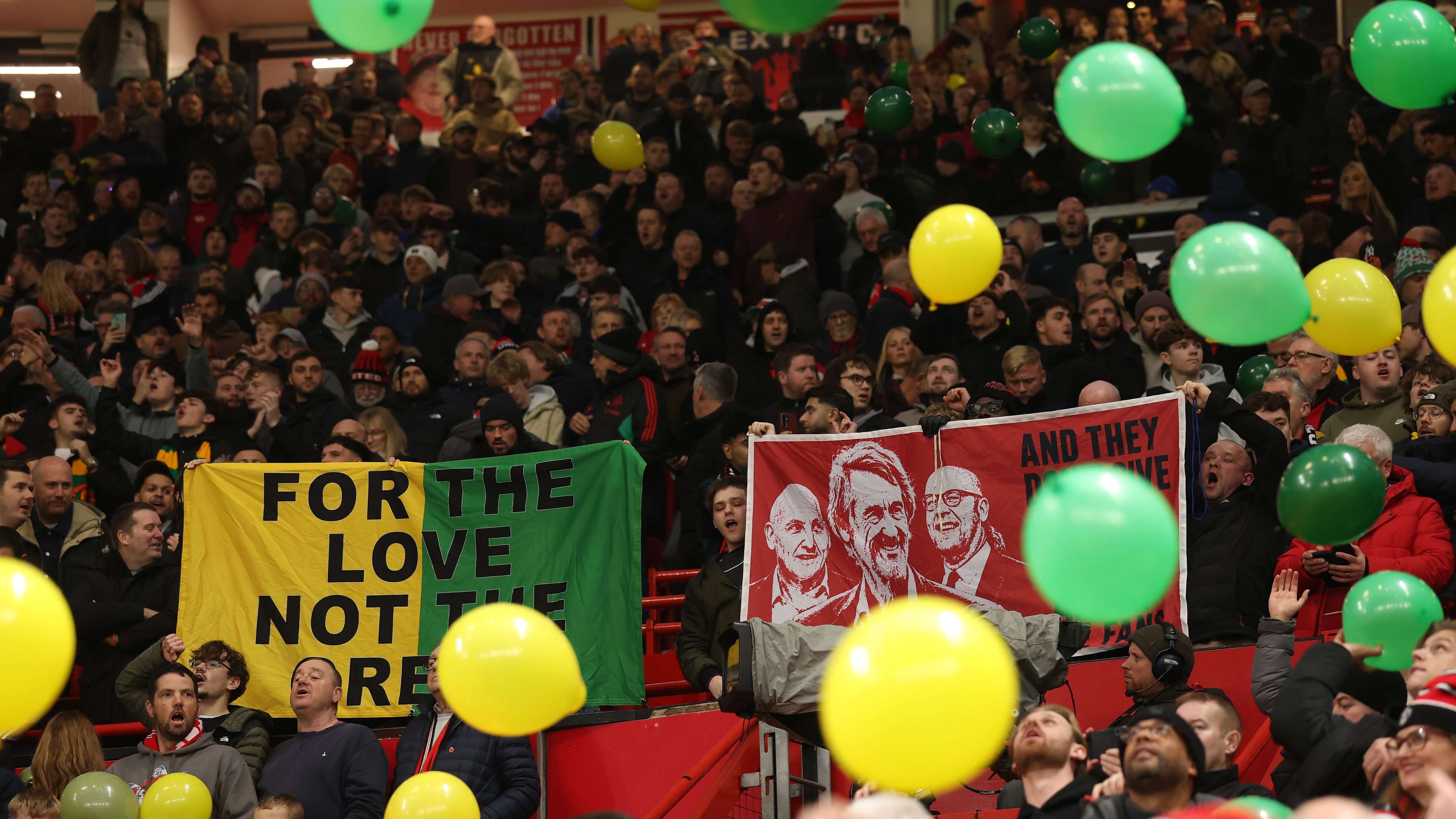
Manchester United’s latest match against Aston Villa began with a striking reminder that the club’s problems extend far beyond the football pitch. Before kick-off at Old Trafford, supporters staged another protest against the club’s leadership, making clear that frustration over poor results has grown into a broader demand for change at board and ownership level.
Among the messages displayed by fans was a blunt statement: “We don’t want a new stadium, we want a new board.” Supporters also raised green and yellow balloons—the colours associated with the club’s origins—and released them as the players emerged. The visual demonstration turned the pre-match walkout into a public expression of discontent, placing the spotlight firmly on the people running Manchester United.
Results intensify pressure on United’s leadership
The protest came amid a difficult Premier League campaign. United entered the Aston Villa fixture with only seven points from their opening nine matches, leaving them 19th in the table and second from bottom. For a club with Manchester United’s history and ambitions, that position has made it increasingly difficult for the management to contain criticism.
Supporters’ anger is not focused solely on one defeat or a short spell of poor form. The message at Old Trafford reflected wider concerns about how the club is being managed, the direction of its leadership and the gap between its stature and its performances. When results deteriorate, questions about recruitment, decision-making and long-term planning tend to become louder—and United’s early-season struggles have brought those issues into sharp focus.
The demand for a new board also underlines a distinction many fans are keen to make: stadium investment alone would not address their concerns. A modernised ground may be part of a club’s future plans, but supporters are signalling that they want confidence in the people making the major decisions. For them, restoring trust is as important as improving the team’s results.
A growing pattern of fan demonstrations
The Aston Villa protest was not an isolated incident. Just days earlier, during United’s Champions League meeting with Roma, supporters threw tennis balls onto the pitch in opposition to the club’s management. The objects briefly interrupted play, making the demonstration visible to viewers inside the stadium and watching around the world.
Different tactics, from banners and balloons to objects on the field, have carried a similar message: sections of the fanbase believe the club needs fundamental change. Such protests can create difficult scenes on matchday, but they also reveal how strongly supporters feel about their relationship with the institution. At a club where tradition and identity matter deeply, the use of green and yellow was especially symbolic.
Fan demonstrations do not automatically lead to immediate changes in ownership or governance. They can, however, increase pressure on decision-makers, shape public debate and make it harder for the club to treat dissatisfaction as a passing reaction to results. The challenge for United’s leadership is to respond in a way that addresses the underlying concerns rather than simply waiting for attention to move elsewhere.
Roma comeback offered a brief lift on the pitch
United’s Champions League match against Roma also showed how quickly the mood around a team can shift during a game. Despite the protest and a two-goal deficit, United fought back to secure a 3–2 victory. Matheus Cunha scored twice, while Bruno Fernandes added the decisive goal, turning a tense night into a late celebration.
The comeback demonstrated the team’s capacity to respond under pressure, but one dramatic win cannot erase a poor league position or settle questions about the club’s direction. For supporters, the Roma result may have offered a welcome moment of excitement; it did not necessarily restore confidence in the board. The distinction between backing the players and criticising the leadership remains central to the current atmosphere around Old Trafford.
What the Aston Villa match means for United
The meeting with Villa arrived at a pivotal point in United’s season. With the team near the bottom of the Premier League table, every fixture carries added weight. A positive result could provide a platform for recovery, while another setback would likely increase scrutiny of the manager, the squad and the club’s decision-makers.
For fans considering a football prediction for United’s next run of matches, the most important factor may be consistency. The Roma comeback showed that the team can produce a strong response, but a sustained improvement requires more than one inspired performance. United need to turn resilience into reliable points, particularly against opponents they must compete with if they are to climb away from danger.
Villa, meanwhile, offered a demanding test at a moment when United could ill afford another loss. The result would matter in the standings, but the atmosphere surrounding the game also made it a measure of the relationship between the club and its supporters. Even a win would not necessarily silence calls for change; a defeat could make them harder to ignore.
A club facing questions on and off the field
Manchester United’s current situation is shaped by two connected crises: disappointing football and declining trust in the club’s leadership. Improving performances is essential, but the protests suggest that supporters are also looking for clear communication and a credible long-term plan. Without those elements, short-term results may provide only temporary relief.
Old Trafford’s green and yellow balloons made that point unmistakably. They recalled the club’s beginnings while challenging its present direction, turning a pre-match protest into a statement about identity and accountability. As United try to recover their form, the board will face a parallel test: persuading supporters that the club’s future is being handled with the ambition and care they expect.