
Ismael Saibari Injury Update: Early Assessment Raises Concern After Bayern’s Draw With Dortmund
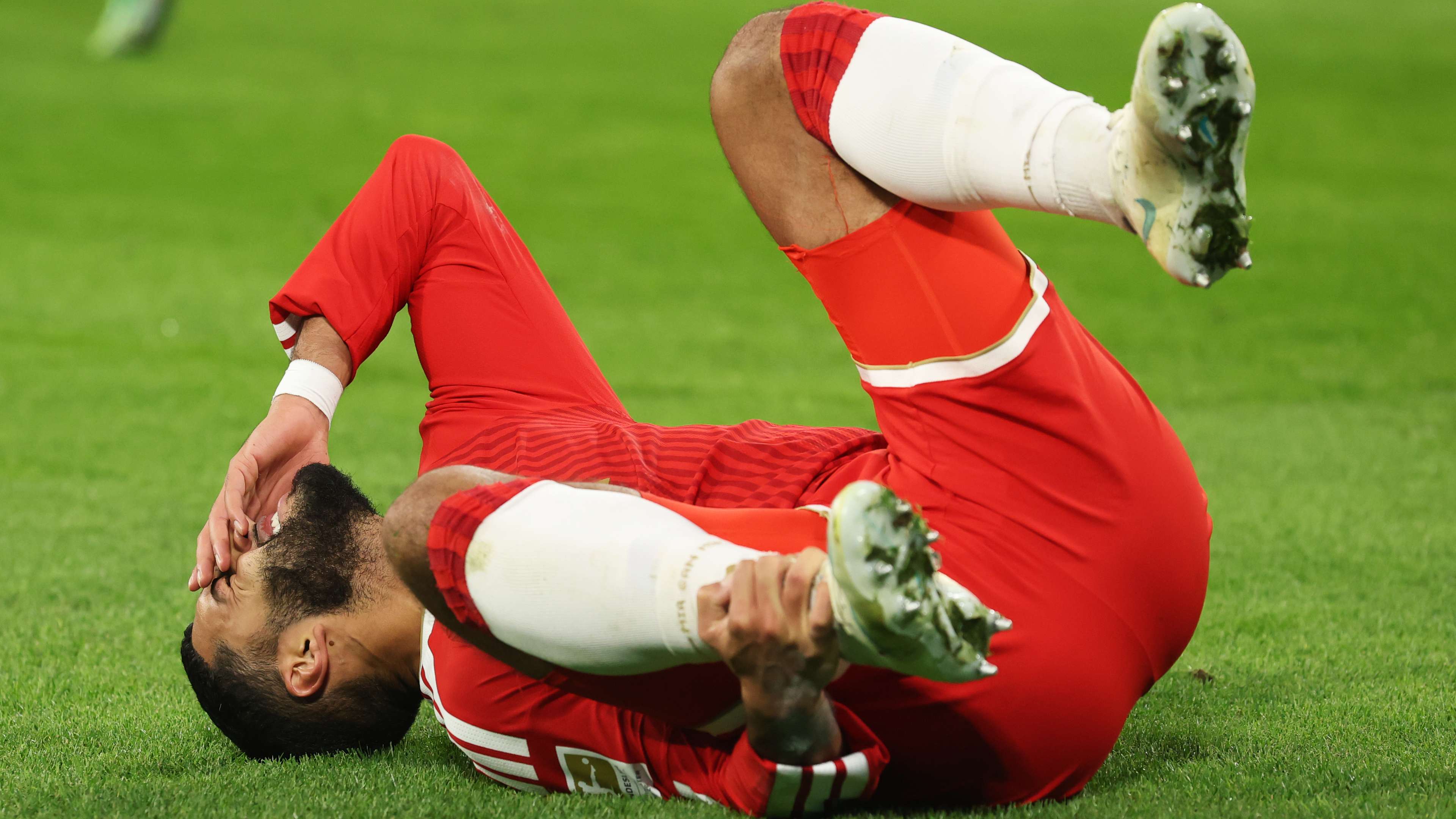
Morocco international Ismael Saibari is awaiting medical tests after suffering a worrying injury during Bayern Munich’s 2-2 draw with Borussia Dortmund. The midfielder was forced off in the 29th minute following a challenge, prompting concern among Bayern supporters and Morocco fans about the seriousness of the damage and the possibility of a lengthy absence.
Physiotherapist Thamer Al-Shahrani, who specialises in injuries sustained on the pitch, has offered an initial assessment of the incident. In a post on his official X account, Al-Shahrani suggested that Saibari may have sustained significant damage to the ligaments around his ankle. He also said an injury involving the knee ligaments could not yet be ruled out.
Those comments have intensified discussion about the player’s condition, but they should be treated as an early opinion rather than a confirmed diagnosis. Only a detailed examination and appropriate medical imaging can establish which structures have been affected, whether any ligament has been torn, and what that could mean for Saibari’s recovery.
What happened during the Bayern-Dortmund match?
Saibari was injured during the high-profile Bundesliga meeting between Bayern Munich and Borussia Dortmund. The match ended in a 2-2 draw, but the result was overshadowed for Bayern by the midfielder’s early exit. After receiving treatment, he was unable to continue and left the field in the 29th minute. Nathaniel Brown came on as his replacement.
The timing was particularly difficult for Bayern. Saibari had been part of a demanding contest in which both teams were competing intensely, and his departure forced a change well before half-time. In a match of this importance, losing a player early can affect a coach’s tactical options as well as the team’s ability to manage substitutions later in the game.
At this stage, the precise mechanism and full extent of the injury have not been confirmed publicly. Al-Shahrani’s assessment focuses on the apparent severity of the challenge and the possibility of ankle ligament damage, while acknowledging that the knee may also need to be examined. That uncertainty is why supporters should wait for information from the club’s medical staff before drawing conclusions about a return date.
Why ligament injuries can be difficult to assess
Ankle injuries can range from a painful sprain to a more serious ligament tear. Swelling, bruising, instability and difficulty putting weight on the foot may all be considered during an initial assessment, but those symptoms alone do not reveal the full extent of the damage. A clinical examination and scans are often needed to determine whether ligaments have been stretched, partially torn or completely ruptured.
Possible knee involvement adds another layer of concern. The ankle and knee can both be affected by the force and direction of a challenge, although an early observation cannot establish whether the knee ligaments are actually injured. Medical specialists will need to assess Saibari carefully and distinguish any confirmed damage from the possibilities raised in the first reaction to the incident.
The difference matters because recovery timelines vary considerably. A minor sprain may require a shorter period of rest and rehabilitation, while a significant ligament injury can involve a longer programme before a player is ready for competitive football. The final timetable depends on the diagnosis, the treatment plan and how the player responds during recovery.
What Saibari’s absence could mean for Bayern
Until Bayern provides an official update, it is too early to predict how many matches Saibari could miss. The club will likely base its next steps on medical findings rather than speculation, with further information expected once the examinations are complete. Any decision about his return will also need to account for his fitness and confidence, not simply the amount of time that has passed.
For Bayern, the immediate challenge is to manage the uncertainty while preparing for upcoming fixtures. An injury to a midfielder can affect squad balance, pressing intensity and the choices available from the bench. If Saibari is unavailable, the coaching staff may need to adjust its selection or redistribute responsibilities among other players, depending on the schedule and the options in the squad.
However, it would be premature to assume that the injury will have a long-term impact. The initial assessment has raised legitimate concerns, but it is not a substitute for a diagnosis. The results of the scans will provide a clearer picture of whether Saibari faces a short spell on the sidelines or a more demanding rehabilitation period.
Morocco supporters also await news
The situation is being followed closely beyond Munich. Saibari is an important figure for Morocco, and his availability could matter for the national team’s plans as well as Bayern’s. If the injury proves serious, medical staff from both club and country may need to coordinate around his treatment and eventual return to action.
For now, the central question is whether the suspected ankle damage is confirmed and whether examination reveals any additional injury to the knee. Those answers will shape expectations for Saibari’s recovery, Bayern’s team selection and Morocco’s future plans.
Al-Shahrani’s early comments have put the potential seriousness of the incident into focus, but the final word rests with the medical assessments. Bayern and Morocco fans will be watching for an official update before making predictions about when the midfielder might return to football. Until then, caution is essential: the injury is concerning, but its full scope remains unknown.