
Tebas and Laporta Find Common Ground After Years of Tension
The relationship between La Liga president Javier Tebas and Barcelona chief Joan Laporta has experienced plenty of twists, but the two football leaders now appear to be working together on a more professional footing. Their disagreements have not disappeared, particularly over financial regulations, yet both have increasingly emphasized dialogue, cooperation and the broader interests of Spanish football.
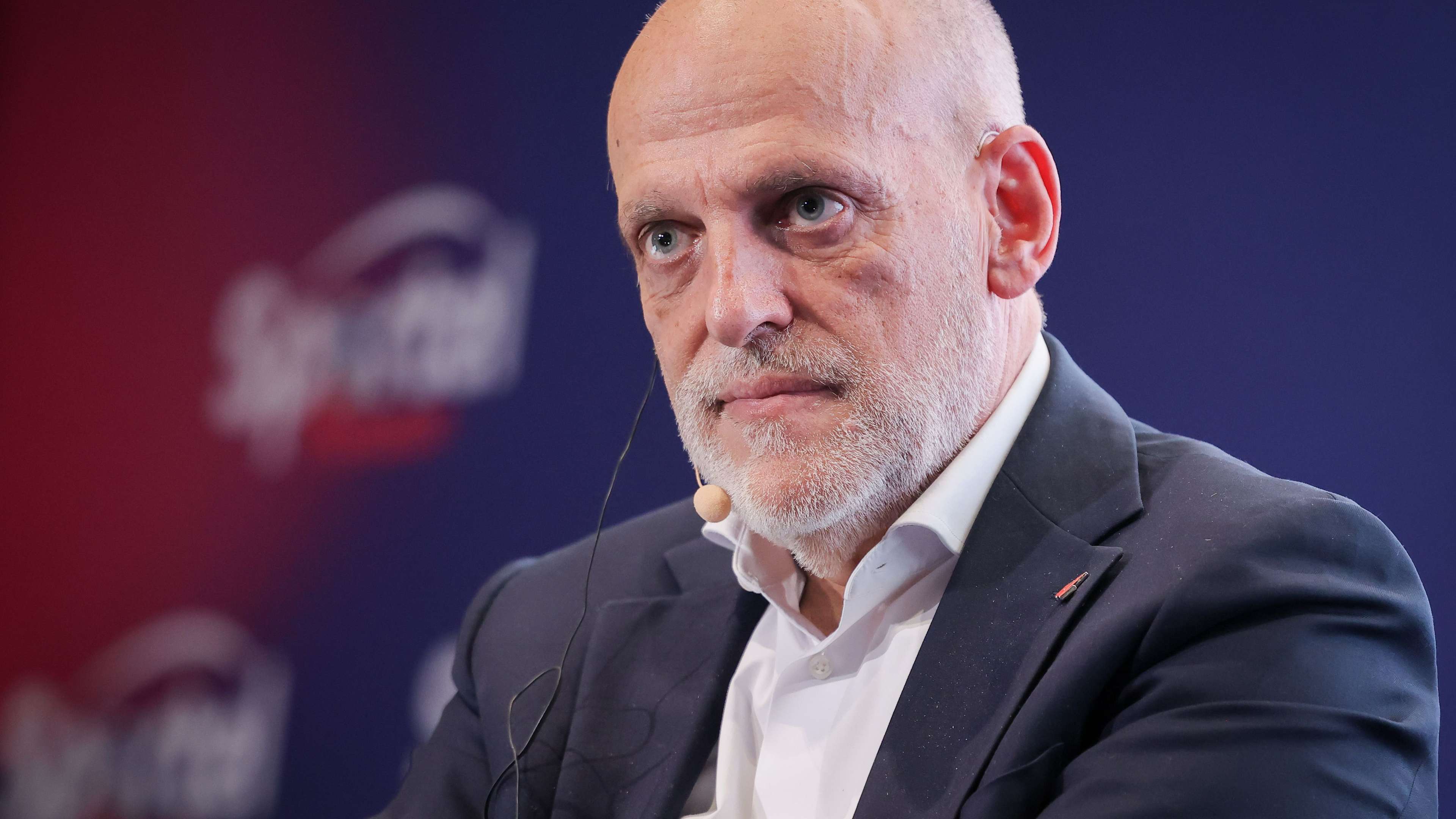
Speaking at the World in Progress forum in Barcelona, Tebas described his dealings with Laporta as a “rollercoaster,” reflecting the periods of disagreement and rapprochement that have marked their relationship. His comments, reported by Sport, also included a note of gratitude: Tebas thanked the Barcelona president for defending his independence in the face of criticism from Real Madrid.
According to Tebas, Laporta understands that the league president is committed to protecting La Liga’s authority and applying its rules without yielding to pressure from individual clubs. That independence, he argued, is essential if the competition’s regulations are to be taken seriously by all its members.
From confrontation to professional cooperation
“My relationship with Laporta has gone through good times and bad; it is like a rollercoaster,” Tebas said. He suggested that their working relationship became more professional when Barcelona’s leadership understood how La Liga’s financial fair play framework operates and why the rules matter to the competition as a whole.
Tebas said he understood Laporta’s public remarks and appreciated the Barcelona president’s recognition of his approach. He added that if the league had given in to pressure from clubs, it would have weakened its authority across Spanish football. The message was significant: even when Barcelona and La Liga disagree, both sides appear to recognize the value of maintaining a functioning relationship.
That does not mean the two parties see every issue the same way. Barcelona have faced difficult financial circumstances in recent years, and the club’s efforts to register players have repeatedly brought it into direct contact with La Liga’s spending and squad-registration rules. The league has maintained that its regulations must be applied consistently, while Barcelona have sought ways to manage their financial pressures and remain competitive.
Financial rules remain a source of friction
One of the major points of disagreement was La Liga’s proposed partnership with the CVC investment fund. The plan was designed to provide clubs with significant funding in exchange for a share of future league revenues. Tebas supported the initiative, presenting it as a way to strengthen clubs and invest in the long-term development of the competition.
Barcelona chose not to join, believing the agreement did not suit the club’s long-term financial interests. The decision underlined a broader difference in priorities: La Liga was seeking collective investment and stability, while Barcelona wanted to preserve greater control over its future income and commercial assets.
Financial fair play rules created further strain. Barcelona’s economic difficulties made it challenging to register some players within the league’s limits, turning an administrative process into a high-profile dispute. Tebas insisted that the rules could not be relaxed simply because a club was facing hardship. For Barcelona, however, navigating those restrictions became part of the wider challenge of rebuilding the squad while restoring financial balance.
These disagreements have not prevented communication from improving. Laporta has previously said that he and Tebas reopened channels after a period of confrontation, allowing them to discuss disputes directly and look for workable solutions. That shift matters because Barcelona’s sporting plans depend, in part, on a predictable relationship with the organization responsible for administering the league.
Laporta’s new term offers a fresh opportunity
The warming tone was particularly visible on 1 July 2026, when Laporta was confirmed as Barcelona president for a new term running until 2031. At the ceremony, Tebas acknowledged that the two men had disagreed over the years but said each had been defending the interests of their own institution.
He also stressed that differences need not prevent cooperation. In his view, the league and its clubs can disagree on individual policies while continuing to work toward what benefits Spanish football. That distinction is important: professional relations do not require complete agreement, but they do depend on communication and a shared understanding of the competition’s long-term needs.
Laporta offered a similarly conciliatory message, describing Barcelona as a loyal ally in promoting La Liga at home and internationally. He said the club was ready to cooperate with the league and would continue to do so, adding that the points of agreement between them now outweigh the areas of disagreement.
For supporters, the renewed dialogue could have practical consequences beyond public statements. Stronger institutional cooperation may help reduce uncertainty around financial planning, player registration and the league’s international ambitions. It does not guarantee that future disputes will be avoided, but it may make them easier to manage before they escalate.
Real Madrid tensions add another layer
The improvement in relations between Tebas and Laporta is also unfolding against a difficult backdrop involving Barcelona and Real Madrid. The clubs’ rivalry has become more politically charged amid the Negreira case and Barcelona’s withdrawal from the European Super League project, developments that have contributed to a breakdown in relations with Real Madrid president Florentino Pérez.
Laporta told L’Équipe last October that his relationship with Real Madrid had effectively become a confrontation. Against that backdrop, Tebas’s public praise from the Barcelona president carries added weight. It signals that Barcelona and La Liga may be finding common ground even as one of the sport’s most influential club rivalries remains tense.
Still, the current alignment should not be mistaken for a permanent alliance or a shared position on every major issue. Barcelona will continue to defend its financial and sporting priorities, while Tebas is responsible for enforcing league-wide rules. Their interests may overlap on some matters and diverge sharply on others.
What the relationship could mean for Spanish football
The most realistic prediction is that Tebas and Laporta will continue to pursue cooperation where it serves both sides, while financial regulation remains the likeliest source of renewed friction. Barcelona needs stability as it works to strengthen its squad and manage its finances; La Liga needs its biggest clubs to support a credible framework that applies across the competition.
For the league, Barcelona’s global reach makes the club an important partner in expanding the appeal of Spanish football. For Barcelona, maintaining access to constructive discussions with La Liga can be valuable when financial decisions affect recruitment and registration. Their relationship may still have its ups and downs, but the recent tone suggests both leaders see more benefit in negotiation than in prolonged public conflict.
That cautious rapprochement could ultimately matter beyond the two men themselves. If Barcelona and La Liga can resolve disagreements through regular dialogue, it may strengthen the league’s ability to present a united and stable image to clubs, players and international audiences. The challenge will be turning warm words into consistent cooperation when the next difficult decision arrives.