
Mitchell Starc Stands by His 2021 Account of Australia’s Sandpaper Scandal
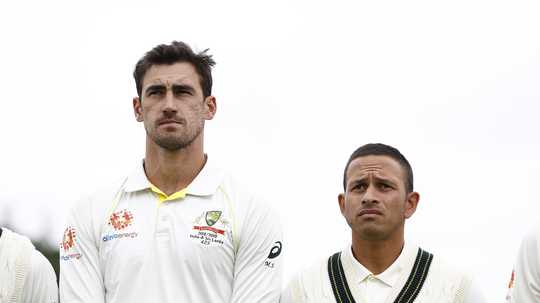
Australian fast bowler Mitchell Starc has reaffirmed that he did not know sandpaper had been taken onto the field during the 2018 Test series in South Africa, despite renewed claims that members of the team were aware of the ball-tampering plan. His comments have revived debate about one of cricket’s most damaging controversies and whether the incident was ever fully investigated.
The dispute has resurfaced after former Australia opener Usman Khawaja said the team knew sandpaper was being used to alter the ball. David Warner, who was banned alongside captain Steve Smith and Cameron Bancroft after the Cape Town Test, later described Khawaja’s account as “100 percent accurate.” Starc, however, says his recollection has not changed.
Starc Repeats His Account of the Cape Town Test
Starc said he continues to stand by a statement issued by Australia’s bowlers in 2021. In that statement, the group said they had not known a foreign substance was being used to change the ball’s condition until they saw images on the big screen at Newlands, the venue for the third Test of the series.
Speaking on Tuesday, November 10, Starc said he had not closely followed the latest coverage of Khawaja’s comments. He acknowledged that opinions about the episode now differ from those expressed at the time, but said his own understanding remained consistent.
“We were heavily grilled through the process at the time and since,” Starc said. “I won’t speak on behalf of the bowlers, but where I stand, my opinion hasn’t changed. My recollection hasn’t changed from what we said in 2021.”
Starc also rejected the suggestion that he knew Bancroft, or another Australian player, had used sandpaper during the second Test in Port Elizabeth. He said the first time he became aware that sandpaper had been taken onto the field was when the incident came to light in Cape Town.
Khawaja’s Claims Bring New Scrutiny
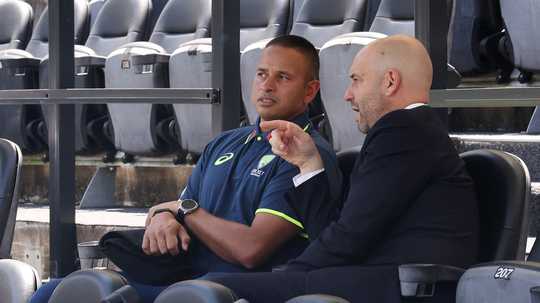
Khawaja’s comments have prompted questions about what players knew, when they knew it, and why the information is being discussed publicly now. The former opener has faced criticism from some quarters for not speaking earlier, as well as for making the claims while his book is due to be released.
Starc declined to interpret Khawaja’s account or explain why it differs from the bowlers’ earlier statement. He pointed out that the claims appear in a book he has not read and said it was for Khawaja to provide further detail.
“As far as our statement said in 2021, we weren’t aware of it being taken on the field. That’s where I’ll leave it,” Starc said. He added that he had not spoken to Khawaja since the recent public comments and left open whether they would talk in the future, saying that was up to the former opener.
The contrasting accounts have created fresh uncertainty around a scandal that was thought to have been addressed through player suspensions and Cricket Australia’s disciplinary process. The latest claims do not, by themselves, establish what individual players knew. They do, however, raise renewed questions about the completeness of the original inquiry and how the team’s understanding of events was established.
Cricket Australia Sees No Current Case for a New Inquiry
Cricket Australia chief executive Todd Greenberg said there was not enough compelling reason to reopen the investigation unless those involved held a shared account of what happened. His comments came after Warner criticised the interview process, describing it as “rushed and botched.”
Warner has argued that the focus should shift from scrutinising people who are asking questions to examining how the investigation was conducted. He has called for accountability and transparency, saying those responsible for the inquiry should be asked to explain how the truth was assessed.
The difference between Greenberg’s position and Warner’s criticism reflects a broader challenge for any review of the episode: a renewed investigation would need to address not only the use of sandpaper, but also the reliability of evidence gathered at the time and the reasons accounts now appear to conflict.
Why the 2018 Ball-Tampering Scandal Still Matters
The Cape Town incident had immediate and lasting consequences for Australian cricket. Bancroft was caught on camera using sandpaper on the ball, while Smith and Warner were found to have roles in the plan. Cricket Australia imposed lengthy suspensions, and Smith stepped down as captain. The episode damaged the team’s reputation and prompted wider scrutiny of leadership, player conduct and the culture surrounding elite sport.
Ball tampering is an attempt to change the condition of the ball to influence its movement through the air or off the pitch. Because the condition of the ball can affect a contest between bat and ball, cricket’s laws place strict limits on what players may do to it. The use of an artificial abrasive material such as sandpaper made the Cape Town case especially serious.
For supporters following the latest cricket news, the key issue is now less about what was visible on the field—the broadcast images made the act clear—than about who knew of the plan and when. That distinction matters when judging individual responsibility, the fairness of past sanctions and whether the original process answered all the questions raised by the scandal.
What Happens Next?
For now, Starc has made clear that he will not revise his account. He says he did not know sandpaper had been brought onto the field and that his recollection remains the same as the bowlers’ 2021 statement. Khawaja and Warner have offered a different interpretation, while Cricket Australia has not indicated that a new investigation is underway.
Whether the latest claims lead to further scrutiny may depend on whether more specific evidence or corroborating accounts emerge. Until then, the episode is likely to remain a point of debate among former players, officials and fans. Any future assessment will need to separate confirmed facts from recollections and allegations—and consider whether the original inquiry was sufficiently thorough.
As the discussion continues, cricket prediction and match analysis may dominate the sport’s day-to-day coverage, but the controversy is a reminder that trust and accountability are just as important to the game’s long-term credibility as results on the field.