
Hossam Hassan’s Exit Raises Questions Over Hamza Abdelkarim’s Egypt Future
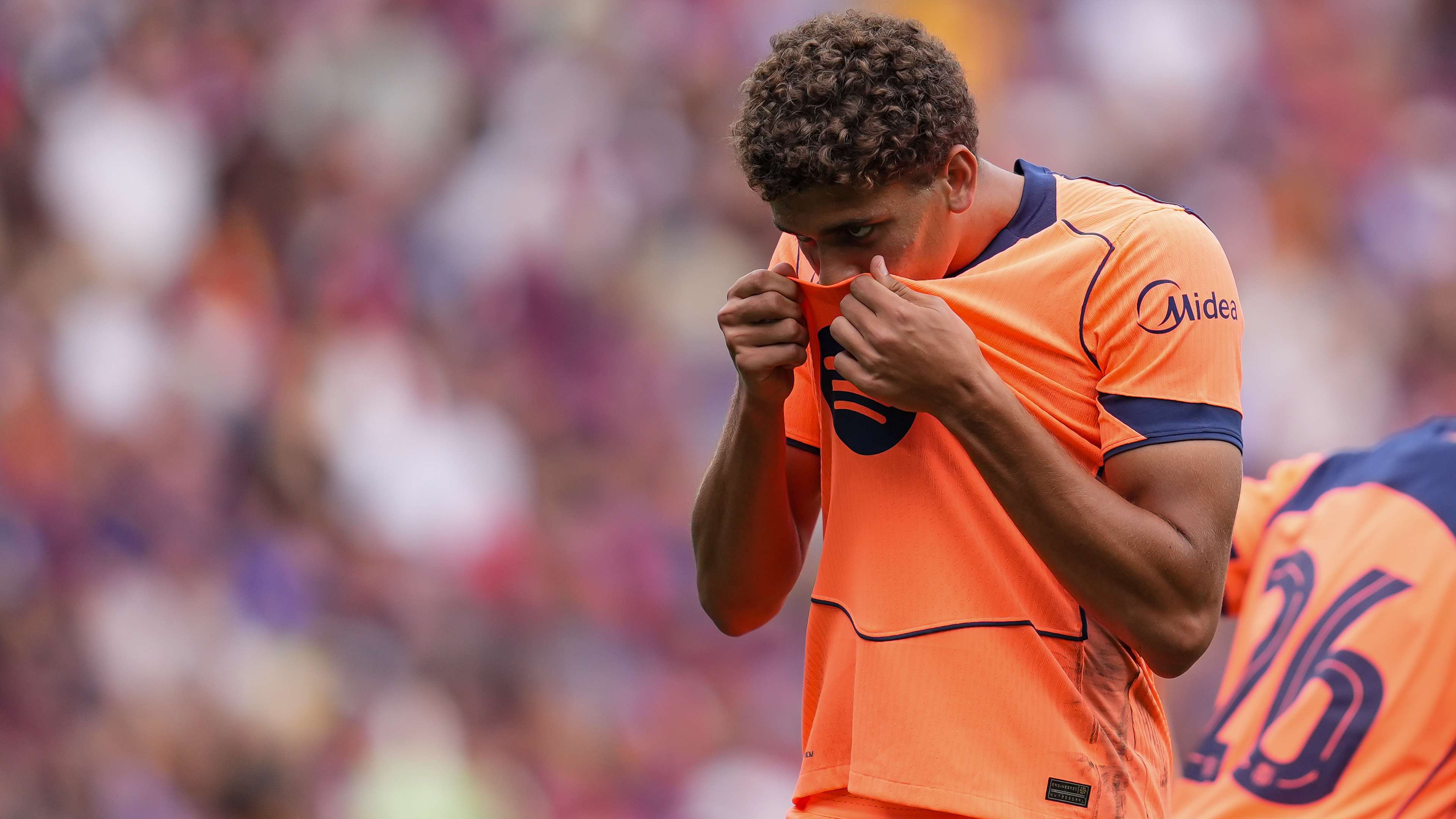
Hossam Hassan’s departure as Egypt head coach could mark a turning point for Barcelona forward Hamza Abdelkarim. The young striker had emerged as one of Hassan’s most notable selections, earning the coach’s confidence and an opportunity to feature on football’s biggest international stage despite his age and limited senior experience.
Now, with Ali Maher appointed as Hassan’s successor, Abdelkarim faces a fresh test: can he convince a new coaching staff that he deserves the same prominent role? The change arrives at a significant moment for the forward, whose progress at Barcelona has attracted growing attention in Spain and Egypt.
A major opportunity under Hassan
Spanish newspaper Sport has described Hassan’s exit as a potential setback for Abdelkarim, who benefited from the former coach’s faith in his ability. Hassan was reportedly among the youngster’s strongest supporters in the national setup, backing his talent even though he had relatively little experience at senior international level.
That trust brought Abdelkarim a valuable chance to represent Egypt at the World Cup. For a developing striker, inclusion in a major tournament squad can be more than a personal milestone: it offers exposure to elite opponents, intense pressure and the demands of competing for a national team. Regular involvement also gave Abdelkarim an opportunity to learn quickly and show what he could contribute beyond youth football.
Egypt’s tournament campaign delivered both excitement and disappointment. The team reached the round of 16 before being eliminated by Argentina, the reigning champions at the time. Egypt had taken a 2-0 lead in the knockout match, only for Argentina to recover and end the Pharaohs’ run. Abdelkarim featured in most of Egypt’s matches, gaining meaningful minutes and leaving a positive impression during a demanding competition.
That experience strengthened his international profile. However, a new coach may assess the squad differently, meaning Abdelkarim will need to build on his performances rather than rely on the reputation he developed under Hassan.
Barcelona progress adds to the spotlight
Abdelkarim’s national-team story is unfolding alongside a busy period at Barcelona. The Egyptian forward recently renewed his contract after making an encouraging start, a sign that the Catalan club sees potential in his development. He has also continued to gain experience across different levels of the club’s structure.
His recent appearances have included action for Barcelona’s under-19 side against Aston Villa in the UEFA Youth League, as well as matches for Barcelona Atlètic. He has also been included in the first-team environment, sitting on the bench under German coach Hansi Flick. While a place among the senior substitutes does not guarantee an immediate debut, it reflects the club’s willingness to monitor his progress closely.
Barcelona’s interest in Abdelkarim is tied to a set of qualities that can be valuable in a modern forward. He is described as having sharp positioning in the penalty area, a natural instinct for finishing and the aerial ability to challenge defenders. Those attributes can help him influence matches even when he has limited touches, particularly if he continues improving his movement, link-up play and decision-making under pressure.
For young players, moving between youth football, reserve-team competition and first-team training can be challenging. Each level brings faster play, stronger opponents and less time to make decisions. Abdelkarim’s ability to adapt across those settings may help determine how quickly he can progress at Barcelona—and how persuasive his case becomes for regular Egypt selection.
Ali Maher’s first decisions will matter
Ali Maher, formerly in charge of Ceramica Cleopatra, has been named as Hassan’s successor. His appointment gives Egypt a new voice on the touchline and leaves several questions about the team’s direction. Among the most closely watched decisions will be whether Maher continues to trust Abdelkarim, adjusts his role or asks him to earn his place through club performances.
That question will be put into focus as Egypt prepares for two Africa Cup of Nations qualifying fixtures against Malawi. The matches offer Maher an early chance to assess his squad and establish his preferred approach. They also provide Abdelkarim with an opportunity to demonstrate that his value to Egypt is not tied to one coach’s personal backing.
Selection will depend on more than potential. A new manager may consider current form, tactical fit, training performances and the balance between experienced players and emerging talent. Abdelkarim’s challenge is therefore twofold: maintain momentum at Barcelona and show that he can meet the demands of Egypt’s new system.
What is the prediction for Abdelkarim?
The coaching change does not automatically mean Abdelkarim will lose his place. Hassan’s support helped open the door, but the forward’s World Cup experience and continued development at Barcelona give him a stronger platform than he had before the tournament. A new coach may also value a young striker who has already faced high-pressure international football.
Still, competition for places is inevitable. If Maher prefers a different formation or more experienced options, Abdelkarim may have to wait for opportunities. The most realistic prediction is that his role will depend on how quickly he adapts to the new coach’s expectations and whether his club performances continue to show progress.
For now, the change represents uncertainty rather than a definitive setback. Abdelkarim has lost an important advocate, but he has also gained experience, visibility and the chance to make his case to a new manager. His next appearances for Barcelona and Egypt could be crucial in shaping the next chapter of his football career.