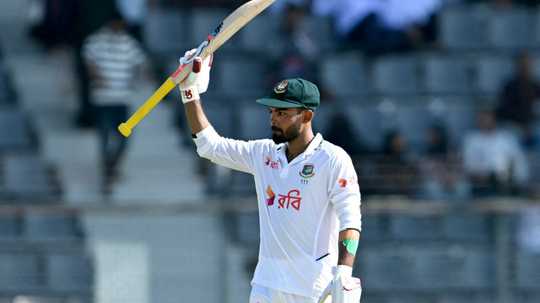

Saqib Khan’s Seven-Wicket Debut Shifts Rawalpindi Test Momentum
Pakistan clawed their way back into the Rawalpindi Test on Day 4, with debutant Saqib Khan producing a remarkable seven-wicket haul to prevent Sri Lanka from building a commanding first-innings lead. After the visitors resumed at 404 for 4, they were dismissed for 446, leaving Pakistan with a narrow 12-run deficit. The hosts then reached 57 for 1 in their second innings before bad light brought another frustrating interruption.
Weather and visibility continued to shape the contest, with large portions of the day lost despite the match reaching a crucial stage. Still, Saqib’s outstanding spell gave Pakistan fresh hope and changed the balance of a Test that had appeared to be tilting Sri Lanka’s way. For cricket fans following the match, the day offered a sharp reminder that a strong position can quickly become vulnerable when a new-ball or change bowler finds rhythm and pressure builds.
Saqib strikes early to remove Sri Lanka’s centurions
Sri Lanka began the day in control, with captain Dhananjaya de Silva unbeaten on 167 and Kusal Mendis on 119. The pair had helped establish a substantial platform, and the visitors had reason to believe they could stretch their lead well beyond the 12 runs they eventually secured. Pakistan, however, needed early breakthroughs—and Saqib delivered almost immediately.
In the opening over, Dhananjaya edged a delivery behind and departed without adding to his overnight total. Four overs later, Saqib produced a similar result against Kusal Mendis, who was caught behind for 119. The two dismissals removed Sri Lanka’s most established batters and put the lower order under pressure before it could settle.
Saqib’s morning spell continued to gather momentum. He dismissed Sonal Dinusha to claim a five-wicket haul in his first-ever bowling innings in Test cricket, a notable achievement for a player making his debut. His control and ability to keep finding the edge proved especially important on a surface where Sri Lanka’s top order had earlier scored freely.
Sri Lanka’s lower order loses its footing
From 432 for 7, Sri Lanka were unable to turn their promising position into a much larger total. The final three wickets fell quickly, and the team lost six wickets for just 42 runs to finish on 446. Saqib completed the innings with figures of 7 for 130 from 34 overs, including five maidens.
The collapse did not erase the value of the earlier contributions. Dhananjaya’s 167 and Kusal’s 119 formed the backbone of Sri Lanka’s innings, while Kamindu Mendis added a useful 58. But the rapid finish meant Pakistan’s first-innings score of 434 for 9 declared kept the deficit to only 12. That small margin gave the home side a realistic opportunity to take control in the second innings, provided they could bat through the remaining time.
For Saqib, the performance was an emphatic introduction to Test cricket. A seven-wicket haul on debut is a major milestone, but its impact went beyond the personal achievement: it prevented Sri Lanka from converting two centuries into a potentially decisive lead. His spell also gave Pakistan’s other bowlers a lift after the visitors had dominated much of the earlier phase.
Pakistan begin their second innings cautiously
Pakistan’s response began with an early setback. Opener Tayyab Arif was trapped leg before wicket by Asitha Fernando in the third over, and the batter used a review without overturning the decision. The dismissal gave Sri Lanka an immediate opening and raised the possibility that the visitors could apply pressure before Pakistan’s lead began to grow.
Azan Awais and Mohammad Taha steadied the innings, taking Pakistan to lunch at 39 for 1 after 12 overs. Taha remained unbeaten on 24, while Fernando had taken the only wicket to fall, conceding 10 runs. Pakistan had moved ahead, but the lead was still modest and the batting side needed more time at the crease to create a meaningful cushion.
Only 9.2 overs were possible after the interval. As the light deteriorated, the players left the field and an early tea was taken. Conditions did not improve enough for play to resume, leaving Pakistan unbeaten at 57 for 1 and 45 runs ahead overall. The lost overs were significant: with the match finely balanced, every uninterrupted session could have influenced the final result.
Rawalpindi Test prediction: a close finish still in prospect
At the close, neither side had established a decisive advantage. Pakistan had recovered from Sri Lanka’s strong first-innings position, but their second-innings lead remained too small to guarantee safety. Sri Lanka, meanwhile, had missed the chance to build a substantial advantage after losing their final six wickets in a cluster. The next full session is likely to be crucial, particularly if Pakistan can avoid another early collapse and extend the lead.
Any cricket prediction for the remainder of the Rawalpindi Test must account for the repeated interruptions. Reduced playing time can make a draw more likely, especially if bad light continues to limit the number of overs available. However, a substantial Pakistan lead could still create pressure on Sri Lanka, while quick wickets for the visitors would reopen the contest. The pitch, the weather and the ability of each side to make the most of limited time will all matter.
Pakistan’s immediate priority is to build partnerships and turn their narrow advantage into a target that gives their bowlers something to defend. Sri Lanka will look to strike early, with Fernando already showing that he can trouble the openers. After a day defined by Saqib’s exceptional debut and another interruption for bad light, the Test remains finely poised. The match’s direction may depend less on one dramatic moment than on which team handles the next available hours with greater discipline.
Brief scores: Pakistan 434 for 9 declared and 57 for 1 (Mohammad Taha 24 not out; Asitha Fernando 1 for 10), leading Sri Lanka 446 (Dhananjaya de Silva 167, Kusal Mendis 119, Kamindu Mendis 58; Saqib Khan 7 for 130) by 45 runs.