
The Swiss Official Faces Crisis Amid Controversy
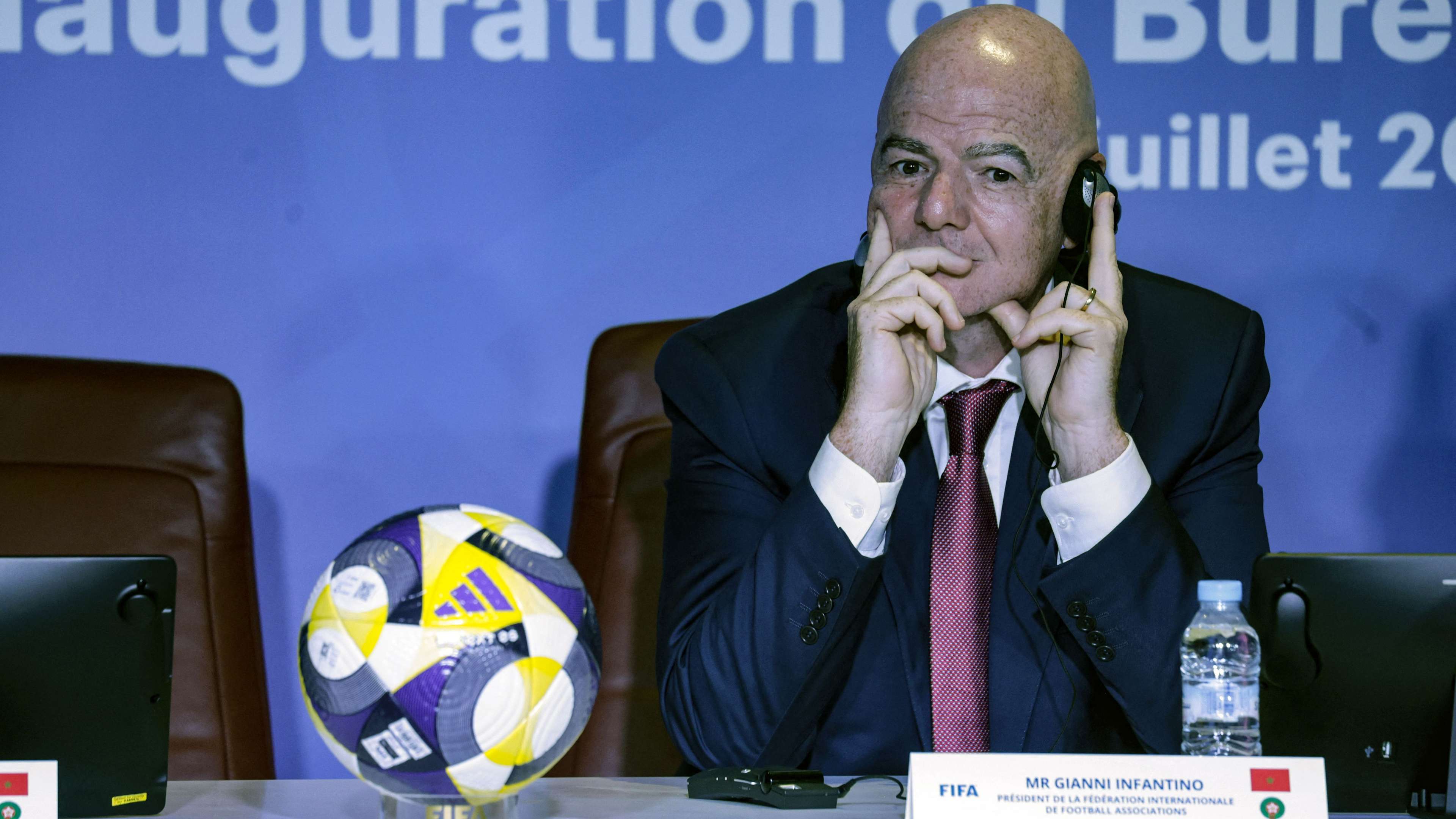
FIFA President Gianni Infantino is currently facing one of the most challenging periods of his tenure as the head of the international football governing body. Infantino has called for an emergency meeting with senior officials in Rabat, Morocco, to address a crisis that has put his future in jeopardy.
The crisis began when Infantino proposed the creation of the “FIFA Forward Enterprise” (FFE), a commercial entity that would oversee the rights to FIFA’s tournaments. The plan involved selling 20% of the new company to private investors. However, the proposal was met with widespread rejection from continental and national federations, leading Infantino to abandon the project.
Pressure Mounts on Infantino
According to reports from Britain’s “Sky Sports” network, the decision to scrap the FFE project has fueled unprecedented criticism against Infantino. Prominent figures both inside and outside of FIFA have publicly criticized him, with Arsène Wenger, former Arsenal manager, delivering a particularly striking intervention.
Wenger distanced himself from the project, calling the decision to withdraw it “absolutely necessary and not open to discussion.” He emphasized the importance of transparency and integrity within FIFA, urging for an independent operation.
FIFA Secretary General Mattias Grafström also addressed the escalating crisis, describing recent events as “unfortunate and unacceptable.” He expressed gratitude towards FIFA employees for their resilience during the turbulent period, reaffirming the institution’s commitment to its mission despite the challenges.
Allegations of Blackmail and Legal Action
Prince Ali bin Al Hussein, President of the Jordan Football Association, accused FIFA of “blackmail”, alleging that the governing body had tied assistance on various matters, including financial dues and fan issues, to a public declaration of support for Infantino in the upcoming elections.
Furthermore, UEFA has announced it is considering legal action against FIFA over the FFE project and has requested the preservation of all related documents for investigation.
International Repercussions
The confidence in Infantino has significantly waned across Europe, with several federations withdrawing their support for his re-election. Former FIFA President Sepp Blatter has even called for the election of the first woman to lead the organization, endorsing Lise Klaveness, President of the Norwegian Football Federation, as his successor.
With Asia emerging as a crucial battleground in the FIFA presidency race, divisions between federations in different regions are becoming more apparent. While European and North American federations are leaning towards ending Infantino’s term, support for him remains in Africa, South America, and Oceania.
Infantino’s future as FIFA president hangs in the balance as he navigates through this turbulent period of criticism and controversy.
Stay tuned for updates as the situation continues to develop.
Infantino’s Response and Damage Control
In response to the mounting pressure and allegations, Gianni Infantino has been working to regain trust and address concerns within FIFA. He has publicly apologized for the controversy surrounding the FFE project and emphasized his commitment to transparency and accountability moving forward. Infantino has also pledged to work closely with FIFA’s stakeholders to rebuild relationships and restore confidence in his leadership.
As part of his damage control efforts, Infantino has initiated an internal investigation into the allegations of blackmail and any potential misconduct within the organization. By taking proactive steps to address these issues, he aims to demonstrate his willingness to confront challenges head-on and uphold the principles of fair play and integrity that FIFA stands for.
Global Support and Opposition
While Infantino faces significant backlash in certain regions, he still retains support from federations in other parts of the world. African, South American, and Oceanian football associations have expressed solidarity with Infantino, highlighting his efforts to promote development and inclusivity within the sport. These regions view Infantino as a leader who has brought positive changes to FIFA and are reluctant to see him ousted from his position.
On the other hand, European and North American federations continue to push for Infantino’s resignation or removal from office. They argue that the controversies surrounding the FFE project and allegations of misconduct have tarnished FIFA’s reputation and compromised its credibility. The divide between different regions highlights the complex dynamics at play in international football governance and the challenges of consensus-building in a diverse and politically charged environment.
The Path Forward for FIFA
As FIFA grapples with internal turmoil and external scrutiny, the future of the organization hangs in the balance. The upcoming elections will be a crucial turning point in determining the direction of international football governance. Whether Infantino can weather the storm and secure another term as president remains to be seen, but the outcome will have far-reaching implications for the sport’s integrity and credibility.
Regardless of the outcome, the controversy surrounding Infantino has sparked important conversations about transparency, accountability, and ethical standards in football governance. It serves as a reminder of the challenges faced by global sporting bodies in balancing commercial interests, political pressures, and the need to uphold the values of fair play and sportsmanship.
As stakeholders within FIFA and the football community at large continue to monitor developments, the ultimate goal remains the advancement and protection of the beautiful game for players, fans, and all those who cherish the spirit of football.
Stay tuned for further updates on this unfolding story as the world of international football braces for potential changes and transformations.