
Editor’s note: The source text describes Cristiano Ronaldo’s international retirement as a confirmed announcement, but does not provide an official statement or independently verified confirmation. The article below presents the retirement as reported in the supplied material and preserves the context of that account.
Cristiano Ronaldo and Portugal: The international career that changed a nation’s football story
For more than two decades, Cristiano Ronaldo’s name has been inseparable from Portugal’s rise in international football. According to reports, the forward has announced his retirement from the national team, bringing a remarkable chapter to a close. If confirmed, the decision would end a career defined by extraordinary goal-scoring, major trophies and a transformation in what Portuguese supporters expect from their team.
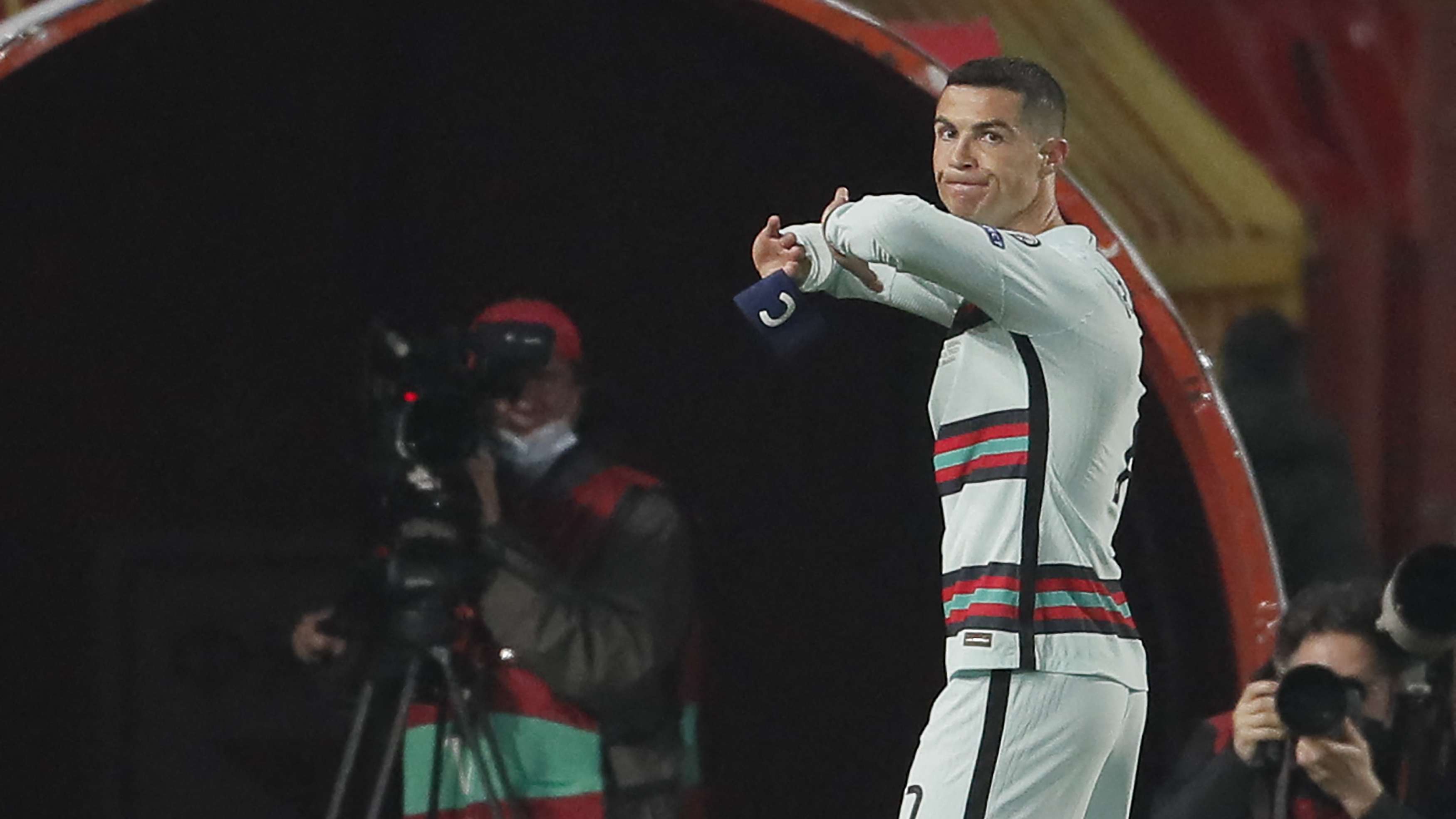
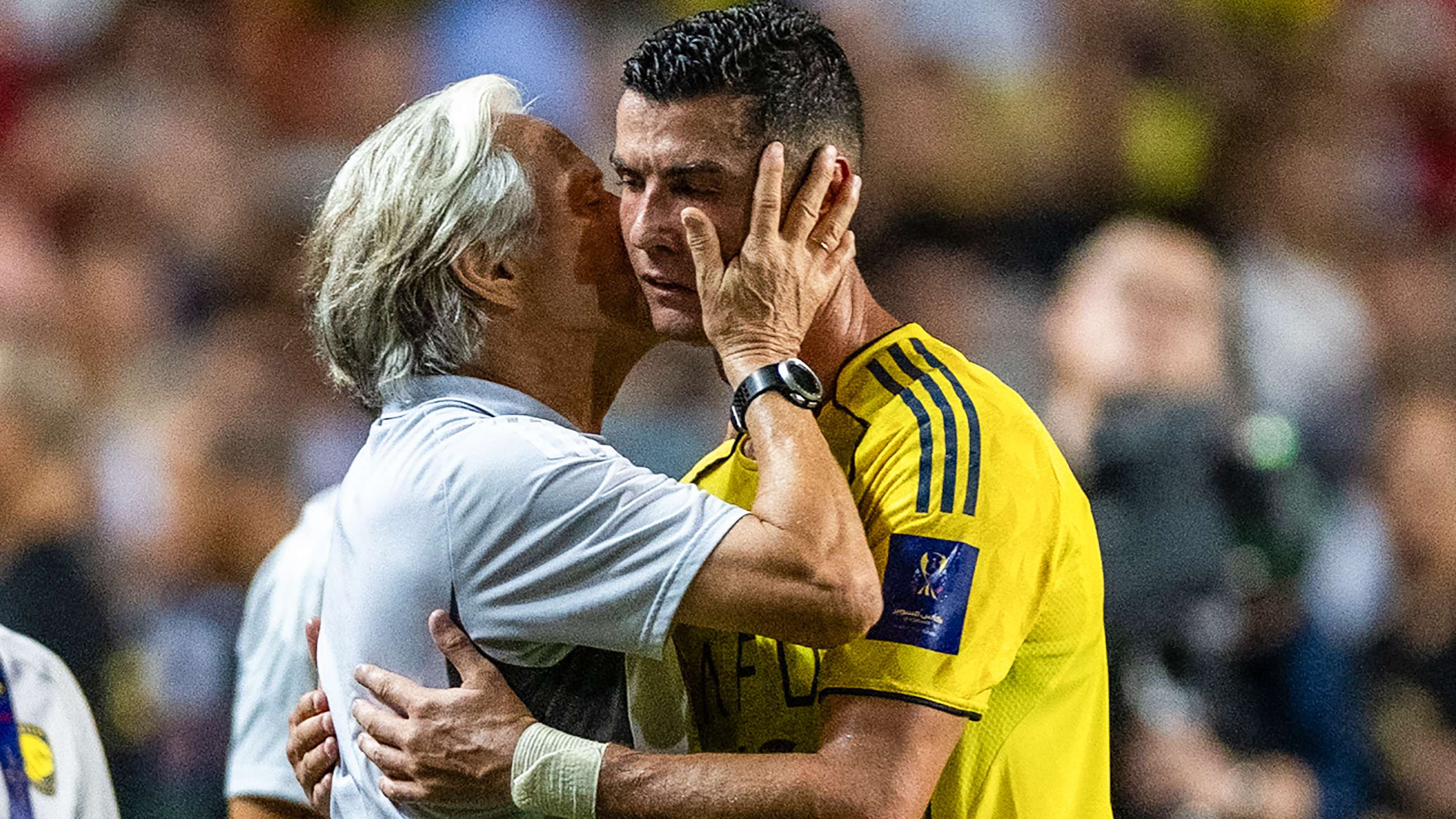
The timing is striking. Ronaldo had reportedly hoped to continue representing Portugal while pursuing the ambition of scoring his 1,000th career goal in the national shirt. The announcement also follows a reported disagreement with Portugal coach Jorge Jesus during the previous international break. Jesus was expected to consider the Al-Nassr star for the squad due to be announced the following day, but Ronaldo appears to have made his decision first.
Whatever the circumstances behind the reported retirement, its significance reaches far beyond one player’s next appearance. Ronaldo did not simply become Portugal’s most recognizable footballer. His career unfolded alongside the country’s transformation from a talented outsider into a regular contender for major honours.
From teenage debut to Portugal’s defining star
Ronaldo was 18 years old when he first joined Portugal’s senior team in 2003. His performances for Sporting Lisbon had attracted the attention of Manchester United and Portugal coach Luiz Felipe Scolari, who gave the teenager an opportunity despite the presence of established stars in the squad.
He made his debut in a friendly against Kazakhstan and quickly became part of Portugal’s plans for Euro 2004. Ronaldo scored his first international goal in the tournament’s opening match, also against Greece. Portugal eventually lost the final to the same opponent, but the competition introduced the young winger to a global audience. Luis Figo remained the team’s leading figure at the time; Ronaldo was already emerging as the next generation’s brightest prospect.
That early setback also became part of a longer story. Portugal had reached the final on home soil but could not complete the job. Twelve years later, Ronaldo would help lead the country to its first European Championship title, a result that changed the way the national team was viewed at home and abroad.
Portugal before Ronaldo’s era
Before Ronaldo’s emergence, Portugal was admired for technical quality and attacking flair, earning the nickname “the Brazil of Europe.” Yet attractive football did not consistently translate into tournament success. The team could trouble stronger opponents, but it was not widely regarded as a permanent favourite for international titles.
Portugal had appeared at only three World Cups before Ronaldo’s senior debut: in 1966, 1986 and 2002. The standout campaign came in England in 1966, when the side, inspired by Eusébio, finished third. Later appearances were less successful, with Portugal exiting at the group stage in 1986 and 2002.
The European Championship record was similarly limited. Portugal had qualified for three editions before 2003—1984, 1996 and 2000—and reached the semi-finals in 1984 and 2000. The “Golden Generation,” led by Figo, came close to a breakthrough, but the country still had no major senior international trophy.
A new standard: qualification, trophies and ambition
During Ronaldo’s 23-year international career, Portugal became a regular presence at the sport’s biggest tournaments. The team qualified for six consecutive World Cups in the period described in the source material, while also establishing itself as a consistent European Championship participant. Qualification, once a major objective in itself, increasingly became the starting point rather than the ultimate ambition.
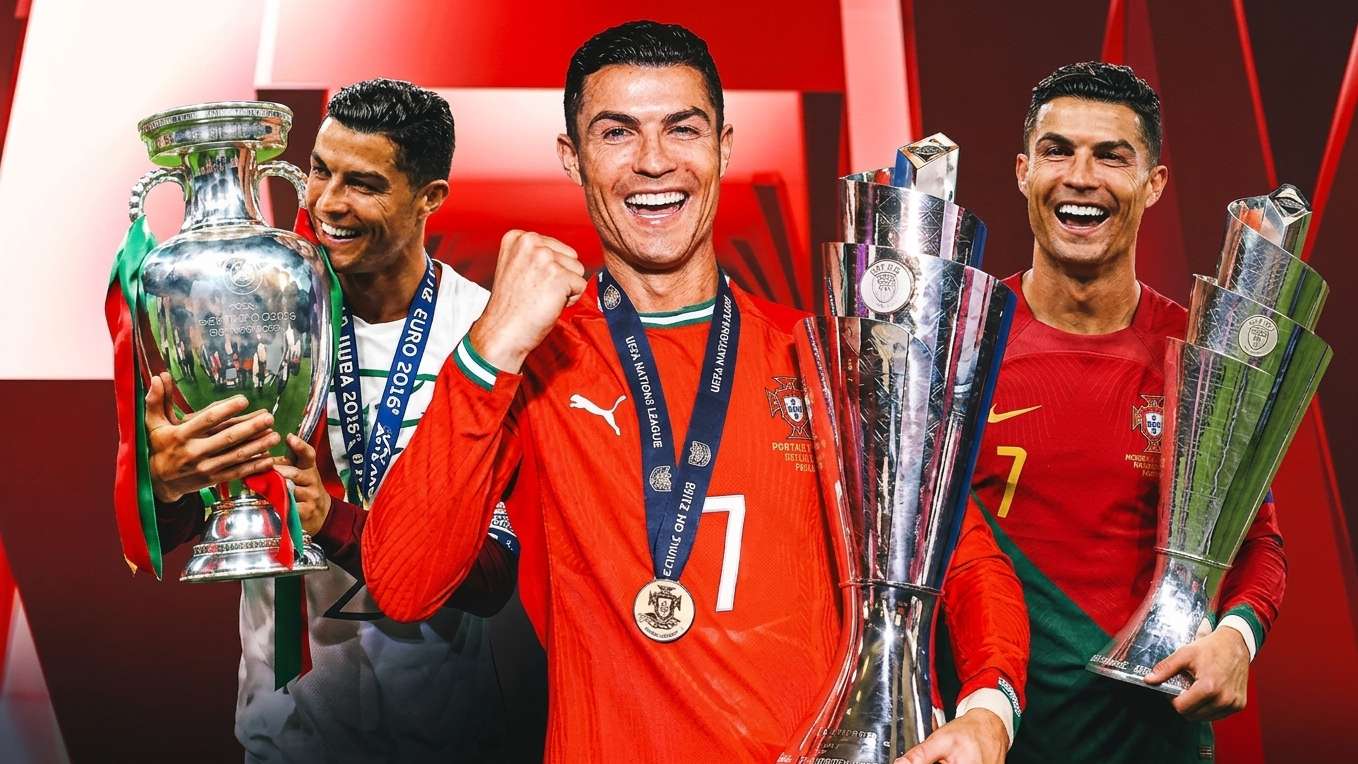
The defining achievement arrived at Euro 2016. Portugal won the tournament in France, defeating the hosts in the final despite Ronaldo leaving the match injured in the first half. His emotional presence on the touchline became one of the tournament’s most memorable images, but the victory also reflected the depth and resilience of the squad around him.
Portugal went on to win the inaugural UEFA Nations League in 2019 and secured a second Nations League title in 2025, according to the supplied account. Those successes gave the country three major senior international trophies in the Ronaldo era: one European Championship and two Nations League crowns. The shift was more than statistical. Portuguese supporters could now judge their team not only by whether it qualified, but by whether it could win.
Ronaldo’s record-breaking numbers for Portugal
Ronaldo’s international statistics underline the scale of his contribution. The figures cited in the original report credit him with 234 appearances, 146 goals and 45 assists for Portugal. He is described as the most-capped player in men’s international football and the leading scorer in the history of the national team.
His scoring records extend across major competitions. Ronaldo is the European Championship’s all-time leading scorer, with 14 goals, and Portugal’s top scorer at the World Cup, with 11. He is also credited with scoring at six different World Cup tournaments—a rare achievement that reflects both remarkable longevity and an ability to remain central to Portugal’s plans across several generations.
These milestones offer useful context for any football prediction about Portugal’s future. Without Ronaldo, the team will need to redistribute goals, leadership and responsibility across its younger attackers and experienced regulars. His departure would not automatically weaken Portugal’s squad beyond repair, but replacing his influence will require more than finding another prolific striker.
A legacy that extends beyond the pitch
Ronaldo’s impact was not limited to goals or medals. His insistence that Portugal could compete for titles helped reshape the national team’s mentality. Players who grew up watching him saw a teammate who treated ambition as a requirement, not an act of arrogance. That example may continue to influence Portugal long after his international career ends.
His profile also gave Portugal extraordinary visibility around the world. The source material cites Portuguese Economy Minister Manuel Castro Almeida as saying that many people know the country through Ronaldo. The remark points to a wider effect: elite sport can become part of a nation’s international identity, attracting attention to its culture, tourism and business as well as its football.
Ronaldo’s international story began with a teenager entering a talented but trophyless team. It may end with Portugal established among the world’s leading sides and a generation of footballers raised on the belief that major honours are attainable. The next chapter will belong to the players who follow him, but the standard he helped create will remain their challenge—and their opportunity.