
Lakshya Sen’s Patient Strategy Delivers Hylo Open 2026 Badminton Title
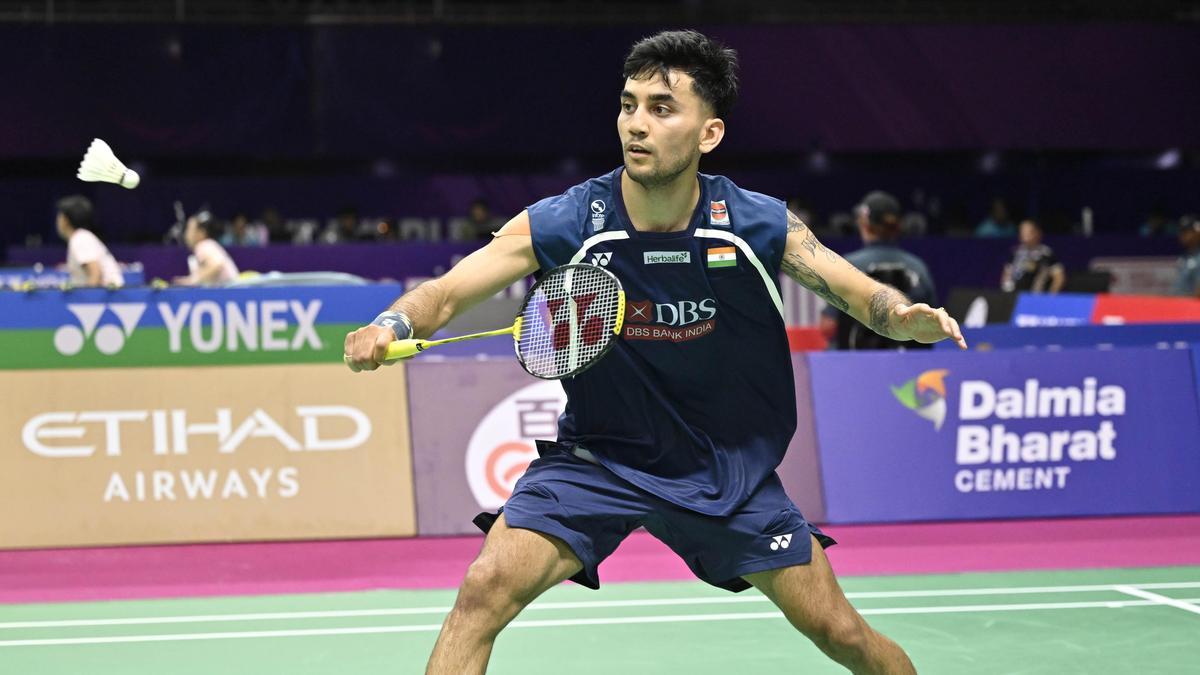
Lakshya Sen claimed the Hylo Open 2026 men’s singles title with a composed straight-games victory over Indonesia’s Jonatan Christie, winning 21-17, 21-10 in the final. The Indian shuttler’s performance was built not on relentless attacking, but on patience, careful shot selection and a clear plan to control the rallies before looking for opportunities to finish them.
Sen had opened up a six- to seven-point advantage at one stage, but he resisted the temptation to force the pace. Christie was defending effectively and offering few easy errors, making it difficult for Sen to hit through him immediately. Instead, the Indian focused on maintaining pressure and waiting for the right moment to attack.
Why patience proved decisive against Christie
After the final, Sen explained that his priority was to play the “right patient game.” The advice from his coaching team was similarly direct: stay in the rally, avoid attacking without a clear opening and remain steady around the net.
That approach was designed to limit Christie’s opportunities to take charge. The Indonesian is known for his strong attacking game and his ability to turn untidy exchanges into winning chances. Sen therefore had to be especially careful with the lifts he played from the forecourt. A loose lift could give Christie the chance to unleash a smash; a controlled net shot, by contrast, could make the Indonesian work for every opening.
Sen’s plan was to use the net to shape the rally rather than simply treat it as a place to defend. By keeping his shots tight and choosing when to lift, he could make Christie move, reduce the quality of his attacks and create better chances to take control. It was a measured strategy that helped Sen close out the first game before pulling away more emphatically in the second.
A final shaped by discipline, not rankings
Sen also said he did not want to become distracted by rankings or the broader significance of the match. Against familiar opponents, he believes the contest can be close regardless of reputation, so preparation and execution matter more than assumptions about who should win.
His focus, he said, was to have the right strategy, compete hard and play the game in front of him. That mindset was evident in the final: even with a lead, he continued to build points patiently rather than chase quick winners. The result was a controlled performance that gave Christie few opportunities to build momentum.
The 21-17, 21-10 scoreline reflected the way the match developed. The opening game required Sen to stay composed as Christie remained competitive, while the second showed the value of that patience. Once Sen had established control, he was able to apply greater pressure and prevent the Indonesian from finding a route back into the contest.
Sen built momentum after a challenging start
The title run was not without difficult moments. Sen had skipped the French Open to allow a shoulder issue to settle, and he acknowledged that he was not immediately at his sharpest when he returned to competition. In his opening match, he lost the first game before recovering to win in three.
He said his shot selection was initially rusty and that he was slow to get started in games. That can be a particular challenge in a demanding badminton tournament, where opponents are quick to punish hesitation and where a poor opening can put pressure on the rest of a match.
As the week progressed, however, Sen’s timing and touch improved. The draw brought increasingly demanding tests, including matches against top-15 opponents, leaving little margin for slow starts. Sen credited the volume of competition for helping him find his rhythm. Playing five matches in a week gave him the opportunity to adjust, sharpen his decisions and carry improvements from one round into the next.
That progression made the final especially significant. Rather than relying only on raw power, Sen combined improved timing with a patient tactical approach—an important sign of how a player can adapt over the course of a tournament.
Adapting a trademark weapon
Sen’s cross-court overhead smash has long been one of the most recognisable parts of his game. He said the shot grew from years of practice and from an early enjoyment of playing it. It was a major weapon during his junior career, when opponents had fewer opportunities to study his patterns.
At the highest level, however, familiar strengths can become easier to anticipate. Sen noted that players and coaching teams now have access to extensive video analysis, allowing them to identify tendencies and prepare for signature shots. As a result, he does not use the cross-court smash as frequently as he once did.
That does not make the shot less valuable. Instead, using it selectively can make it harder to read and more effective when the right opening appears. The Hylo Open final offered a reminder that Sen’s game is not dependent on one attacking option: he can also win through patience, net control and smart rally construction.
Looking ahead to Japan, Hong Kong and the World Tour Finals
Sen said he was not carrying any major injury concerns after the tournament. His immediate plan was to take a short break and spend Diwali with his family before travelling for the next events in Japan and Hong Kong.
Those tournaments are important to his ambitions for the remainder of the season, with the World Tour Finals still in his sights. The Hylo Open victory gives him valuable momentum, but the upcoming schedule will bring fresh opponents and new tactical challenges. Maintaining his fitness and carrying the improved form from Germany into the next stretch will be key.
For Indian badminton fans, Sen’s title was more than a convincing final score. It showcased a player capable of adjusting his approach: recovering from a slow start, managing a recent shoulder concern and choosing patience over unnecessary risk against a dangerous opponent. In a sport where power often attracts attention, Sen’s Hylo Open triumph showed how composure and tactical clarity can be just as decisive.