
Manchester City Take Narrow Half-Time Lead Against Leipzig After Own Goal
Manchester City went into the break with a 1-0 advantage over RB Leipzig in their UEFA Champions League meeting at the Red Bull Arena, but the scoreline offered only limited reassurance. The English side controlled possession for long stretches without turning that dominance into a convincing attacking display, while Leipzig looked sharper and more threatening in the first half.
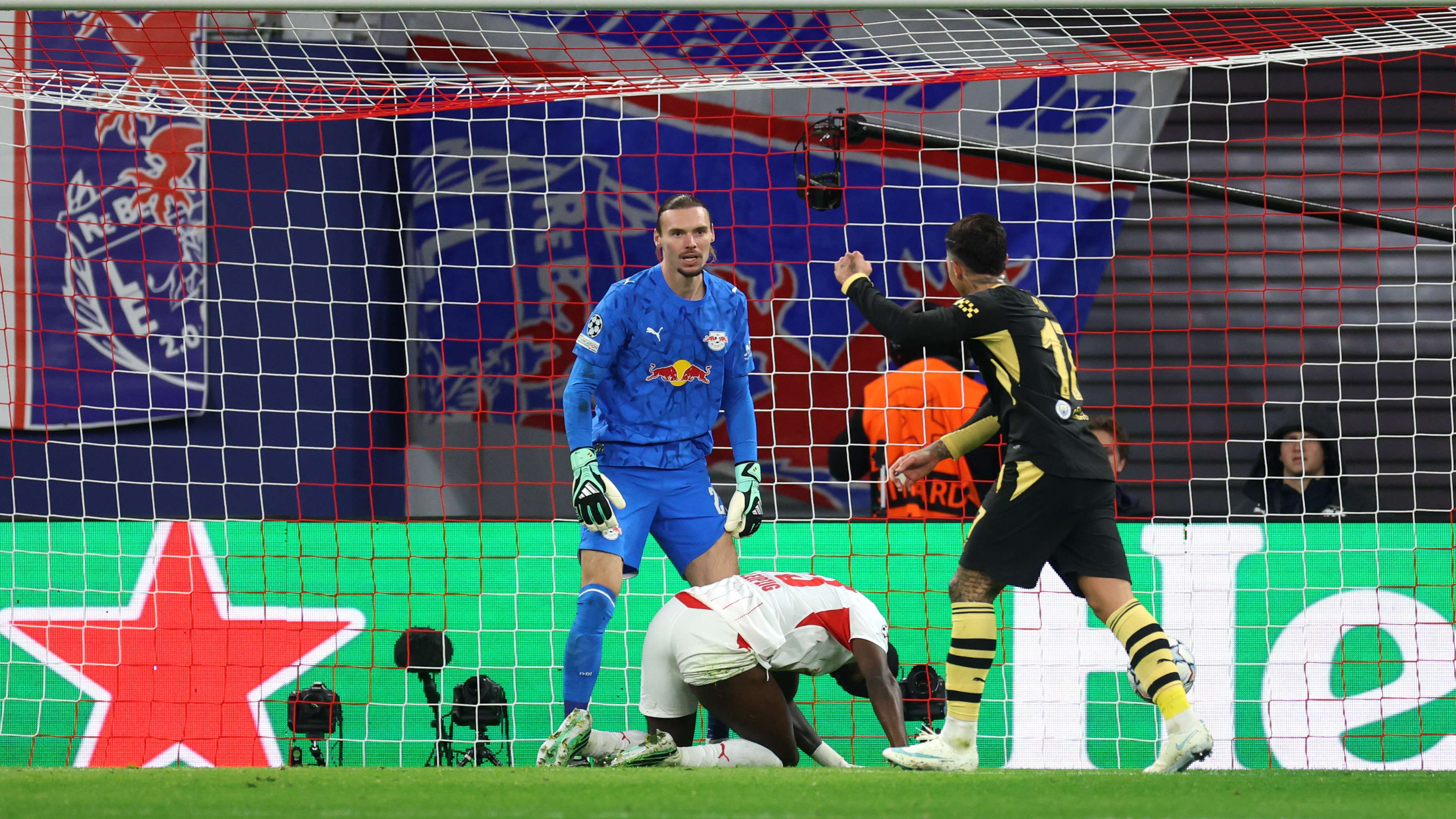
The decisive moment arrived in the 37th minute, when Leipzig defender Castello Lukeba inadvertently put the ball into his own net. Nico O’Reilly sent a cross into the penalty area, and Lukeba’s attempt to deal with it ended with the ball crossing his own goal line. The unfortunate finish gave City the lead, despite the visitors having struggled to create clear chances up to that point.
Possession Did Not Translate Into City Chances
City held 66% of the ball before half-time, compared with Leipzig’s 34%, but their control was largely measured in possession rather than attacking productivity. Pep Guardiola’s team registered four attempts, with only one testing the goalkeeper. For a side renowned for patient build-up and precise movement in the final third, the numbers reflected a subdued opening period.
Leipzig, meanwhile, made better use of their opportunities. The German side recorded six shots, two of which were on target, and matched City with eight touches inside the opposition penalty area. Those figures suggested that Leipzig were not simply defending against the reigning European heavyweights: they were finding routes forward and applying pressure of their own.
That contrast shaped the half. City circulated the ball and looked to establish their usual rhythm, but Leipzig’s organisation limited the space available near goal. The hosts were more direct when they won possession, seeking to move quickly into attacking areas and make City’s defenders turn toward their own goal.
O’Reilly’s Delivery Creates the Breakthrough
Although the goal was credited as an own goal, O’Reilly’s contribution was central to the breakthrough. His cross forced Leipzig into a difficult defensive moment, where Lukeba had little time to make a clean intervention. It was a reminder that even when a team is not creating a steady stream of chances, a well-placed delivery can change the match.
For City, the goal provided a valuable lead but did not remove the need for improvement. Their challenge after the interval was to make their possession more purposeful, move the ball faster through midfield and create more pressure around Leipzig’s box. A single-goal advantage can be fragile in the Champions League, especially against a home side that had already shown it could threaten.
What Leipzig Needed After the Break
Leipzig had reason to remain encouraged despite trailing. Their shot count and penalty-area activity showed that they had been competitive, and the own goal had arrived against the run of a broadly balanced contest in terms of attacking presence. If the hosts could maintain their energy while improving their finishing, they had opportunities to make the second half uncomfortable for City.
The key question for Leipzig was how to keep creating chances without leaving too much space behind. Pressing City aggressively could help win the ball in dangerous areas, but it also risked allowing the visitors to exploit gaps with their passing and movement. A measured approach—pressing at the right moments and using quick transitions—offered the clearest route back into the match.
Second-Half Prediction: City Favoured, but Leipzig Remain a Threat
Any football prediction based on the first-half statistics would have to account for two competing signals. City had the advantage on the scoreboard and a clear edge in possession, while Leipzig had produced more shots and matched the visitors for touches in the penalty area. The numbers pointed to a close contest rather than a comfortable City performance.
City’s experience and ability to control the tempo made them the natural favourites to protect their lead. If they increased the speed of their combinations and forced Leipzig to defend deeper, they could create the clearer chances that had been missing before half-time. However, Leipzig’s attacking intent meant City could not afford to treat possession as a substitute for defensive concentration.
A reasonable second-half outlook was that City would seek to manage the game through sustained possession, while Leipzig would look for a breakthrough through pressure and rapid attacks. The first goal after the interval, if there was one, could prove decisive: a City goal would strengthen their control, while a Leipzig equaliser would turn the closing stages into a far more open contest.
A Lead That Still Needed to Be Earned
At half-time, Manchester City had the advantage, but their performance had not yet matched the authority usually associated with their Champions League campaigns. The visitors had dominated the ball without producing enough shots on target, and Leipzig had shown that they could compete in the attacking areas that matter most.
The own goal gave City a platform for the second half, not a guarantee of victory. To convert the narrow lead into a strong result, they needed greater sharpness in the final third and continued focus against Leipzig’s forward runs. For the hosts, the task was straightforward: build on a lively first-half display, take their chances and make the most of the home crowd’s support.