
AC Milan Eyeing Eintracht Frankfurt Executives as Cardinale Shapes the Club’s Leadership Team
AC Milan’s progress under coach Ruben Amorim has given supporters plenty to discuss, but the club’s ambitions extend beyond results on the pitch. With owner Gerry Cardinale and RedBird Capital Partners continuing to develop a long-term project, attention is turning to an important next step: strengthening the management structure responsible for guiding Milan’s sporting strategy.
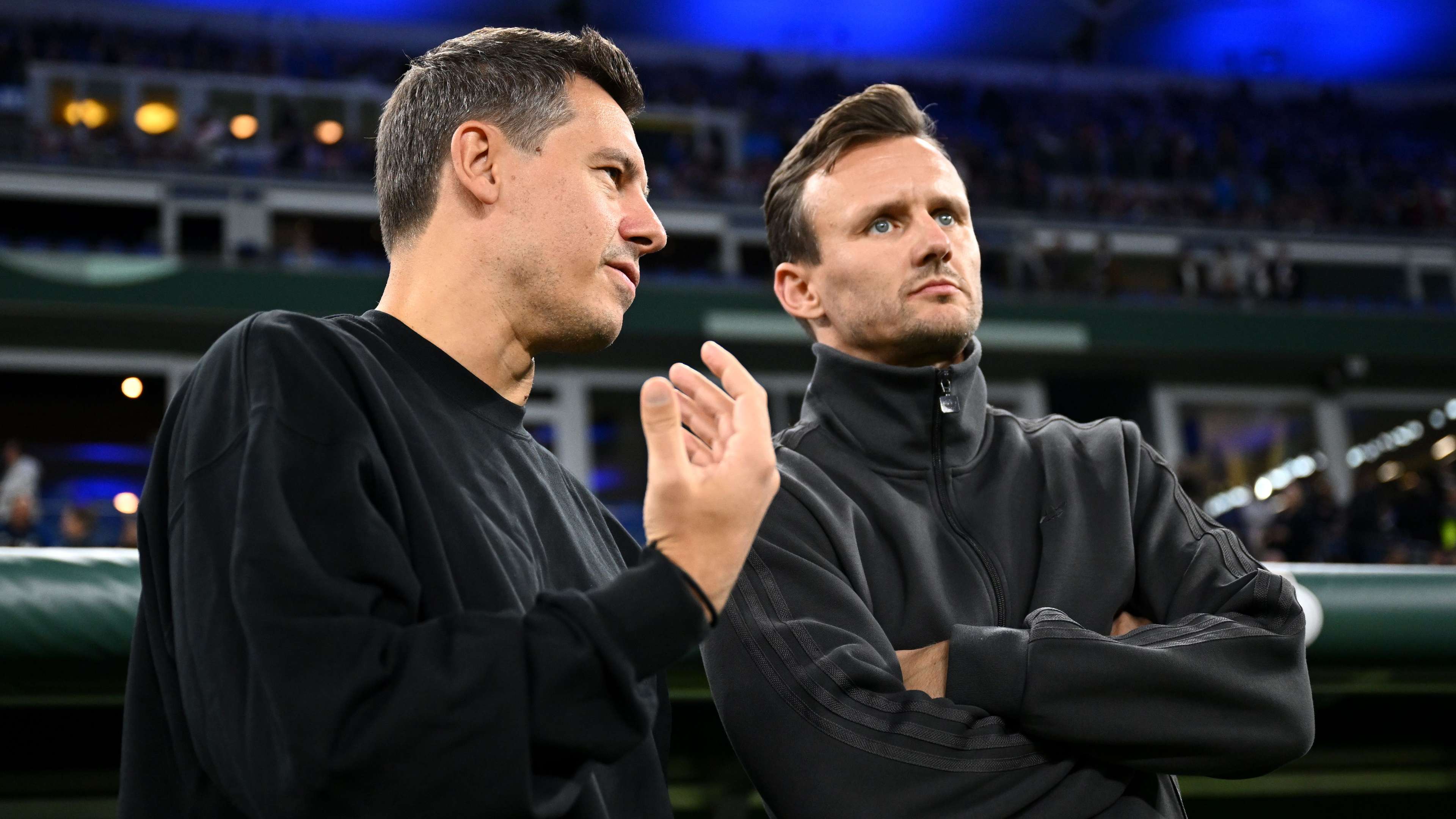
According to reports, Eintracht Frankfurt executive Timmo Hardung could be considered for a role at Milan, potentially alongside Frankfurt sporting director Markus Krösche. The possibility points to a broader effort to bring experienced football leaders into the club as it seeks to build a more coordinated and sustainable operation.
A promising season, despite a costly setback
Milan’s league campaign has shown encouraging signs. The summer arrivals appear to have raised the quality of the starting lineup, while Amorim’s approach has helped give the team a clearer identity. Had the Rossoneri avoided a disappointing home defeat to Bologna two weeks earlier, their early-season record might have looked even stronger.
Still, one loss does not define a campaign—or a project. Milan’s challenge is to turn promising performances into consistent results across the season. That means improving depth, maintaining standards through a demanding fixture schedule and ensuring that decisions made away from the pitch support the coach’s plans on it.
The next listed Serie A fixture is against Fiorentina on November 23, 2026, at 01:00. Matches like this will test Milan’s ability to respond to setbacks and sustain momentum. For supporters following every prediction and football discussion around the club, the wider direction of the project is becoming just as compelling as the next starting lineup.
Why Milan want to strengthen the management structure
Cardinale has repeatedly emphasized that building a successful club takes time, with clear goals and carefully planned stages. Strengthening the executive team would fit that approach. A modern football club needs more than a strong coach and talented players: it also needs clear responsibility for recruitment, contract planning, player development, data analysis and long-term squad construction.
Milan’s current management operation draws on the expertise of figures including Gardiner, Estevao, Lomonte and Almstadt. Adding further senior football experience could help clarify how those responsibilities are coordinated and ensure that sporting decisions follow a consistent strategy. The objective would not simply be to add prominent names, but to build a structure capable of making informed decisions across multiple transfer windows.
That distinction matters. A club can spend heavily in one summer and still struggle to create a balanced squad if recruitment is not guided by a shared plan. Effective management helps connect the coach’s tactical requirements with scouting, budgets and contract decisions, reducing the risk of short-term moves that do not serve the team’s longer-term needs.
What Hardung and Krösche could bring
Hardung’s potential arrival would be notable because of his experience within Eintracht Frankfurt’s football operation. Frankfurt have established a reputation for developing players, identifying value in the transfer market and competing effectively despite operating under different financial conditions from Europe’s wealthiest clubs. Those capabilities are increasingly important for teams seeking to improve without relying on spending alone.
Krösche, meanwhile, is widely associated with sporting leadership and squad-building. His name appearing in connection with Milan suggests that the club may be examining more than one route to reinforce its decision-making team. However, the reported interest should not be treated as confirmation of an appointment. Any move would depend on negotiations, responsibilities and how a potential role fits within Milan’s existing hierarchy.
If the club does pursue executives from Frankfurt, the appeal could lie in their practical knowledge of recruitment and team development. Milan would need to define precisely what each person would oversee, how authority would be shared and how their work would align with Amorim’s footballing ideas.
Building a project that lasts beyond one transfer window
For Milan, the timing of a management review is significant. A competitive starting XI can help a team challenge in the short term, but sustained success usually depends on a deeper system. That includes planning for injuries, identifying replacements before key players leave and developing young talent who can contribute rather than merely fill out the squad.
Stronger leadership could also help Milan balance sporting ambition with financial discipline. Recruitment decisions often involve difficult trade-offs: whether to invest in an established player, take a calculated risk on a younger prospect or promote someone from within the club. A well-organized sporting department can assess those options against a consistent set of priorities.
For fans, this work may be less visible than a goal or a major signing, but it can shape the club’s fortunes for years. The best executive appointments do not guarantee trophies. They can, however, create the conditions for better recruitment, clearer planning and greater stability when results fluctuate.
What supporters should watch next
The key question is not simply whether Hardung or Krösche will join Milan. It is how any new appointment would fit into the organization and whether the club can establish a clear division of responsibility. Supporters should also watch for signs that recruitment is becoming more closely connected to the coach’s tactical needs and the club’s long-term financial plan.
On the field, Amorim’s side must continue converting potential into reliable performances. Off it, Cardinale’s leadership team has an opportunity to strengthen the foundations beneath the squad. If Milan can make progress on both fronts, the club’s ambitions will look more credible than a strong opening run alone can suggest.
For now, the reported interest in Frankfurt executives remains part of a developing story rather than a completed deal. But it underlines an important point: AC Milan’s next phase may be decided as much in the boardroom as on the pitch. As the season unfolds, football predictions will focus on results and standings, while the club’s long-term success could depend on the people shaping its strategy behind the scenes.