
David Odogu’s Toulouse Loan Raises Questions About His Development
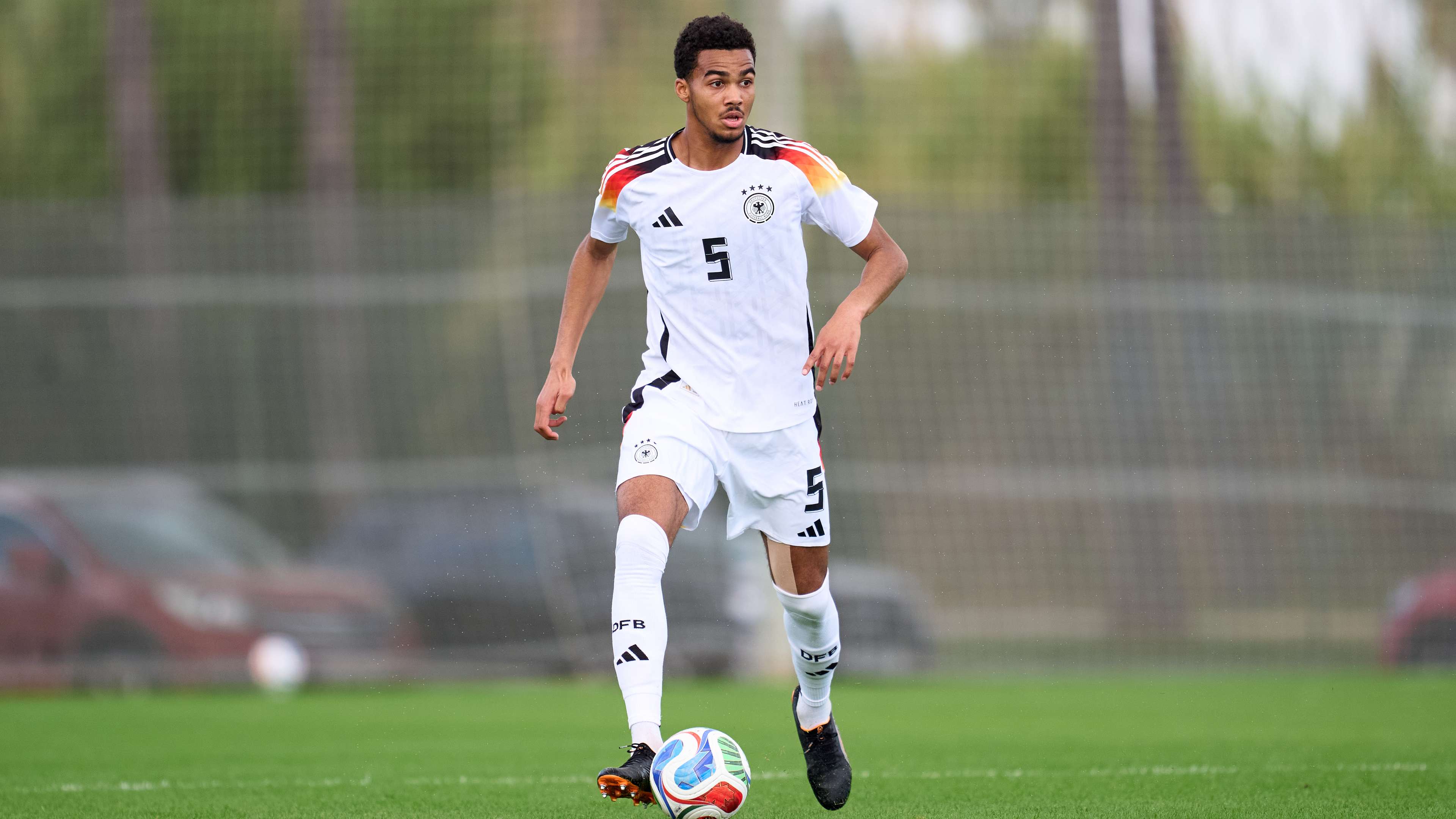
David Odogu arrived at AC Milan with the profile of a promising young defender and the potential to become a long-term asset. But after a difficult first season in Italy, the Berlin-born centre-back is now facing another challenge: finding regular minutes during his loan spell at Toulouse. For a player whose next steps depend on consistent senior football, limited opportunities in France could make this season a pivotal stage in his development.
Odogu, born in 2006, moved to Milan from Wolfsburg on the final day of the 2025 summer transfer window. The deal was reported to be worth around €6 million, with additional bonuses potentially increasing the fee. It was a bold move for a teenager who had made only a handful of Bundesliga appearances, but his reputation among Germany’s youth teams had helped establish him as one of the country’s notable defensive prospects.
A high-potential signing with limited senior experience
Milan’s decision reflected the club’s willingness to invest early in young talent. Odogu had not yet built an extensive record at first-team level, but his youth international experience and defensive promise suggested there was room for significant growth. The move offered him the chance to train in a demanding environment and learn from a club with ambitions in domestic and European competition.
However, potential alone does not guarantee a place in a senior starting XI. For a young defender, the transition from youth football to professional competition can be especially demanding. Centre-backs must make quick decisions under pressure, communicate effectively with teammates and handle opponents who are stronger, faster and more experienced. Those skills are usually sharpened through regular match action—not simply through training sessions.
Odogu’s first season with AC Milan proved difficult from a playing-time perspective. He did not feature under manager Massimiliano Allegri, leaving him without the senior opportunities that might have accelerated his adaptation to Italian football. The lack of appearances was not necessarily a verdict on his long-term ability, but it did make a change of environment increasingly important.
Why Toulouse became the next step
Last summer, Toulouse emerged as a potential solution. The French club is part of the wider RedBird Capital group, which also owns Milan, creating a familiar connection between the two sides. A loan to Ligue 1 was intended to give Odogu a clearer route to first-team football while allowing Milan to monitor his progress closely.
In theory, the arrangement offered benefits for everyone. Toulouse could add a young defender with a strong development profile, while Odogu could gain experience in a different league and adapt to the physical and tactical demands of senior football. Milan, meanwhile, could assess how he responds to regular competition before deciding on his longer-term role.
Yet a loan only fulfils its purpose if the player receives meaningful minutes. Odogu is currently struggling to secure playing time at Toulouse, raising questions about how effectively the move is meeting its original objective. Competition for places, tactical preferences and the defender’s readiness for the demands of Ligue 1 can all affect selection. A young player may need time to earn a coach’s trust, particularly in a position where mistakes can have an immediate impact on results.
Why regular minutes matter for a young defender
For Odogu, the most important measure of this loan may not be the club’s league position or the number of headlines he generates. It is whether he can build a steady sequence of appearances. Match experience helps defenders develop their positioning, timing in challenges and understanding of when to step forward or hold the line. It also exposes them to different types of forwards and changing game situations.
Training can support those skills, but competitive football adds pressure that cannot be fully reproduced on the practice pitch. A defender must respond when a team is protecting a narrow lead, playing out from the back under a press or recovering after losing possession. These repeated decisions are a major part of a young centre-back’s education.
There is also a confidence element. Players who are given a clear role can settle into a rhythm, learn their teammates’ habits and become more decisive. By contrast, irregular appearances can make it harder to build momentum. That does not mean Odogu’s Toulouse spell is already a failure; loans can take time to develop, and opportunities may arise through injuries, rotation or changes in the team’s tactical plan.
What happens next for Odogu and Milan?
The coming months will offer a clearer picture of Toulouse’s intentions. If Odogu begins to feature more regularly, the loan could still provide valuable experience in a competitive league. Even a gradual increase in involvement would help him adjust to the pace and physicality of senior football. If his minutes remain limited, Milan may need to reconsider how best to structure his next stage of development.
Possible options could include keeping him in France and allowing more time for adaptation, arranging another loan where a defined role is available, or bringing him back to Milan for further assessment. Any decision will depend on his progress in training, the club’s defensive needs and the coaching staff’s view of his readiness. For a player who joined with considerable promise but little top-level experience, the priority should be a pathway that combines challenge with genuine opportunities to play.
For supporters following the football prediction and transfer conversation around Milan and Toulouse, Odogu’s situation is worth watching, although it is too early to draw firm conclusions. His career remains at an early stage, and one difficult spell does not erase the potential that made him an attractive signing. The key question is whether Toulouse can turn the loan into the regular senior exposure Milan originally sought.
Odogu’s story also highlights a wider challenge facing elite clubs: identifying talented teenagers is only the first step. Development depends on the right environment, patient coaching and competitive minutes at the appropriate level. His move from Wolfsburg to Milan, followed by a loan to Toulouse, was designed to accelerate that process. Whether the plan succeeds will depend on what happens on the pitch in the weeks ahead—and, above all, whether the young defender gets the chance to show what he can do.