
Martinez dismissal deepens Manchester United’s Stamford Bridge setback
Manchester United’s visit to Stamford Bridge turned into a damaging afternoon after Chelsea struck early in the second half and Lisandro Martinez was sent off during a decisive spell of the match. The Argentine defender’s dismissal left United chasing the game with ten men, while Chelsea capitalised to strengthen their position in this Premier League encounter.
After a goalless first half, United appeared to have kept Chelsea at bay. But the visitors’ defensive organisation quickly unravelled after the break, allowing Chelsea to take control. A sharp individual goal from Rogers in the 50th minute gave the hosts the lead, and Martinez’s subsequent red card and Cole Palmer’s penalty made United’s task considerably harder.
Rogers punishes United after the break
The opening 45 minutes had offered little to separate the sides on the scoreboard. United had managed to reach half-time without conceding, but their concentration faltered almost immediately after play resumed. Rogers took advantage of the space in front of him, advancing through midfield and beyond the United defence with striking ease.
United’s players struggled to close him down or disrupt his run. Rogers carried the ball into a dangerous position before lifting a composed finish over goalkeeper Lammens. The goal was a product of individual quality, but it also exposed the gaps and hesitation in United’s defensive shape. Lammens had little chance of preventing the finish once Rogers had created the opportunity.
Conceding so soon after the interval changed the character of the contest. United had to abandon some of the caution that had helped keep the first half level, while Chelsea gained confidence and room to attack. For supporters weighing up the match’s football prediction, the goal was a major turning point: Chelsea had the lead, momentum and the advantage of playing at home.
Martinez’s yellow card becomes a turning point
Martinez was booked in the 59th minute after Rogers again got away from him. Unable to stop the Chelsea attacker cleanly, the defender brought him down to halt the move. The yellow card placed Martinez under immediate pressure, particularly with United already trailing and Chelsea continuing to threaten in the final third.
The next major incident arrived inside United’s penalty area. Following a corner, Fofana went to ground while holding his face, prompting Chelsea players to appeal for a penalty. The referee initially awarded another corner, but the incident was referred for a VAR review of Martinez’s challenge.
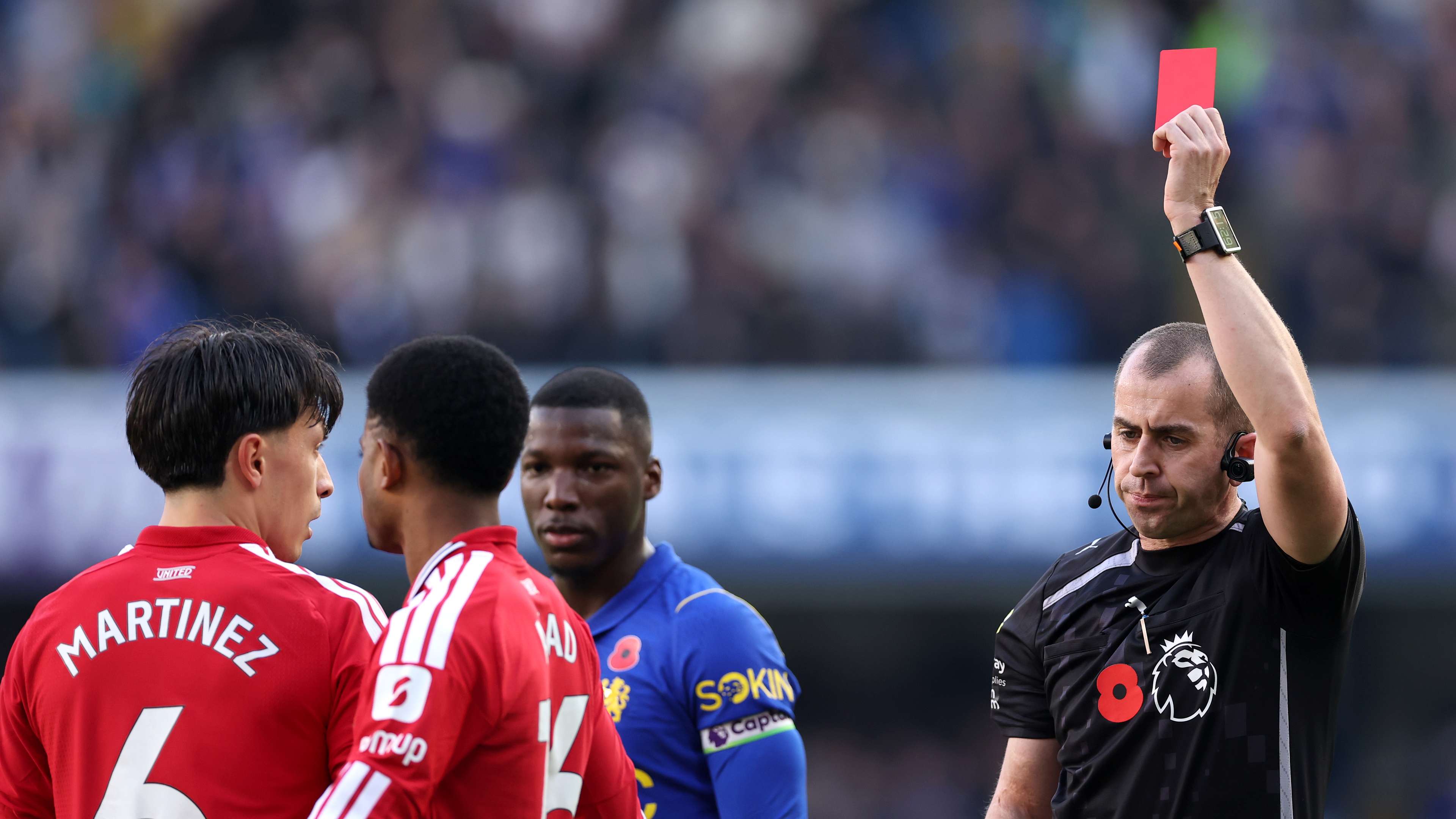
After checking the footage, the referee changed the decision and awarded Chelsea a penalty. Martinez was shown a second yellow card, meaning he had to leave the pitch. The sequence transformed an already difficult situation into a crisis for United: they were behind on the scoreboard, down to ten players and facing a spot-kick against them.
Palmer converts as United’s challenge grows
Cole Palmer took responsibility from the penalty spot and finished confidently. Lammens managed to get a hand to the effort, but could not keep the ball out. Chelsea’s second goal gave the home side a more comfortable cushion and left United with little margin for error.
For Michael Carrick, the timing could hardly have been worse. His side had entered the second half level, but within a short period they had conceded, lost Martinez and fallen further behind. Playing with ten men meant United had to cover more ground and defend with even greater discipline, while also trying to find a route back into the match.
The episode is likely to prompt scrutiny of United’s defensive response. Rogers’ opener highlighted the danger of allowing an attacker to carry the ball through midfield without pressure, while the penalty incident underlined how quickly a challenge inside the box can become decisive. Martinez’s first booking also made his later involvement in the VAR review particularly costly.
What the result means for both sides
For Chelsea, the sequence offered a clear example of how pressure can build after a breakthrough goal. Rogers’ finish shifted the momentum, and the hosts then forced United into increasingly difficult defensive decisions. Palmer’s penalty gave Chelsea a valuable second goal, while the numerical advantage made it harder for the visitors to mount a sustained response.
United, meanwhile, will need to assess both their defensive structure and their discipline. A single moment does not explain an entire performance, but the speed with which the match turned will concern the coaching staff. Against strong Premier League opponents, losing control of midfield and leaving defenders exposed can invite repeated attacks—and a red card can make recovery even more complicated.
For fans looking ahead to the next fixture, this match is a reminder that football predictions should account for more than recent form or team reputation. Momentum, defensive availability, home advantage and the possibility of disciplinary incidents can all influence a game. United’s ability to respond in their upcoming matches will depend on how quickly they regroup after a setback of this kind.
Martinez’s future adds another storyline
Martinez’s dismissal also arrives amid reported interest in his future. Atletico Madrid are said to be preparing to compete with Barcelona for the defender’s signature. His contract is due to expire in the summer of 2027, a timeline that could make the next year important for both the player and Manchester United as they consider whether to negotiate an extension or assess potential offers.
Any transfer decision will depend on more than one difficult afternoon. Martinez remains an established international defender, but his availability, form and role within United’s plans will all matter as the club weighs its options. For now, the immediate focus is on the consequences of the Chelsea match: a costly defensive lapse, a penalty conceded after VAR intervention and a dismissal that left United facing a steep uphill battle at Stamford Bridge.