
Referee Explains Atlético Madrid’s Disallowed Goals in La Liga First
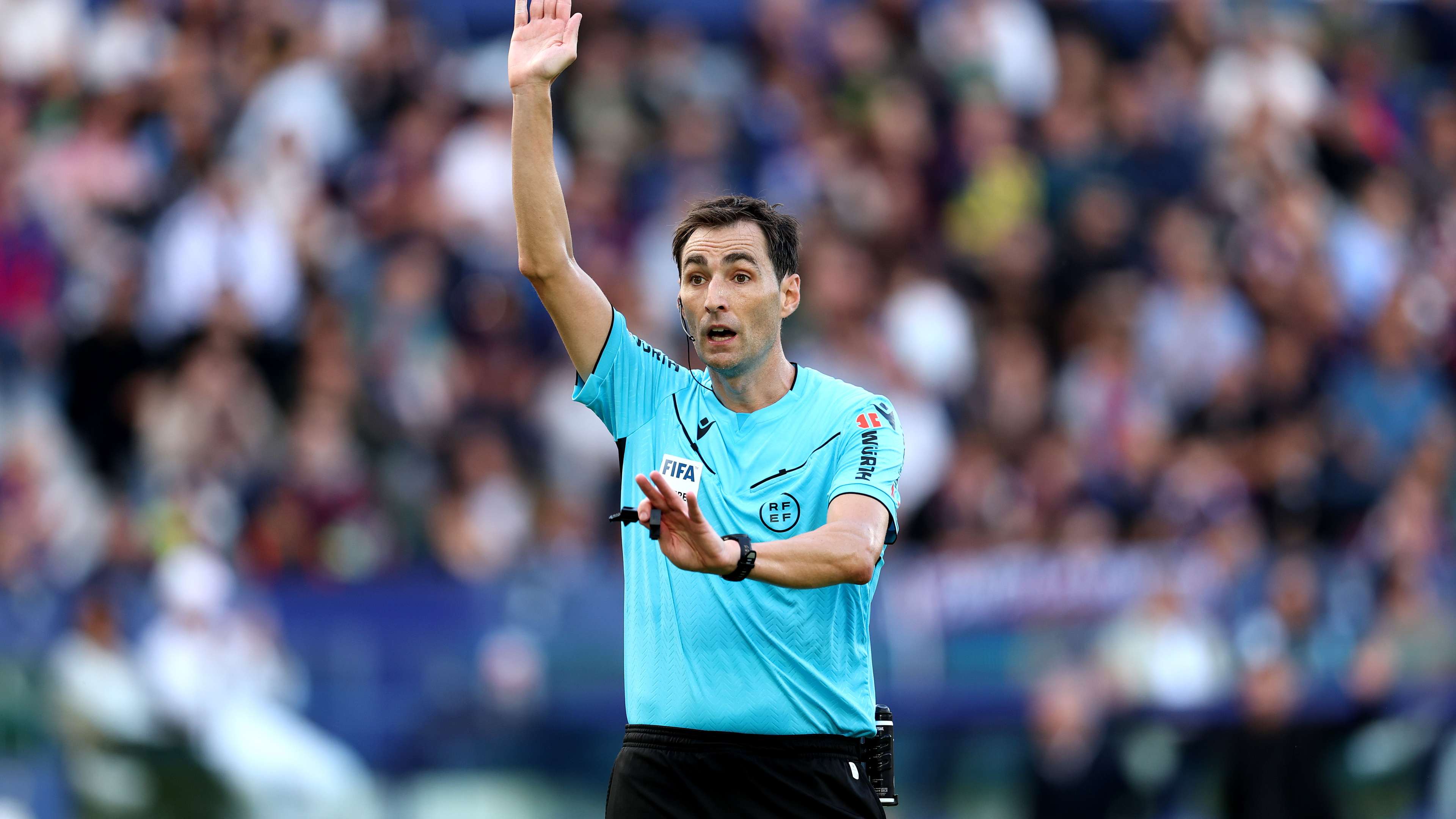
Referee Ricardo de Burgos Bengoetxea has publicly explained several of the most contentious decisions from Levante’s meeting with Atlético Madrid at the Ciutat de València, including why two Atlético goals were ruled out. His post-match comments marked a first for La Liga: match officials were given a platform to clarify major incidents directly to viewers.
The fixture produced debate over offside technology, an on-field decision to disallow a goal, and disciplinary action involving Levante’s coach and a member of the club’s equipment staff. De Burgos addressed those moments on Movistar as part of a joint initiative involving La Liga, the Spanish Football Federation and the referees’ union. The project allowed referees to discuss controversial calls from two matches played that day.
VAR intervention overturns Atlético’s first goal
De Burgos began his explanation with a message of solidarity for the victims of an accident in Toledo and their families. He then turned to Atlético’s first disallowed goal, explaining that the officials initially allowed play to continue before the video assistant referee team identified an offside offence.
“There was an offside that we allowed to continue on the pitch,” the referee said. “From the video assistant referee room they told us that the system indicated an offside, and we simply had to correct the play and change the goal to an offside.”
The explanation highlights how VAR can intervene when a goal-scoring sequence contains a potentially decisive offside. Rather than stopping play immediately, officials may allow an attack to finish and review the incident afterward. If the review confirms an infringement, the goal is disallowed and the appropriate restart is awarded.
Such decisions can be difficult for supporters to assess in real time, particularly when the offside is close or involves a player who does not directly touch the ball. De Burgos’ comments were intended to make the process clearer by outlining the sequence: the on-field team allowed the play to develop, VAR checked the incident, and the referee amended the decision based on the review.
Second goal ruled out following an on-field decision
The referee described Atlético’s second disallowed goal differently. In that incident, the decision was made on the pitch first, with the technology subsequently confirming the officials’ assessment.
“In the second incident we took the decision on the pitch to disallow the goal, and the system confirms that we were right,” De Burgos said.
The distinction matters because VAR is often discussed as though it makes every major decision. In practice, the referee and assistant referees remain responsible for making calls during the match. Video review is designed to support the on-field team in specific situations, including goals, penalties, direct red cards and cases of mistaken identity. In this instance, according to De Burgos, the officials had already judged that the goal should not stand, and the technology backed up that call.
For Atlético, losing two goals to separate decisions made the officiating a central talking point. For viewers, the referee’s explanation offered useful context about how the two incidents were handled and why the same outcome—no goal—came through different decision-making routes.
Levante coach and staff member disciplined
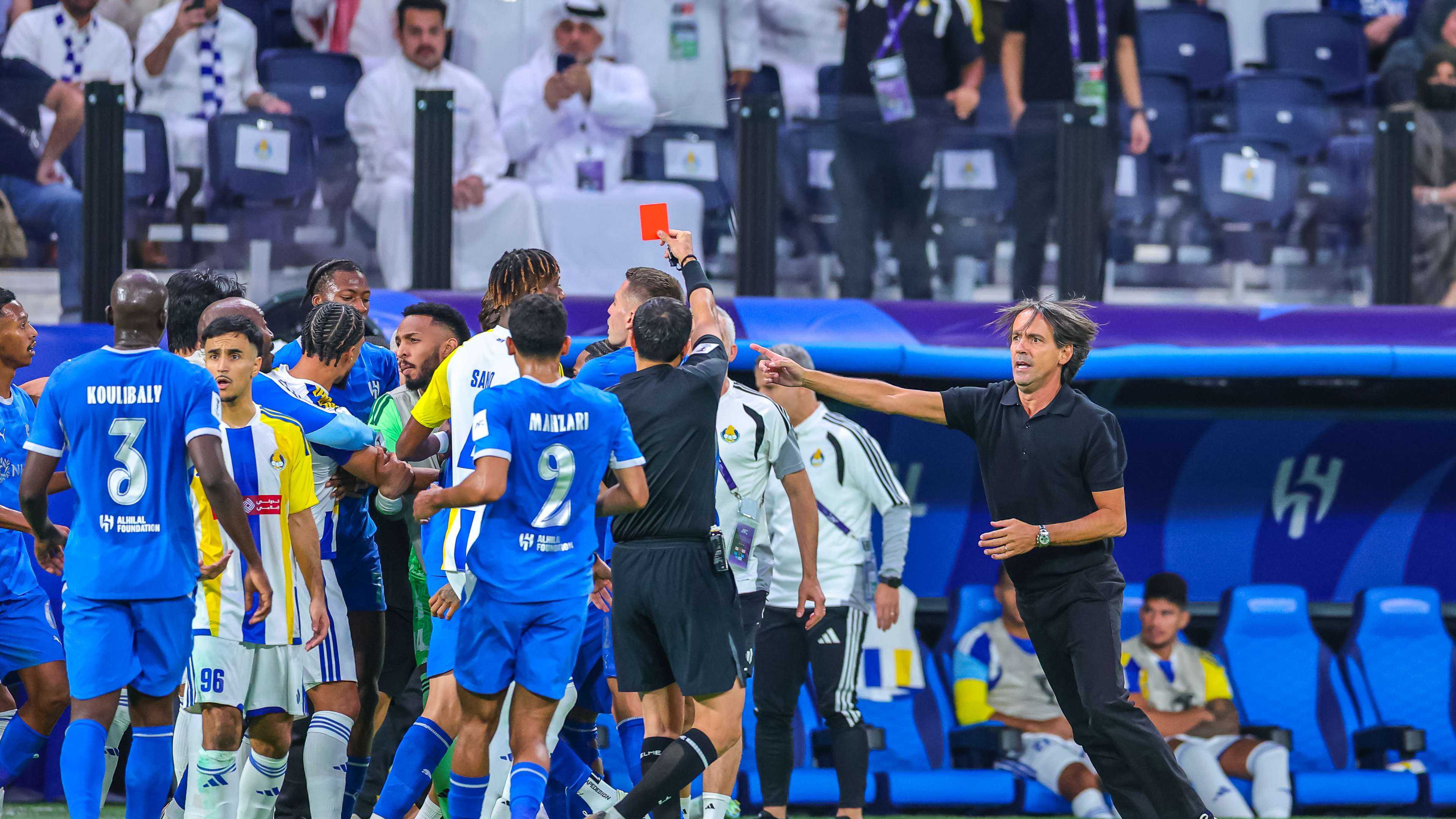
De Burgos also explained the disciplinary action taken against Levante personnel. Head coach Luis Castro received a yellow card after, in the referee’s account, going beyond acceptable limits in his comments. A member of the club’s equipment staff was sent off following repeated complaints and conduct the officials considered improper.
“We received several complaints, the last of them relating to improper conduct, and we took the decision to send him off in accordance with the regulations,” De Burgos said.
Technical-area discipline is a recurring source of tension in football. Coaches and staff are expected to manage their reactions while challenging decisions, and referees can issue cautions or dismissals when behaviour crosses the line set out in the competition’s rules. De Burgos’ account framed the staff member’s dismissal as the result of repeated complaints, rather than a single isolated exchange.
Castro’s booking and the staff member’s red card added another layer to a match already shaped by controversial goal decisions. The referee’s comments did not remove the frustration that can follow such incidents, but they did provide an official account of why disciplinary action was taken.
VAR review finds no offence in Ivan Romero incident
Another moment reviewed after the match involved Levante forward Iván Romero, who complained that he had been caught by an elbow. De Burgos confirmed that contact occurred behind the player’s back, but said VAR examined the footage and concluded that the action was part of normal play. The review found no offence that required a penalty or other intervention.
Contact alone does not automatically constitute a foul. Officials must consider the nature of the movement, its force and whether the player acted carelessly, recklessly or with excessive force. In this case, the referee said the review did not meet the threshold for a punishable offence.
What the referee’s explanation means for La Liga
The post-match broadcast represents a notable step in La Liga’s efforts to improve transparency around refereeing. Referees rarely speak publicly about individual decisions, so a direct explanation can help fans understand how rules and technology were applied. It also gives clubs and supporters a clearer account of what officials saw, even if they continue to disagree with the final outcome.
For anyone assessing the match or making a football prediction about Atlético and Levante’s next fixtures, the key takeaway is that the game involved several separate officiating judgments—not one single VAR controversy. The first Atlético goal was overturned after a VAR offside alert; the second was disallowed by the on-field officials and supported by technology; and the Romero incident was reviewed without a foul being awarded.
That distinction is important when evaluating a team’s performance. Disallowed goals can shape the result and influence post-match discussion, but they do not necessarily tell the whole story of a side’s attacking display or defensive resilience. De Burgos’ explanations provide a more detailed picture of how the key moments were assessed—and signal that Spanish football authorities may be willing to offer supporters more insight into major refereeing calls in the future.