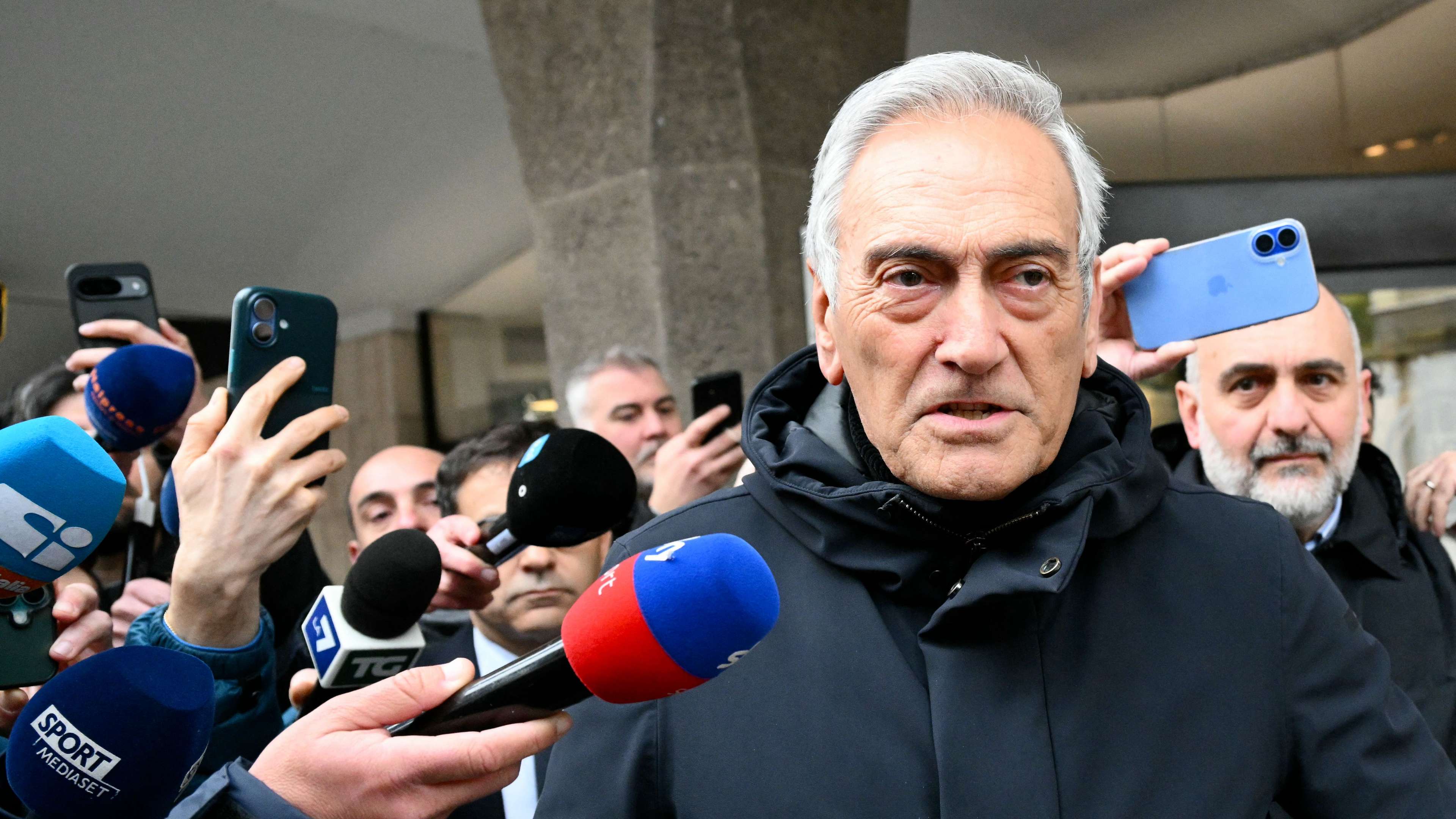

Italian Football Federation president Gabriele Gravina has opened up about Italy’s heartbreaking absence from the World Cup and discussed the factors that led to their failure to qualify for the 2026 tournament. Despite praising manager Gennaro Gattuso for instilling a strong team spirit, Gravina acknowledged that certain players did not perform as expected during the play-offs.
Gravina, who had initially announced his resignation following Italy’s World Cup elimination, decided to stay on to oversee the federation’s operations until a new president is elected on 22 June. Gattuso took over as Italy’s head coach in June 2025, succeeding Luciano Spalletti, but was unable to guide the Azzurri to the World Cup.
In an interview with Corriere della Sera, Gravina commended Gattuso as a talented coach and a great person who managed to create a positive atmosphere within the team despite the limited preparation time. However, he admitted that this alone was not enough to secure qualification. Gravina stated, “On paper we were stronger than Northern Ireland and Bosnia. Some players were carrying injuries, while others were in top form but failed to deliver on the pitch.”
Legendary goalkeeper Gianluigi Buffon also stepped down from his role as team manager, but Gravina remains optimistic about Buffon’s future in coaching, citing his extensive experience and dedication to professional development. Gravina expressed his belief that Buffon has the potential to excel as a coach and make significant contributions to the sport.
Former Italy manager Luciano Spalletti has proposed a rule to include at least one Under-19 player in every Serie A starting line-up, aimed at nurturing young talent within Italian football. However, Gravina clarified that such a regulation cannot be enforced by law and can only be encouraged through incentives for Italian youth academies. He mentioned the possibility of offering tax breaks as a way to promote the development of young players, although the government has not yet approved such measures.
Looking ahead, the Italian Football Federation is focused on rebuilding the national team and preparing for future competitions. As the search for a new president continues, the federation remains committed to supporting Italian football and fostering the growth of talented players at all levels.
Italy’s disappointing World Cup campaign has sparked discussions about the team’s performance, coaching strategies, and the development of young talent in Italian football. While the Azzurri may have missed out on the 2026 World Cup, the federation is determined to learn from this experience and work towards a stronger future for Italian football.
Italy’s World Cup Absence: A Turning Point for Italian Football
Italian Football Federation president Gabriele Gravina’s reflections on Italy’s heartbreaking absence from the 2026 World Cup shed light on the challenges faced by the national team. Despite an optimistic start under manager Gennaro Gattuso, Italy’s journey to qualify for the prestigious tournament was marred by unexpected setbacks.
Gravina’s decision to continue leading the federation until a new president is elected demonstrates his commitment to steering Italian football in the right direction. While acknowledging Gattuso’s efforts in fostering team spirit, Gravina also highlighted the underperformance of certain players during the crucial play-offs, which ultimately led to Italy’s failure to secure a spot in the World Cup.
The departure of legendary goalkeeper Gianluigi Buffon from his role as team manager marked the end of an era, but Gravina remains hopeful about Buffon’s potential as a future coach. With Buffon’s wealth of experience and passion for the game, there is optimism that he could play a pivotal role in nurturing young talent and shaping the next generation of Italian football stars.
Proposals put forth by former Italy manager Luciano Spalletti to integrate more Under-19 players into Serie A starting line-ups reflect a broader effort to rejuvenate Italian football. While Gravina clarified that enforcing such a rule may be challenging, the idea of incentivizing clubs to prioritize youth development through measures like tax breaks could pave the way for sustainable growth in Italian football.
Looking ahead, the Italian Football Federation is focused on rebuilding the national team and preparing for upcoming competitions. As the search for a new president continues, the federation remains dedicated to fostering a supportive environment for talented players across all levels of the sport.
Italy’s disappointing World Cup campaign has sparked conversations about the team’s performance, coaching strategies, and the overall trajectory of Italian football. While the absence from the 2026 World Cup served as a wake-up call for the nation, it also presents an opportunity for reflection, learning, and growth. By embracing these challenges and implementing strategic changes, Italy aims to emerge stronger and more competitive in the international football scene.
As Italian football evolves and adapts to new realities, the federation’s unwavering commitment to excellence and development will be key in shaping a brighter future for the sport in Italy. The lessons learned from the World Cup disappointment will serve as a foundation for building a more resilient and successful national team in the years to come.