
Inter Take Command Against Feyenoord After Bisseck and Esposito Strike
Inter went into the break with a valuable 2-0 lead over Feyenoord in their fourth match of the 2026/27 UEFA Champions League campaign. Goals from defender Yann Bisseck and forward Pio Esposito gave the Italian side a strong platform in a contest that demanded patience, persistence and composure.
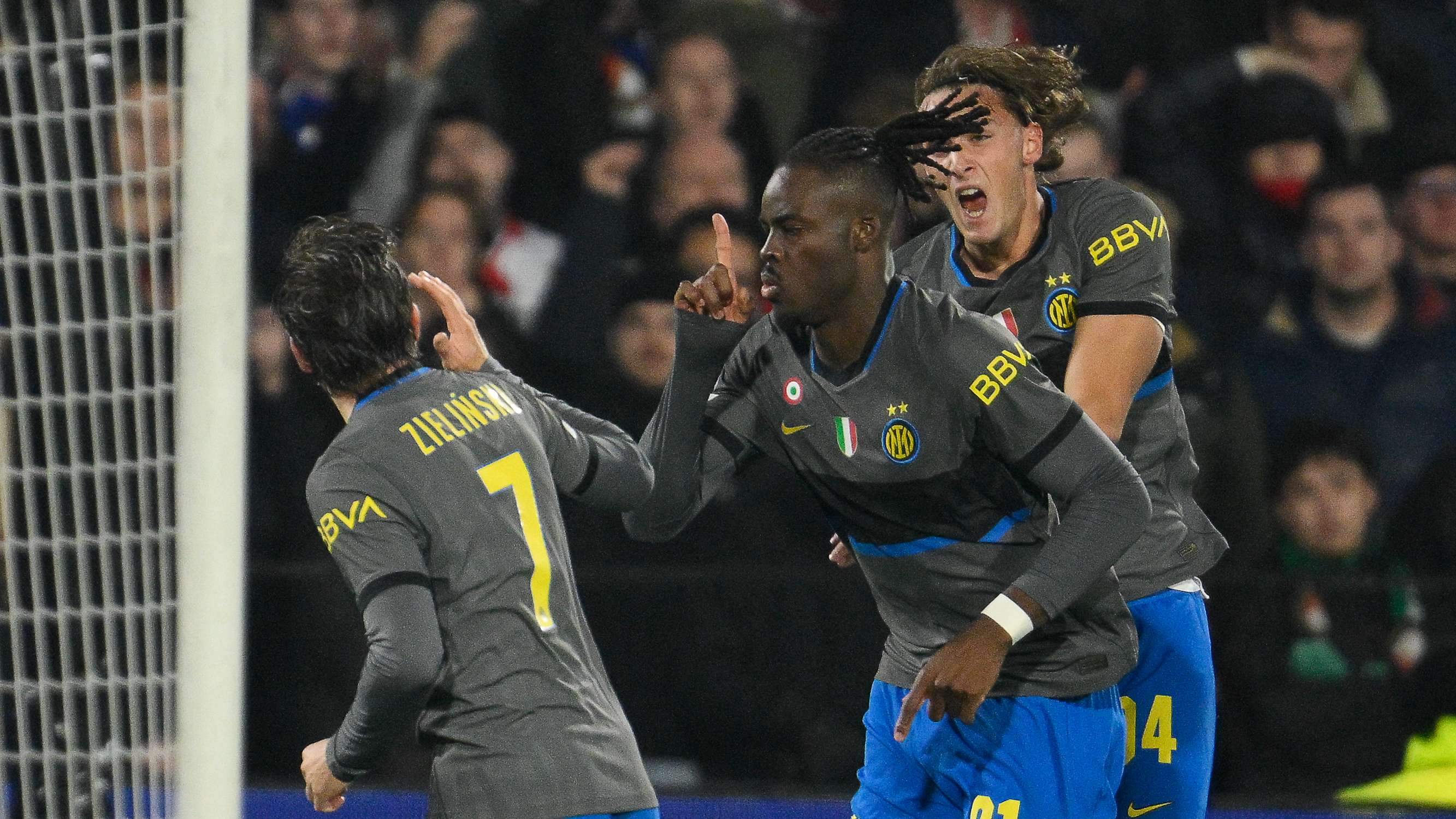
The two goals were more than a simple reward for Inter’s attacking pressure. Both arrived after hard-fought spells in which Feyenoord worked to disrupt the hosts and limit their opportunities. Their contrasting celebrations also offered a glimpse into what the goals meant to the scorers: Esposito reacted with a mixture of frustration and elation, while Bisseck marked a landmark moment in his career with a pointed celebration after scoring his first Champions League goal.
A breakthrough built on persistence
Inter’s opening goal came from Bisseck, whose strike put the home side in front and gave the German defender a personal milestone on one of European football’s biggest stages. Scoring a first Champions League goal is a significant achievement for any player, but it can carry extra weight for a defender, who is often judged first on positioning, discipline and defensive work rather than goals.
Bisseck’s celebration reflected the intensity of the occasion. Rather than treating the moment as routine, he showed how much the goal mattered after a demanding first half. It was a meaningful contribution at both team and personal level: Inter gained the lead, while Bisseck added a memorable achievement to his growing record.
For Inter, the opener also changed the rhythm of the match. A goal can force an opponent to reconsider its approach, particularly in a Champions League fixture where every point and every goal may matter in the wider group-stage picture. Feyenoord now had to balance the need to respond with the risk of leaving space for Inter to exploit.
Esposito adds a second before the interval
Inter strengthened their position when Esposito found the net to make it 2-0. The forward’s reaction captured the emotional complexity of the moment, combining visible anger with joy. Such a response can reflect the pressure surrounding a difficult match, the effort required to create a scoring chance or the release that comes when persistence finally produces a result.
Esposito’s goal gave Inter a more comfortable cushion heading into half-time, but it did not make the task simple. A two-goal advantage is important in European competition, yet it still demands concentration, especially against a side that can raise its tempo after the restart. Inter would need to manage possession carefully, protect the space in front of their defence and avoid giving Feyenoord an early route back into the contest.
What the scoreline means for the second half
At 2-0, Inter had reason to be pleased with their first-half work. The hosts had converted key moments into goals and could approach the second half with greater control than if the match had remained level. Their challenge was to maintain the same focus without becoming overly cautious. Sitting too deep could invite pressure, while committing too many players forward could offer Feyenoord opportunities on the counterattack.
Feyenoord, meanwhile, faced a clear tactical test. The Dutch side needed to find a way to create more threatening attacks while remaining alert to Inter’s ability to punish mistakes. A quick goal after the break could have changed the atmosphere and renewed the visitors’ belief. Without one, the hosts’ advantage would become increasingly difficult to overcome as the clock ran down.
The match also underlined the importance of contributions from different parts of the team. Bisseck’s goal showed how defenders can influence a Champions League fixture beyond their work at the back, while Esposito’s strike highlighted the value of a forward who can turn pressure into a decisive finish. For Inter, that variety can be a major asset across a demanding European schedule.
Champions League prediction: Inter in control, but not secure
Any football prediction at half-time has to account for both the score and the match situation. Inter’s 2-0 lead made them clear favourites to take control of the result, particularly with the confidence that comes from scoring twice before the break. However, the advantage was not a guarantee. Feyenoord still had time to respond, and a single goal could quickly make the closing stages tense.
Inter’s most effective route to protecting the lead would be to stay organised, press selectively and make good decisions when moving the ball forward. Keeping Feyenoord occupied in their own half could reduce the visitors’ chances to build sustained pressure. At the same time, Inter would need to avoid unnecessary fouls or turnovers in dangerous areas.
For supporters following the fixture, Bisseck and Esposito provided the defining moments of the first half. Their goals gave Inter a commanding position, while their very different celebrations added personality to a high-stakes European night. The second half would determine whether the Italian side could turn that promising advantage into a result and strengthen its position in the 2026/27 Champions League campaign.
Match snapshot
Competition: UEFA Champions League, 2026/27 season
Match: Inter vs Feyenoord, Matchday Four
Half-time score: Inter 2-0 Feyenoord
Scorers: Yann Bisseck and Pio Esposito