
Mbappé Faces a Clear Message After Ballon d’Or Setback
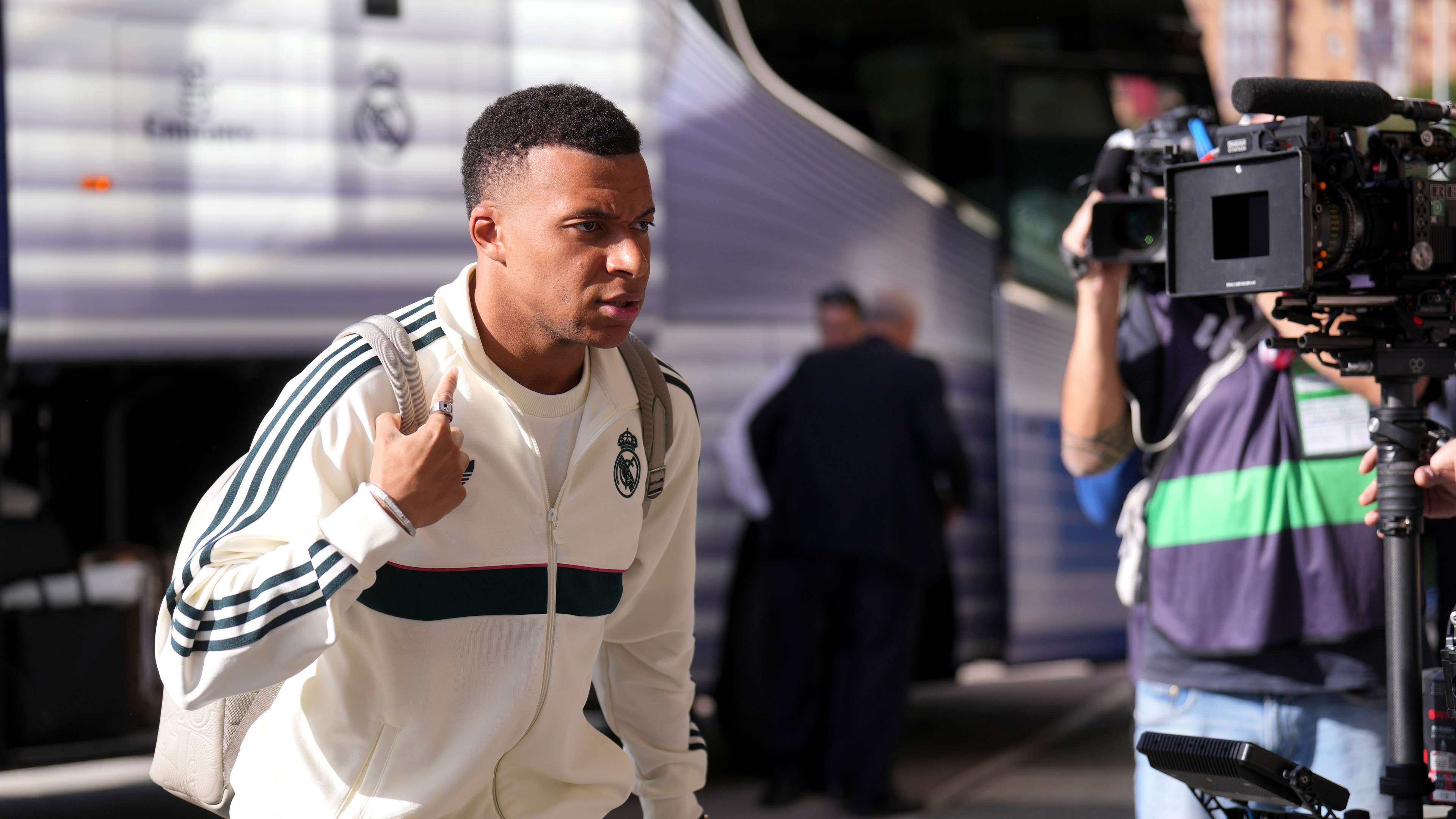
The debate over the Ballon d’Or has continued in France after Kylian Mbappé finished second, 28 points behind winner Harry Kane. For a player widely regarded as one of football’s defining talents, the result has prompted questions about what separates individual brilliance from the achievement voters ultimately reward.
Former France international Bixente Lizarazu has offered a pointed assessment of Mbappé’s campaign, arguing that the forward’s public image and emphasis on individual recognition may have weakened his case. Speaking on the French television programme Telefoot, the 1998 World Cup winner contrasted Mbappé’s leadership during the World Cup with what he saw as a less convincing approach during the Ballon d’Or conversation.
Lizarazu contrasts World Cup leadership with individual focus
Lizarazu praised Mbappé’s performances for France on the international stage, describing him as a consistent leader who carried an important message for the squad. In his view, the forward’s contribution to the national team showed that he could combine elite ability with a strong sense of responsibility.
But Lizarazu said he was less impressed by the way Mbappé handled the period surrounding the Ballon d’Or. He felt the striker appeared to lose perspective, shifting from the collective values associated with France’s World Cup campaign towards a more individual-centred outlook.
“He drifted towards an excessively individual stance, lacking humility, focusing on promoting himself and somewhat ignoring others,” Lizarazu said. “He gave the impression that he was the only one who mattered and that no one else existed.”
The criticism is not simply about how often a player speaks about personal awards. The Ballon d’Or is decided by journalists from around the world, and voters weigh a range of factors, including performances, trophies, consistency and a player’s overall influence. Lizarazu acknowledged that he did not believe Mbappé’s attitude directly determined the final result, noting that the decision rested with 100 journalists from 100 countries.
Why team success remains central to the Ballon d’Or debate
Mbappé’s second-place finish, just 28 points behind Kane, underlines how narrow the margin can be in an award shaped by different interpretations of a season. Individual statistics matter, but they are rarely considered in isolation. Voters may also look at decisive moments, collective achievements and whether a player’s performances helped turn a strong team into a successful one.
That distinction is at the heart of Lizarazu’s message. A forward can score regularly and produce memorable highlights, yet the wider assessment often comes down to the effect those contributions have on results. In football, goals are valuable, but their timing and impact can be just as important as the total.
This is especially relevant for Mbappé, whose reputation brings intense scrutiny. His speed, finishing and ability to change a match make him a constant focus for supporters and media. That attention can raise expectations beyond the pitch, too: every statement, celebration and discussion of personal ambitions is likely to be examined as part of the wider story surrounding his season.
A call to refocus on France
Lizarazu urged Mbappé to return to the French national team with a renewed emphasis on collective work. He argued that France’s success depends on the shared values and coordination of the squad, rather than the achievements of one individual—even one as influential as Mbappé.
The former defender’s comments also arrive against a difficult backdrop. According to Lizarazu, Mbappé has come through a period without winning a title with either his club or national team. That does not erase his individual quality, but it does sharpen the discussion about how personal performances translate into silverware.
For France, the challenge is to make the most of Mbappé’s extraordinary attacking ability while maintaining a balanced team structure. A leading player can shape a side through goals and creativity, but also through work off the ball, communication and the willingness to bring teammates into the game. Those qualities become particularly important in major tournaments, where small lapses in cohesion can decide a match.
What Mbappé’s next chapter could mean
Lizarazu’s final point was concise: “You may score a lot of goals, but you have to help your team win. That is what matters most.” It is a familiar principle, but one that carries particular weight for a player whose individual numbers are often compared with those of the world’s best.
For Mbappé, the next phase offers an opportunity to answer the criticism through performances rather than debate. Consistent displays, visible leadership and success with his teams could strengthen his case in future awards discussions. Just as importantly, a more collective approach could help France turn its considerable talent into trophies.
Any football prediction about Mbappé’s future should account for both sides of the equation. His ability to score and create chances makes him capable of influencing the biggest games, but awards and titles depend on more than individual output. Team form, tactical balance, decisive performances and the contributions of those around him will all shape what comes next.
The Ballon d’Or result has therefore become more than a close vote between two elite players. It has reopened a broader conversation about leadership, humility and the relationship between personal excellence and team achievement. Lizarazu’s message is a challenge, but also a clear path forward: keep the ambition, use the talent for the group and make winning the priority.