
New Zealand Face Fresh Fast-Bowling Setbacks as India ODI Series Slips Away
New Zealand’s injury troubles have deepened at a critical point in their one-day international campaign against India. Lockie Ferguson will miss the final two ODIs, while Blair Tickner is unavailable for the same matches under the International Cricket Council’s mandatory stand-down rules after he was struck on the helmet in Wellington.
The setbacks leave the hosts with fewer specialist pace options as they try to recover from a 0-2 deficit in the five-match series. New Zealand must win the third ODI in Hamilton to keep their hopes of taking the series alive, but their selection plans remain shaped by injuries, player workloads and the approaching Test campaign.
Ferguson ruled out with calf injury
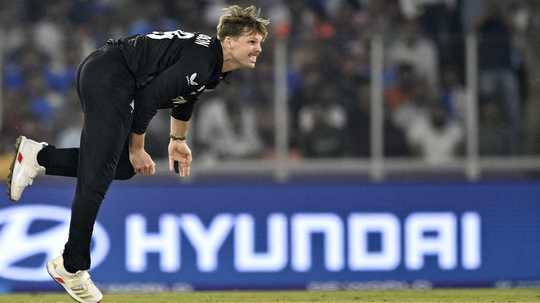
New Zealand Cricket confirmed that Ferguson has not fully recovered from a low-grade tear in his right calf. The fast bowler sustained the injury during the T20I series, and the remaining recovery time means he cannot take part in either of the last two ODIs.
Ferguson’s absence removes an experienced, high-impact option from New Zealand’s attack. His pace and ability to create pressure in the middle overs can be particularly valuable in a series where the side needs wickets as well as control. With India already leading, the hosts will need other bowlers to take on larger roles and find ways to disrupt the visitors’ batting rhythm.
Tickner cleared of concussion but must sit out
Tickner was substituted for Matt Fisher during the second ODI after taking a blow to the helmet. Although he has been cleared of concussion, he must observe the ICC’s seven-day stand-down period for a head impact. That precaution rules him out of the third and fourth matches.
The distinction is important: Tickner’s absence is not the result of a concussion diagnosis, but of the required safety protocol. Such stand-down periods are designed to give players time to recover and to reduce the risks associated with returning too soon after a blow to the head.
Bowling all-rounder Kristian Clarke has been brought into the squad as cover. Clarke was already named for the final two ODIs, and his call-up ahead of the Hamilton match gives New Zealand another option while the pace attack is stretched. His inclusion also offers the team a chance to balance its bowling resources without relying solely on specialist fast bowlers.
Matt Henry’s return targeted for Mount Maunganui
Matt Henry is also working his way back from injury, with New Zealand’s medical staff advising him to target a return for the fourth ODI in Mount Maunganui. Henry had been involved in a collision with Devon Conway before the series. He was later cleared of concussion, but also sustained a low-grade tear in his right quadriceps during the second T20I.
His potential return would be a timely boost, although New Zealand will need to manage his recovery carefully. Henry is an important part of the team’s pace attack, and rushing him back before he is ready could create further complications during a demanding international schedule.
Kyle Jamieson and Henry had been expected to join New Zealand’s Test camp in Wellington after the third ODI. Both will now remain with the ODI group for the fourth match, reflecting the team’s immediate need for bowling support. New Zealand Cricket has also confirmed that two additional players will be added to the squad for the final two games.
Test preparations add another selection challenge
New Zealand’s planning extends beyond the ODI series. Tom Latham, Daryl Mitchell, Henry Nicholls, Glenn Phillips and Nathan Smith are due to travel to Wellington on Wednesday, the day after the third ODI, to begin preparations for the upcoming Test series. The Test squad is expected to be announced soon.
That transition creates a delicate balancing act for selectors. New Zealand need to field a competitive side against India while also preparing key players for the longer format. The changing availability of players means the composition of the ODI group may shift from match to match, especially if injury recoveries progress as hoped.
The fast-bowling disruption is part of a wider injury list. Conway has been ruled out of the series after suffering a concussion, while Rachin Ravindra is unavailable with a shoulder injury and Mark Chapman is sidelined by a hamstring problem. Those absences reduce New Zealand’s options across both batting and bowling, placing added responsibility on the players who remain fit.
New Zealand’s must-win prediction for Hamilton
New Zealand enter the third ODI under considerable pressure after losing the opening two matches. The hosts also lost the preceding T20I series 2-3, making the current tour a challenging one across formats. A victory in Hamilton would keep the ODI contest alive and provide a lift before the series moves to Mount Maunganui. A defeat, however, would hand India an unassailable lead.
Any cricket prediction for the Hamilton match must account for New Zealand’s depleted resources, but injuries alone will not determine the result. The hosts will need their available bowlers to make early inroads, while the batting group must build partnerships and avoid leaving too much work for the lower order. India, meanwhile, will aim to maintain the consistency that has put them in control of the series.
With several players moving between the ODI and Test groups, selection continuity may be difficult for New Zealand. The team’s immediate challenge is to turn that uncertainty into a focused performance: execute plans with the players available, manage workloads wisely and keep the series alive.
New Zealand squads
Third ODI: Mitchell Santner (captain), Michael Bracewell, Kristian Clarke, Jacob Duffy, Matt Fisher, Kyle Jamieson, Nick Kelly, Tom Latham, Daryl Mitchell, Henry Nicholls, Glenn Phillips, Tim Seifert, Nathan Smith, Will Young.
Fourth ODI: Mitchell Santner (captain), Finn Allen, Michael Bracewell, Kristian Clarke, Jacob Duffy, Matt Fisher, Dean Foxcroft, Mitchell Hay, Matt Henry, Kyle Jamieson, Nick Kelly, Tim Seifert, Will Young.