
Harry Kane’s Ballon d’Or Triumph: Did Rival Statements Backfire on Mbappé and Yamal?
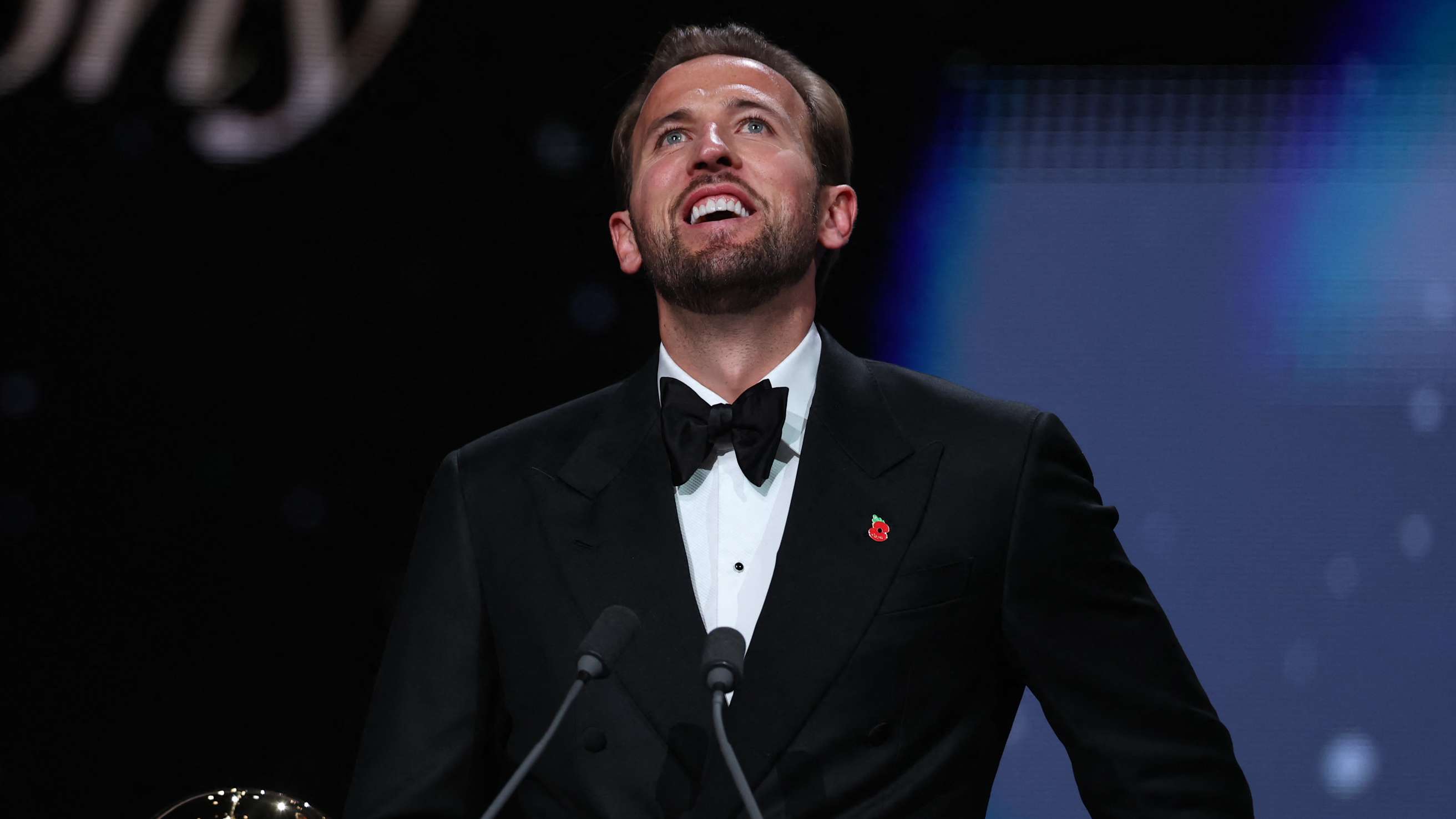
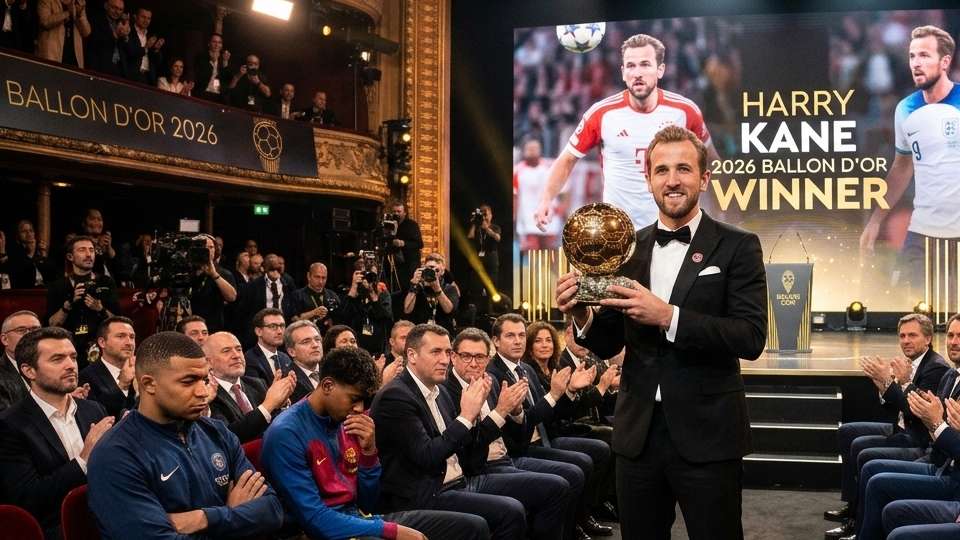
Harry Kane’s reported crowning as the 2026 Ballon d’Or winner was more than a reward for an outstanding season of football. It also revived debate about how a player’s public comments can shape the story around a closely contested award. Did Kylian Mbappé and Lamine Yamal’s confident remarks help make their cases—or unintentionally strengthen Kane’s position?
There is no evidence that either player’s comments changed a particular journalist’s vote. The Ballon d’Or is decided by a panel of international sports journalists, who assess players’ performances and rank their selections. But when candidates speak publicly during the voting period, their words become part of the wider conversation. In a tight race, perception can matter alongside goals, trophies and individual performances.
Mbappé made his Ballon d’Or ambition clear
Mbappé did not hide his belief that he deserved consideration. In an interview with French newspaper L’Équipe last September, the Real Madrid forward said winning the Ballon d’Or was one of his near-term ambitions. He went further, arguing that he did not believe another player had enjoyed a better season than he had.
The France international also emphasised the award’s individual nature, invoking the standards set by Lionel Messi and Cristiano Ronaldo. In his view, the Ballon d’Or is reserved for players who reach exceptional levels—not simply those who have a good year. Asked to imagine choosing the winner himself, he said he would vote for himself.
Mbappé had substantial numbers to support his confidence. He scored 42 goals in 44 competitive appearances for Real Madrid during the season under review and finished as the leading scorer at the World Cup with 10 goals. Those figures made him one of the most compelling individual candidates in the discussion.
However, individual production was not the only consideration. Real Madrid and France did not secure major titles during the period in question, leaving Mbappé with fewer collective honours to strengthen his case. In an award where voters weigh personal excellence alongside team success, that gap could prove significant.
Yamal challenged the focus on goals
Barcelona teenager Lamine Yamal also entered the public debate, presenting himself as a serious contender after an impressive season with his club and Spain. His comments focused on what the Ballon d’Or should recognise—and whether a huge goal tally should dominate the decision.
In an interview with Movistar Plus, Yamal argued that the award should go to the world’s best player, rather than automatically to someone who scores 80 goals. A player with that total, he suggested, could deserve a top-scorer award, while the Ballon d’Or should measure a broader form of excellence. His remarks were widely interpreted as a pointed response to Mbappé’s goal-scoring credentials.
Earlier in September, Yamal had said he did not need to plead with journalists for votes. He believed his work for Barcelona and Spain spoke for itself and said he would thank his teammates if he won. Yet his later comments about prolific scorers appeared to shift the discussion from his own achievements toward the value of a rival’s strongest argument.
That distinction matters in modern football. Goals are not the only measure of a player’s influence: chance creation, pressing, defensive work, decision-making and performances in decisive matches can all shape a season. Still, dismissing goals as a defining measure risks sounding less like a broad argument about award criteria and more like a direct challenge to a competitor.
Why the timing may have mattered
The timing of both players’ remarks attracted attention because they came while Ballon d’Or voting was under way. The jury consisted of 100 journalists representing countries ranked among FIFA’s leading nations, with voters selecting and ranking ten candidates. Voting closed on 28 September.
That does not mean the comments changed the result. Journalists are expected to judge the season’s performances, and there is no public proof that any voter penalised Mbappé or Yamal for what they said. But public statements can influence the tone of coverage and the impression a candidate leaves. Repeatedly insisting that you deserve an award may be read as confidence—or as an attempt to pressure the people deciding it.
For that reason, the idea that the “spell backfired” should be treated as a possibility, not a proven explanation. The comments may have added an unnecessary personal edge to the contest, but the final decision would still have rested on each player’s footballing case.
Kane took a more measured approach
Kane’s public tone offered a contrast. Speaking to Spanish newspaper Marca, the England captain described the season as the best of his career, both individually and collectively, but avoided declaring himself the only worthy winner. He credited his teammates and the people who helped him reach his scoring total, while acknowledging that several rivals had strong claims.
He also recognised that the decision belonged to the journalists and that he could not control how they assessed the candidates. That approach allowed Kane to express confidence without appearing to demand recognition. Whether or not it influenced voters, it framed him as a player focused on his work and respectful of the competition.
The numbers and trophies behind Kane’s case
Kane’s statistical case was formidable. He scored 61 goals across competitions for Bayern Munich during the 2025–26 season. With his England goals included, his reported total rose to 73, alongside eight assists in 65 appearances. By comparison, Mbappé scored 42 goals for Real Madrid, while Yamal recorded 24 in club competitions for Barcelona.
Kane’s season was not built on scoring alone. He won the European Golden Shoe and helped Bayern claim the German league title, the German Cup and the German Super Cup. That combination of individual output and team silverware gave him a strong argument under the award’s broad assessment of individual performance, collective achievement and sporting conduct.
Mbappé’s goal-scoring record remained exceptional, while Yamal offered creative influence and contributed to successful campaigns with Barcelona and Spain. Their cases were different, but both faced comparison with Kane’s unusually complete season: prolific finishing, assists and a collection of major honours.
What the Ballon d’Or race reveals
The 2026 Ballon d’Or debate illustrates why football awards are rarely decided by one statistic. Goals can define a season, but voters also consider trophies, consistency, influence in important matches and a player’s contribution to the team. Public comments may shape the surrounding narrative, yet they cannot replace performance on the pitch.
It is impossible to say with certainty that Mbappé and Yamal’s remarks helped Kane win. A more cautious prediction is that Kane’s combination of scoring, silverware and measured communication made his candidacy especially persuasive. If the reported result stands, his triumph will underline a familiar lesson: confidence can help tell a player’s story, but the strongest case is often the one that needs the least explaining.