
Messi Makes MLS History as Inter Miami Let Three-Goal Lead Slip
Lionel Messi added another milestone to his remarkable career on the final night of the 2026 Major League Soccer regular season, even as Inter Miami endured a frustrating 3-3 draw with Charlotte FC. Miami had raced into a commanding three-goal lead at home, only to concede three times after the break. The result exposed a familiar defensive weakness, but it could not overshadow Messi’s historic achievement.
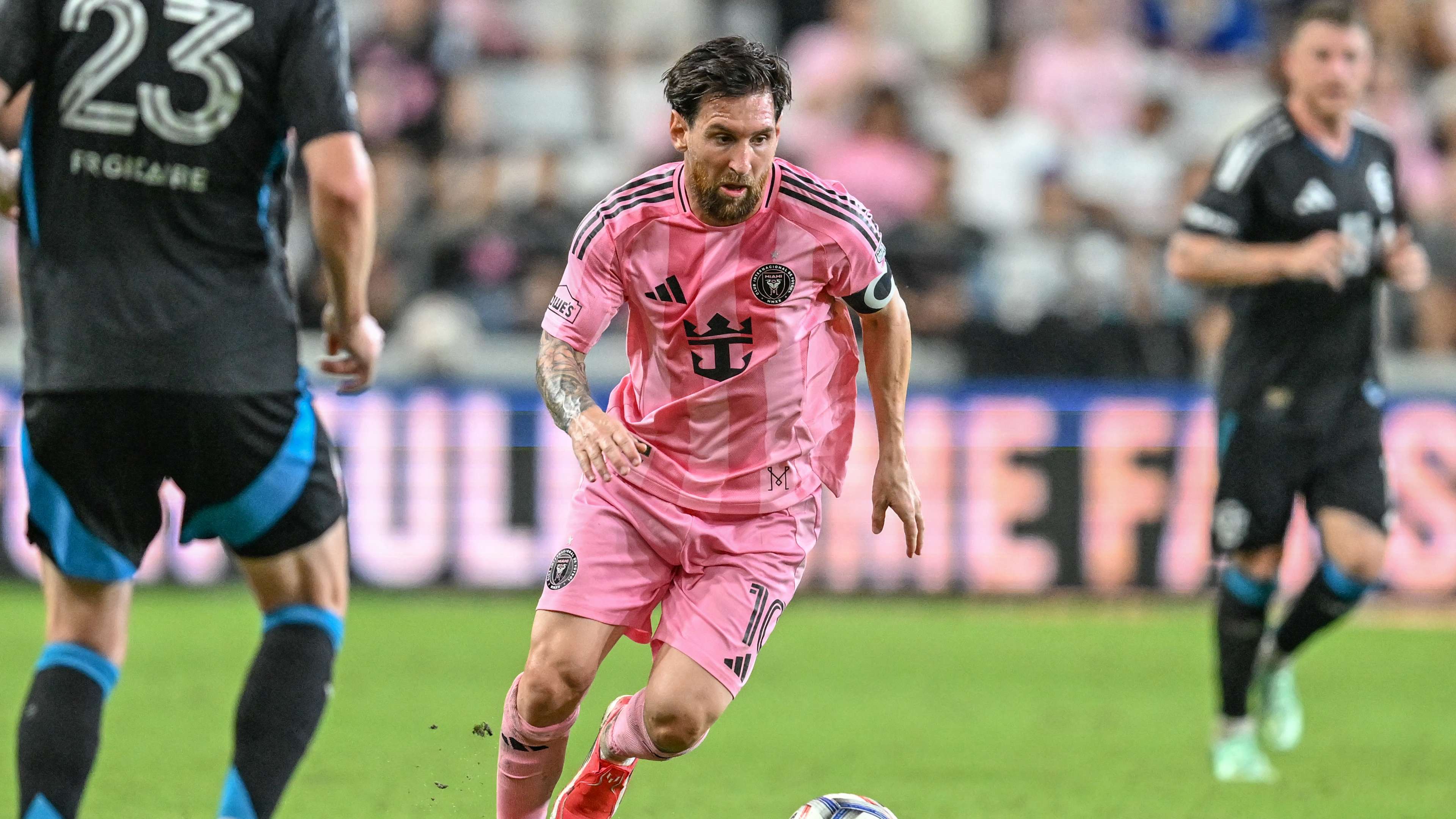
The Argentine forward finished the campaign with 26 goals, securing the MLS Golden Boot for a second consecutive season. At 39, Messi became the first player in league history to win the award in back-to-back years. He is also just the sixth player to claim the Golden Boot more than once.
His scoring record was especially impressive because it relied overwhelmingly on open play. Messi scored 25 of his 26 goals without a penalty, making his total the second-highest non-penalty tally in a single MLS season. The only player to surpass it is Messi himself, with 28 open-play goals in 2025.
Goals and Assists Put Messi in a Category of His Own
Messi’s influence extended well beyond his finishing. He supplied 17 assists, giving him 43 goal contributions across the regular season. No MLS player had previously recorded at least 40 goal contributions in two consecutive campaigns, another record that underlines how consistently he has shaped Miami’s attack.
For supporters following the football season, the numbers offer a useful snapshot of Messi’s value: he remains both a prolific scorer and a creative force. His Golden Boot win also gives Inter Miami a major individual achievement to carry into the play-offs, although the team’s latest defensive collapse raises questions about whether its overall form is strong enough for a deep postseason run.
Inter Miami Build a Three-Goal Lead
The match at Nu Stadium began at a lively pace, with Charlotte briefly believing it had taken the lead in the fourth minute. Liel Abada finished the move, but a video review ruled out the goal after officials spotted a handball by Idan Toklomati earlier in the buildup.
Miami took advantage of the reprieve and opened the scoring in the 14th minute. Ian Fray reacted quickest after the ball bounced loose inside the penalty area following a corner, giving the hosts an early lead.
Messi then helped create Miami’s second goal. In the 33rd minute, his corner found Germán Beltramé, whose header was followed up by Luis Suárez. Rodrigo De Paul made it 3-0 shortly before half-time, striking powerfully from outside the box and seemingly placing Miami in complete control.
Charlotte’s Second-Half Comeback Changes the Game
Charlotte returned from the interval with greater urgency and quickly turned the contest around. Abada pulled one goal back in the 50th minute, meeting a cross from Tyger Smalls. Five minutes later, the same pair helped produce another breakthrough: Abada combined with Pep Biel before sending a precise shot into the far corner to make it 3-2.
Miami had a chance to halt the momentum when Messi attempted to lift the ball over the goalkeeper. Henry Kessler, however, cleared the effort off the line. The missed opportunity proved costly as Charlotte continued to find space against a Miami defence that was struggling to regain its shape.
The equaliser arrived in the 90th minute. Smalls’ shot struck the post and rebounded into the path of Rodolfo Oloko, who finished from close range. Messi nearly rescued the win in stoppage time, but his shot hit the post, leaving the teams to share the points.
A Familiar Warning for Miami’s Defence
The comeback revived memories of Miami’s 4-3 loss to Orlando City on May 2. In that match, Miami also led by three goals, having scored three times in the opening 33 minutes. Orlando mounted a dramatic response, with Martín Ojeda scoring a hat-trick before Tyrese Spicer struck the winner in the 93rd minute.
Orlando’s victory was only the fourth time in MLS history that a team had won after falling three goals behind, and the first such comeback since 2018. Charlotte did not complete a victory this time, but its draw highlighted a troubling pattern: Miami have now surrendered a three-goal home lead twice during the 2026 campaign.
That issue will be important in the play-offs, where a strong attack may not be enough if the defence cannot protect a commanding advantage. Miami’s ability to respond to pressure, manage transitions and close out matches could prove just as decisive as Messi’s goals and assists.
Play-Off Picture and Prediction for Inter Miami
The draw left Inter Miami second in the Eastern Conference with 60 points. They benefited from New England’s 1-0 defeat to Orlando and will begin their postseason against seventh-placed Columbus Crew in a first-round series played as a best-of-three format.
Nashville claimed the Eastern Conference’s top position, reaching 77 points after a 2-0 win over Cincinnati. That total set a new MLS regular-season points record, surpassing Miami’s previous mark of 74 points from 2024.
Any prediction for Miami’s play-off prospects must balance two very different signals. Messi’s league-leading scoring, his 17 assists and the quality of the team’s attacking options make Miami dangerous against any opponent. But repeated collapses from three goals ahead suggest that defensive organisation and game management remain urgent concerns.
If Miami can tighten its back line and maintain composure when opponents respond, Messi’s record-breaking season gives the club a powerful foundation for a postseason push. If not, the Charlotte draw may serve as a warning that even an exceptional attack can be undermined by defensive lapses. For now, Messi heads into the play-offs with another piece of MLS history—and the chance to turn individual brilliance into a lasting team achievement.