
Alonso criticises Albon and backmarkers after Austin Grand Prix collision
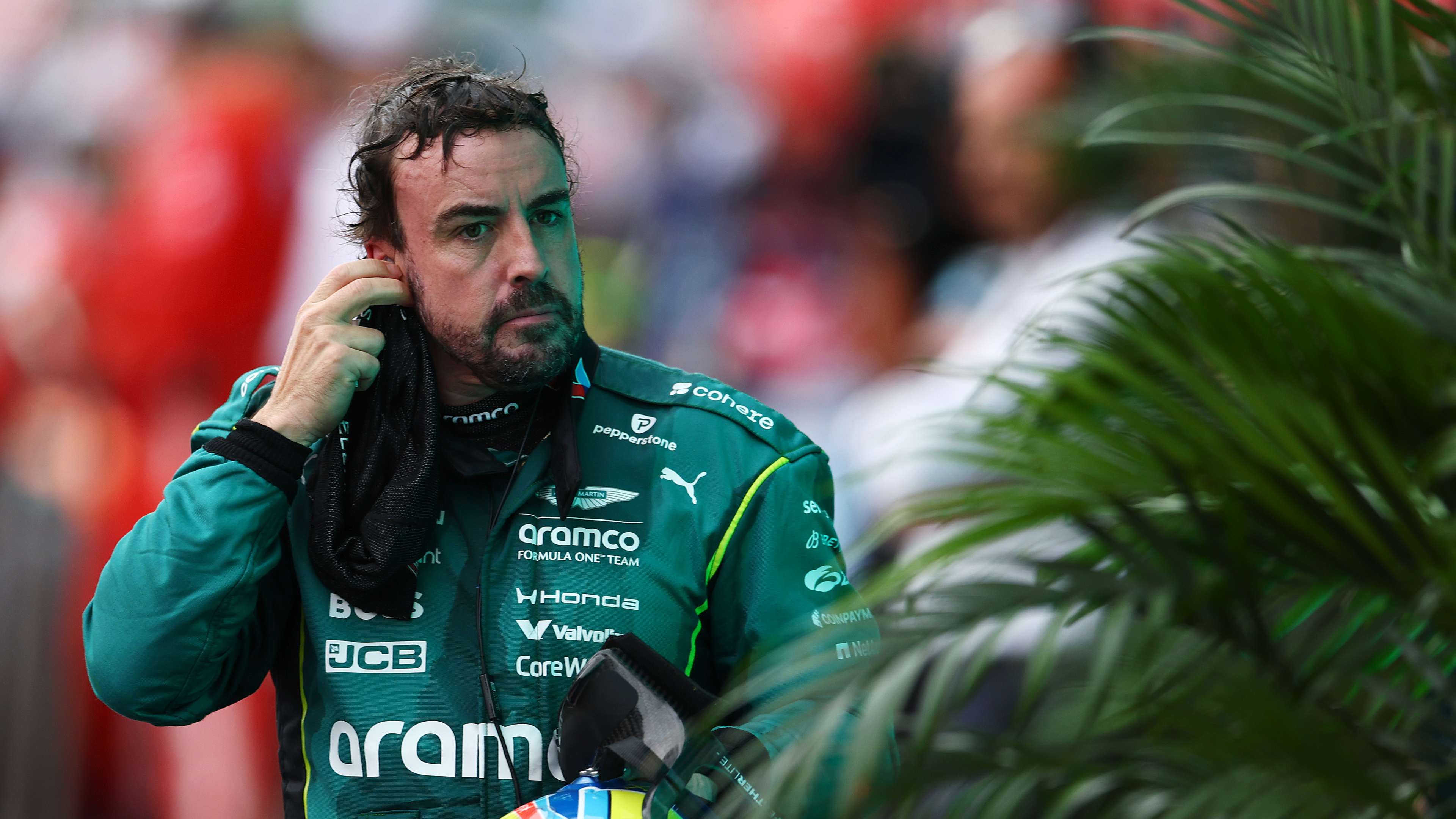
Fernando Alonso has sharply criticised Williams driver Alex Albon and questioned the quality of racing among Formula 1’s backmarkers after a first-lap collision at the United States Grand Prix left his Aston Martin damaged. The incident in Austin has added tension ahead of the Mexican Grand Prix, where both drivers will be looking to put the weekend behind them and deliver a cleaner performance.
The clash happened during the opening stages of the race, as Alonso tried to move past Haas driver Esteban Ocon. Starting 12th, the two-time world champion was attempting to make progress through the pack. Albon, meanwhile, had begun from 17th and gained three places on the first lap. As the drivers converged, Albon’s Williams made contact with Alonso’s Aston Martin.
The impact damaged Alonso’s car, with sections of the floor coming loose. Despite the damage, the Spaniard continued to the finish, but could manage only 16th place. Albon also reported damage, saying he had to complete the race with a compromised front wing.
Alonso questions back-of-the-grid racing
After the race, Alonso did not hold back in his assessment of the collision. He argued that drivers starting near the back face greater risks as they fight to gain positions, but said the incident reflected a broader concern about decision-making in the lower part of the field.
“When you start from the back, you always take that risk,” Alonso said. He added that he believed drivers in the back third of the field lacked quality, pointing to Albon’s move as an example. Alonso also suggested the Williams driver had failed to account for the approaching corner, Turn 11, where the track requires a left-hand turn.
The comments were unusually pointed, particularly because they came from a driver with Alonso’s experience. A two-time Formula 1 world champion, he has raced through multiple eras of the sport and is known for his direct post-race assessments. His remarks are likely to keep the Austin incident in the spotlight as the championship moves to Mexico.
Albon gives his account of the contact
Albon had not directly responded to Alonso’s criticism, but he described how he saw the collision. The Williams driver said he tried to avoid Alonso by moving onto the kerb, though he was unable to prevent contact. He also indicated that his own car was affected by the impact.
“I tried to avoid him and drive onto the kerb, but I didn’t quite manage it,” Albon said. He added that he assumed Alonso’s car had been damaged, while confirming that his own front wing was compromised for the remainder of the race.
The two accounts underline how quickly first-lap battles can become complicated when several cars are fighting for position. Drivers starting further down the grid often have to make early moves to gain ground, while those ahead are also focused on defending or overtaking. With limited space and little time to react, a small misjudgment can have consequences for more than one car.
Aston Martin faces a separate performance challenge
Alonso’s frustration was not directed solely at Albon. He also used the incident to make a broader point to Aston Martin: the team needs to improve its car so that he is not regularly forced to start from the middle or rear of the field. In his view, a more competitive package would reduce the need to take risks in crowded opening laps.
“We need to make the car quick enough that I no longer have to start from back there,” Alonso said. The remark reflects the challenge facing Aston Martin as it seeks to turn race weekends into stronger results. Grid position can shape a driver’s entire strategy, affecting the ability to avoid traffic, choose a clear line and manage tyre wear from the opening lap onward.
For Alonso, the Austin result was particularly frustrating because the damage limited his ability to compete. Even a driver with extensive experience cannot fully compensate for a compromised floor, which can affect aerodynamic performance and reduce stability. Continuing to the finish demonstrated persistence, but 16th place offered little reward for the effort.
What the incident could mean in Mexico
The Mexican Grand Prix will provide an immediate opportunity for both drivers to reset. The circuit’s long run to the first corner can create close racing at the start, while the high-altitude conditions place additional demands on car performance and race strategy. Teams must balance speed, tyre management and reliability, making a clean opening lap especially valuable.
For fans following the weekend, the key prediction is not that the Austin clash will necessarily lead to further confrontation, but that both drivers will be under pressure to deliver a disciplined start. Alonso will want to avoid another race compromised by damage, while Albon will be keen to show that the collision was a difficult moment rather than a pattern of poor judgement.
The wider question is whether Aston Martin can give Alonso a car capable of qualifying further up the grid. If the team improves its pace, the Spaniard may be less exposed to the tightly packed battles that often define the opening laps. Until then, incidents involving drivers trying to recover positions are likely to remain a recurring risk.
Alonso’s criticism has therefore highlighted two connected issues: the split-second decisions required in Formula 1 traffic and the importance of starting position. Albon’s account points to an attempted evasive move, while Alonso’s response stresses the responsibility drivers share when racing in close quarters. As the paddock heads to Mexico, the collision is a reminder that one moment on the opening lap can shape an entire Grand Prix—and that a faster car may be the most effective way for Aston Martin to reduce such risks.