
Mohammad Ashraful backs Towhid Hridoy to thrive against South Africa
Bangladesh batter Towhid Hridoy has earned a strong vote of confidence ahead of the team’s Test tour of South Africa. Former Bangladesh batting coach Mohammad Ashraful believes the in-form right-hander has the technique, preparation and recent experience to meet the challenge of South Africa’s fast bowlers in their own conditions.
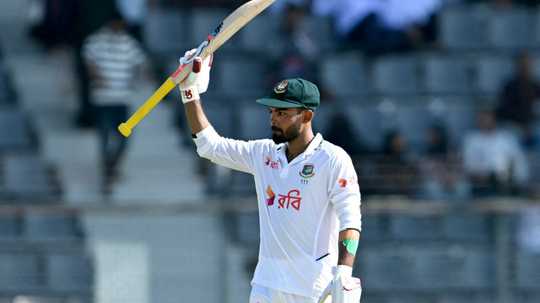
Hridoy arrives with momentum after producing a landmark performance against the West Indies in Sylhet. In only his third Test appearance, he made an unbeaten 242 in the second match of Bangladesh’s two-Test series, recording the highest individual Test score by a Bangladeshi batter. The innings was a significant response to earlier doubts about his place in the red-ball side—and, according to Ashraful, a reward for the work Hridoy has put in away from match day.
The challenge ahead will be very different. South African pitches can offer pace, bounce and movement, particularly to seam bowlers, and visiting batters often have to adjust quickly to unfamiliar conditions. But Ashraful says Hridoy’s recent form and an earlier spell of first-class cricket in South Africa give him useful preparation for the tour.
From limited Test chances to a record-breaking innings
Hridoy’s path into Bangladesh’s Test XI was built on performances across formats and a major first-class achievement. Before his double century against the West Indies, he scored 350 runs in a four-day match for Bangladesh A against South Africa A in Potchefstroom in September. That innings made him the first Bangladeshi batter to reach 350 in first-class cricket and strengthened his case for selection in the home Test series.
Ashraful, who worked with the Bangladesh coaching staff until recently, said Hridoy had been one of the team’s most consistent batters in limited-overs cricket during their time together. He pointed to Hridoy’s strong returns in both one-day internationals and T20 cricket as evidence of his ability, while acknowledging that the batter’s first opportunities in Test cricket had not immediately produced the same results.
“He got an opportunity in Tests in Zimbabwe but couldn’t perform that well. But the very next innings, he scored 350 in first-class cricket,” Ashraful said, describing how quickly Hridoy responded after a difficult start in the longer format.
That resilience was also visible during the home series against the West Indies. Hridoy had made 42 in the first innings of the Dhaka Test, batting well before his dismissal, but Ashraful noted that the manner of his dismissals in both innings attracted criticism. Rather than allowing that scrutiny to define him, Hridoy continued working and eventually delivered a career-changing performance in Sylhet.
Practice habits could help against South Africa’s pace
Ashraful’s confidence is based not only on Hridoy’s scores but also on what he observed in training. He described the batter’s practice routine as unusually demanding and focused on adjustment—an important skill for anyone preparing to face South Africa’s quick bowlers.
In seaming conditions, batters must judge movement early, stay balanced and make decisions against deliveries that can rise sharply or move off the pitch. Ashraful recalled a net session in which Hridoy asked him to challenge him on the bowling machine with a mixture of deliveries, including swing, short balls and fuller-length options.
“Usually, on a bowling machine, if you bowl inswing, outswing, bouncers, full balls, it’s not that easy to adjust,” Ashraful explained. “But he batted for almost two rounds and adjusted wonderfully to it that lasted for 50 balls.”
Bowling machines do not reproduce every feature of facing a live fast bowler, especially the visual cues a batter gets from the bowler’s release. Still, practising against varied pace, length and movement can help develop a more reliable response. Hridoy’s willingness to keep working through that uncertainty, Ashraful suggested, set him apart from many of his teammates.
Partnerships showed maturity under pressure
Hridoy’s 242 not out was notable not just for its size but for the way he managed the innings. Ashraful highlighted the partnerships Hridoy built with lower-order batters Taijul Islam and Taskin Ahmed, including stands of around 100 and 90 runs. Those contributions helped Bangladesh turn one batter’s outstanding form into a substantial team total.
“In cricket, not everyone scores runs, and one or two players will score runs in a match,” Ashraful said. “Those runs can make such a difference that the match result is determined. Towhid Hridoy actually did that.”
The ability to bat with the tail is especially valuable in Test cricket. A set batter must take responsibility for the scoring while also helping less experienced partners stay on strike and settle into the innings. Hridoy’s partnerships in Sylhet offered a promising sign that he can adapt his approach to the needs of the team, rather than focusing only on personal milestones.
Bangladesh face a demanding Test series
Bangladesh’s two-Test series in South Africa begins in Johannesburg on November 15, with the second Test scheduled for Centurion from November 23. The tour will continue with three one-day internationals and three T20 internationals, giving Hridoy opportunities across formats after the Test matches.
For Bangladesh, success in the Tests will depend on how effectively the batters handle South Africa’s pace and how well the team builds partnerships away from home. Hridoy’s recent 242 provides a compelling basis for optimism, but conditions in South Africa will test his judgement in new ways. The bounce may be steeper, the seam movement more persistent and the margin for error smaller than it was in Sylhet.
Ashraful’s prediction is that Hridoy’s preparation and experience in Potchefstroom can help him meet those demands. Having already played first-class cricket in South Africa, the batter is not approaching the tour without a reference point. His record-breaking West Indies innings may also have strengthened his confidence at a crucial moment in his Test career.
Whether that form translates into runs against the Proteas remains to be seen, but Hridoy has given Bangladesh a reason to believe he can make an impact. If he carries the patience, adaptability and partnership-building skills he displayed in Sylhet into the upcoming cricket series, he could become one of the visitors’ most important batters—and a key figure in Bangladesh’s hopes of competing in South Africa.