
FIFA Confirms Correctness of Embolo’s Dismissal at World Cup Quarter-Final Clash
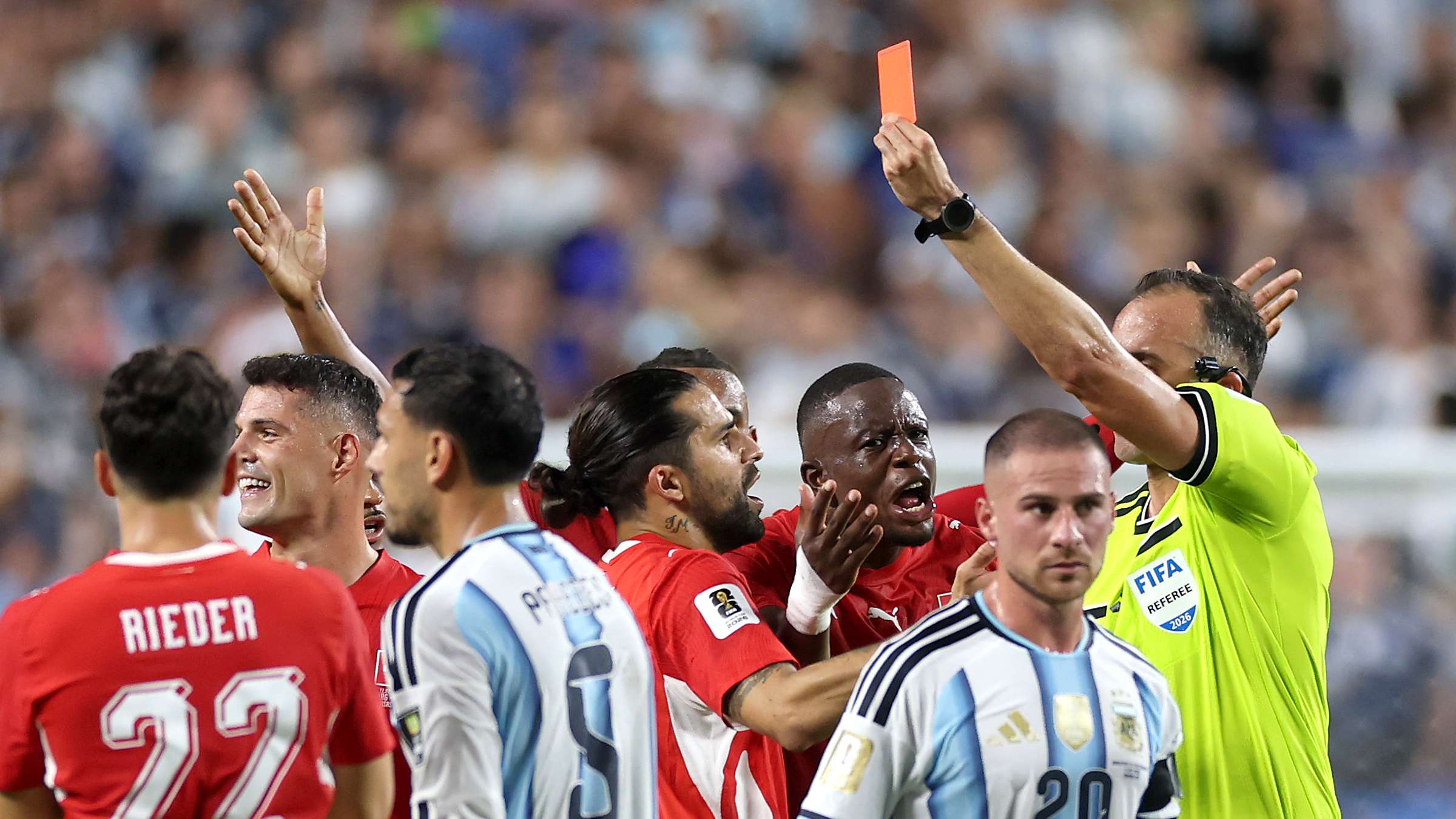
Controversy arose during the 2026 World Cup quarter-final clash between Argentina and Switzerland when Breel Embolo was shown a red card for diving. However, FIFA has weighed in on the situation, confirming that the decision to dismiss Embolo was correct and in line with the guidelines followed throughout the tournament.
The Storm Surrounding “Circular No. 34”
The controversy stemmed from “Circular No. 34” issued by the International Football Association Board (IFAB). While some interpreted the circular as an admission that the sending off of Embolo was a mistake, it was actually an amendment to clarify the rule regarding cases of mistaken identity, rather than correcting a refereeing error from the World Cup.
According to Spanish refereeing specialist site “Archivo VAR”, the protocol during the World Cup allowed officials to review cases of mistaken identity, which enabled the referee to correct the player who received a card. However, a loophole was later closed post-tournament, stating that only the player’s identity can be corrected, not the actual foul itself.
Justice Restored
It was determined that Embolo did, in fact, deserve the yellow card for diving, and since he was already on a booking, he would have been sent off regardless of the rule change. FIFA confirmed that the final decision “restored justice” and that the interpretation used during the tournament was approved by IFAB.
Circular No. 34 was not a condemnation of Embolo’s dismissal, but rather a clarification of the rule for future reference. The statement from FIFA emphasized that they had been in communication with IFAB throughout the process.
Addressing Claims of Injustice
While some claimed that Switzerland was robbed by Embolo’s red card, it was argued that the player deserved to be sent off for cheating and that the real error would have been to allow him to remain on the pitch. A similar incident occurred during the Paraguay vs. USA group-stage match, where Paraguay’s Miguel Almirón was also cautioned for attempting to deceive the referee.
In conclusion, FIFA’s confirmation of the correctness of Embolo’s dismissal at the World Cup quarter-final clash has put an end to the controversy surrounding the incident. The clarification provided by Circular No. 34 ensures that similar situations are handled consistently in future tournaments, maintaining fairness and integrity in the game of football.
Impact of VAR on Football Officiating
With the advent of Video Assistant Referee (VAR) technology in football, controversial incidents like the one involving Breel Embolo at the 2026 World Cup have come under increased scrutiny. VAR has been implemented to assist on-field referees in making more accurate decisions by reviewing key moments during a match. While VAR has been successful in correcting clear and obvious errors, it has also sparked debates about the subjectivity of certain decisions.
VAR has the potential to influence the outcome of a game by overturning decisions made by the referee on the field. In the case of Embolo, VAR likely played a role in confirming the correctness of his dismissal by providing video evidence to support the referee’s decision. This technology has brought a new layer of complexity to football officiating, as it introduces the possibility of reviewing subjective calls like diving or simulation.
Player Accountability and Fair Play in Football
The incident involving Breel Embolo highlights the importance of player accountability and fair play in football. Diving or simulation, where a player exaggerates or fakes contact to deceive the referee, is considered unsporting behavior and goes against the principles of fair play. By penalizing players who engage in such actions, football authorities aim to uphold the integrity of the game and discourage cheating on the field.
Players have a responsibility to conduct themselves with honesty and respect towards the rules of the game. Instances of diving not only deceive officials but also impact the outcome of matches by influencing key decisions. Through disciplinary actions like yellow cards or red cards, players are held accountable for their actions and are reminded of the consequences of trying to gain an unfair advantage through dishonest means.
Future Implications for Refereeing Standards
The confirmation of the correctness of Embolo’s dismissal at the World Cup quarter-final clash sets a precedent for future refereeing standards and interpretations of the rules. As football continues to evolve, officiating bodies like FIFA and IFAB must adapt to ensure consistency and transparency in decision-making processes. The clarity provided by Circular No. 34 serves as a guide for referees and officials in handling similar situations going forward.
Referees play a crucial role in maintaining order and fairness on the field, and their decisions can have a significant impact on the outcome of a match. By upholding the rules and principles of the game, referees contribute to the overall integrity of football and ensure that matches are conducted in a manner that respects the spirit of competition.
Conclusion
In conclusion, the controversy surrounding Breel Embolo’s dismissal at the 2026 World Cup quarter-final clash sheds light on the complexities of football officiating and the importance of fair play. FIFA’s confirmation of the correctness of the decision, along with the clarification provided by Circular No. 34, reinforces the need for consistency and transparency in applying the rules of the game. Moving forward, football authorities will continue to strive for fairness and integrity in officiating, ensuring that players are held accountable for their actions and that the spirit of the game is upheld.