
Riyan Malhan’s Youth Olympic Badminton Gold Signals a New Era for the UAE
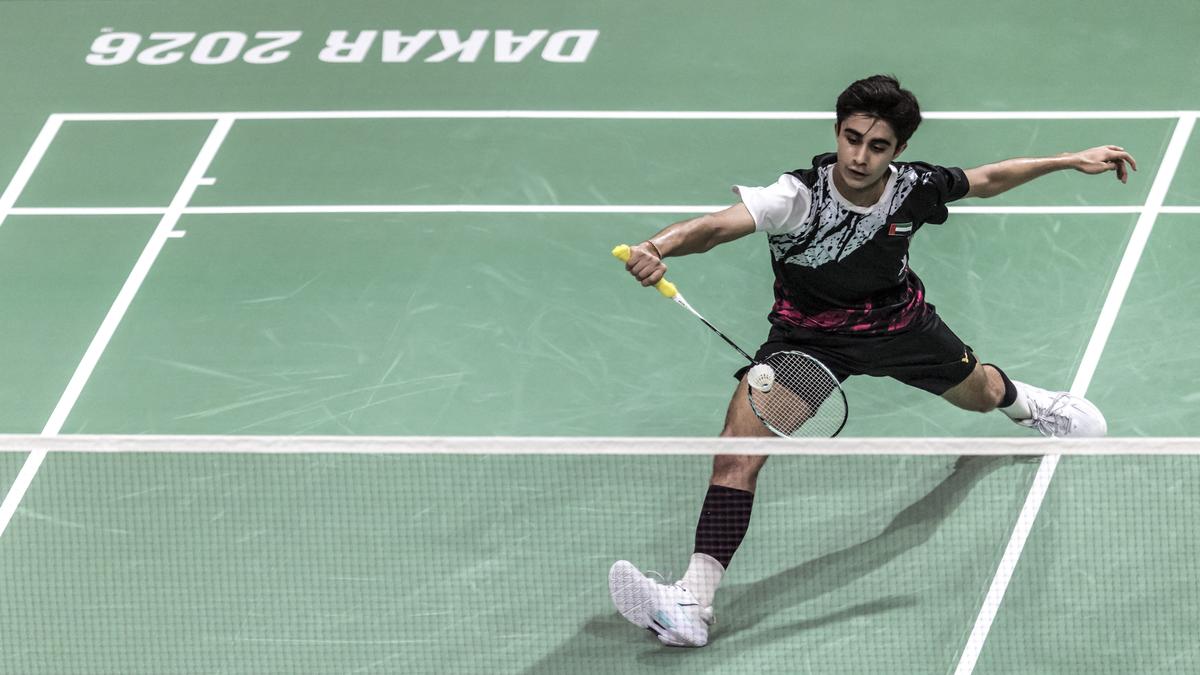
For 16-year-old Riyan Malhan, the significance of becoming a Youth Olympic badminton champion did not sink in the moment he won. After defeating France’s Madi Sow 21-17, 21-18 in Dakar, Senegal, the UAE shuttler found his phone overflowing with messages. Tired from the final and surprised by the attention, he stayed up trying to answer as many as he could.
The scale of his achievement became clearer the next morning. Riyan woke to see that Sheikh Hamdan bin Mohammed bin Rashid Al Maktoum, Crown Prince of Dubai, had congratulated him in an Instagram story shared with millions of followers. The moment made the victory feel larger than a personal milestone: it was the UAE’s first Youth Olympic gold medal.
“That’s when it hit me how big it was,” Riyan said. His triumph also placed him among a distinguished group of players who have won Youth Olympic badminton titles, including China’s Shi Yuqi in 2014 and Li Shifeng in 2018. For a country with a relatively short history in the sport, the result marks a breakthrough—and offers a glimpse of what sustained investment and an ambitious young athlete can achieve.
From a Dubai Club to a Life in Badminton
Riyan’s route to the podium began almost by accident. Born and raised in Dubai, he was introduced to badminton by his father, Vipul Malhan, a banker who had played in Delhi State tournaments before putting his own sporting ambitions aside. In the 1990s, Vipul recalled, becoming a professional athlete was a difficult path, with limited support and strong expectations to focus on education.
He continued to play recreationally, sometimes taking his young son along to the club. When Riyan was three, his parents gave him a child-sized racquet and a balloon to keep him occupied. But the toddler soon began hitting the balloon with an adult racquet, surprising his father with how naturally he handled it.
Riyan’s first coach, Afshin Royal, introduced him to the basics by having him hit a shuttle suspended from the ceiling. His mother, Vasudha, remembers that even when the racquet seemed almost bigger than he was, he wanted to play every day. Training was never something his parents had to insist on; the young player was the one setting the pace.
As he grew, Riyan began winning regional age-group tournaments, including events against older players. His interest extended well beyond the court. While other children watched cartoons, he watched badminton matches. One of his favourites was the memorable 2016 Olympic men’s singles semifinal between Lee Chong Wei and Lin Dan—a match he has watched many times.
During the COVID-19 pandemic, when he was 10, Riyan told his mother he intended to become a professional badminton player. At first, Vasudha saw sport as a possible way to support his education or help him access a good university. Her son, however, was already thinking much further ahead.
Building a Pathway for UAE Badminton
Talent alone could not guarantee progress. For years, the UAE had no badminton federation, limiting access to organised competition and making it difficult for an emerging player to find strong opponents at home. Riyan therefore travelled to India for tournaments, where he became Delhi’s under-13 champion and earned an Indian under-13 ranking.
His family also explored a longer-term move to India. At around nine, Riyan attended a talent selection programme for the Pullela Gopichand Academy in Hyderabad and was accepted. He spent two months there, but his parents decided he was too young to live in a hostel far from home. The experience nevertheless showed that he could compete in a demanding training environment.
The establishment of a UAE badminton federation changed the equation. Riyan could continue developing in the country where his family lived and where he attended school, while gaining access to more structured support. His parents say the federation backed him, and Dubai’s international character helped broaden his training. Coaches with experience from India, Indonesia, China and Denmark were available across the city’s academies.
When he needed specialist preparation, the federation also helped him attend overseas camps in China, Indonesia, Malaysia, Thailand and India. Earlier this year, he spent two months at Shanghai’s Bukon Badminton Academy, founded by Olympic champion Cai Yun. He has also trained at Bengaluru’s Center for Badminton Excellence and worked in Dubai with Olympic silver medallist Mathias Boe.
World-Class Sparring and a Mentor in Anders Antonsen
One of the biggest challenges for a developing player in a smaller badminton system is finding regular, high-quality sparring. That challenge has eased as international players have increasingly used Dubai as a training base. Danish stars, including double Olympic champion Viktor Axelsen, have helped bring elite-level badminton closer to the UAE’s rising talent.
Riyan has also had regular practice sessions with Anders Antonsen, a four-time World Championship medallist and two-time European champion. What began as an opportunity to train alongside a leading player has developed into a mentoring relationship. Antonsen offers advice on preparation and tactics, and even sent messages to Riyan during the Youth Olympics, including before the final.
That combination of local backing, international coaching and elite sparring has helped Riyan move quickly through the junior ranks. Still completing his final year of school, he made his senior professional debut this year by winning the Ghana International Challenge. He then claimed gold at the Asian Under-17 Championships in Chengdu in September, before producing his biggest result in Dakar.
Ambitious Goals—and a Clear Commitment to the UAE
Riyan’s Youth Olympic campaign included a victory over China’s reigning junior Asian champion Hong Tianyue before he overcame Sow in the final. He was pleased with his performance, particularly his net play, but has already identified areas to improve. He wants more variety from the back of the court, including half-smashes and drop shots, and recognises that he can sometimes rush to finish rallies with a smash. Building physical strength is another priority.
His ambitions are equally clear. After the Youth Olympics, Riyan’s next major target is the World Junior Championships. Beyond that, he hopes to qualify for the 2028 Olympic Games and eventually contend for a medal at the 2032 Games. Those goals are demanding, but his recent results have given him a strong foundation and a clearer sense of what elite badminton requires.
Because his parents are from India, Riyan is sometimes asked why he does not represent their country. His answer is rooted in gratitude and belonging. He says the UAE has provided opportunities, support and citizenship, and he is proud to compete under its flag. For him, national representation is not a question of which country offers the easiest route; it is a commitment to the place that invested in his development.
Riyan Malhan’s gold medal is therefore more than a personal breakthrough. It is a landmark for UAE badminton and evidence that a young player can flourish when ambition is matched by a genuine pathway—from grassroots coaching and federation support to international camps and world-class practice partners. His next steps will test his promise, but the teenager has already made history and given the UAE a compelling new name to follow on the badminton court.