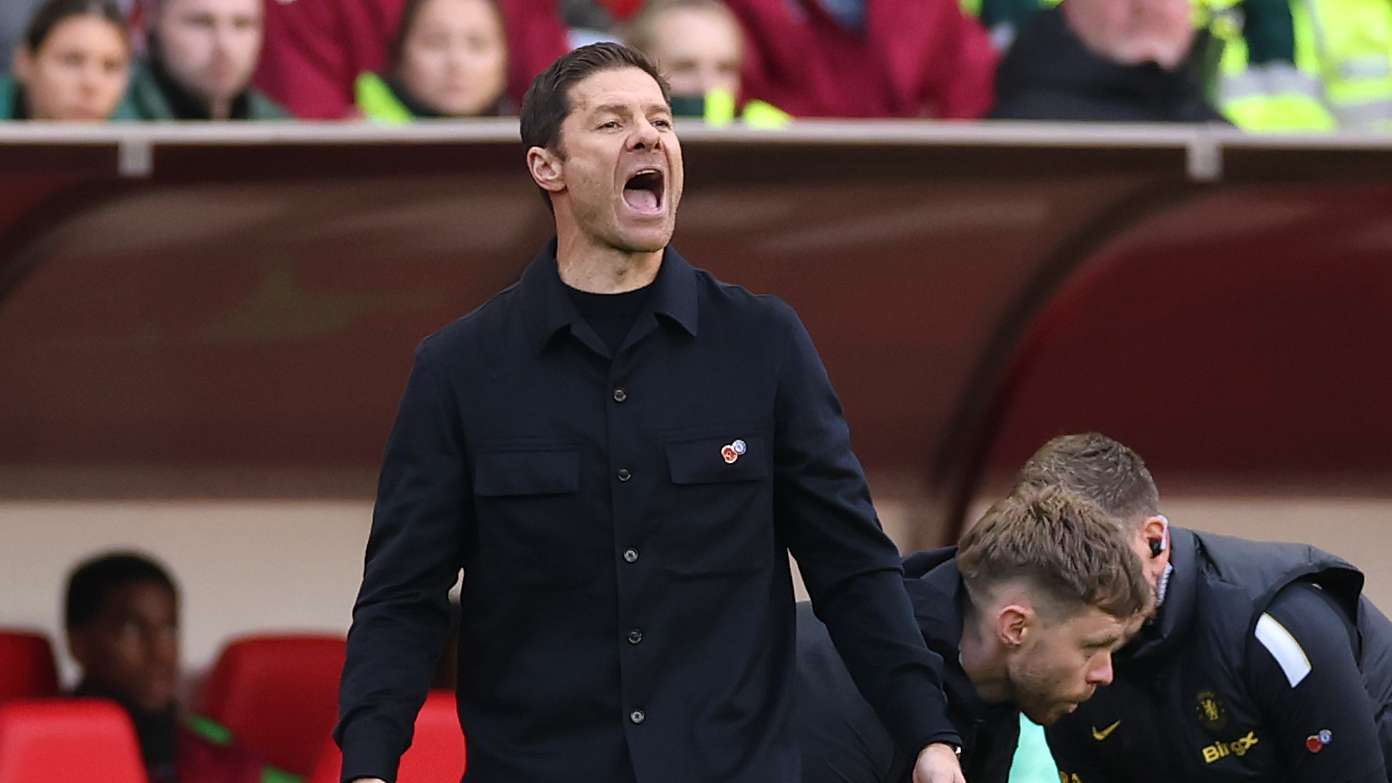

Alonso admits Chelsea fell short after Sunderland defeat
Xabi Alonso offered no excuses after Chelsea’s 1-0 defeat to Sunderland, acknowledging that his side did not do enough to earn a victory. The result was decided by a disputed penalty, but the Chelsea manager said his team’s shortcomings in defence and attack mattered more than the debate over the referee’s decision.
The match turned when Levi Colwill was penalised for a challenge on Sunderland forward Brian Brobbey. The spot-kick sparked immediate disagreement from Chelsea goalkeeper Mike Penders, who told Sky Sports that he did not believe a foul had occurred.
“For me, it was not a penalty,” Penders said. “He barely touched him, and I think it was the other way round, as it was he who held him.”
Alonso, however, declined to make the incident the focus of his post-match assessment. Speaking to the BBC, he said he had not watched the replay again and did not want to criticise the officials. Instead, the Chelsea boss pointed to his team’s own performance, describing the decisive moment as something his players could have handled better.
Alonso focuses on Chelsea’s mistakes, not the penalty debate
“I have not watched the replay again. I have nothing to say about the referee,” Alonso said. “It is about a mistake on our part, and we could have performed better.”
He added that Colwill could have defended the situation more effectively. The comments reflected Alonso’s broader frustration: although the penalty settled the contest, he felt Chelsea had given Sunderland too many opportunities and had not created enough of their own.
That distinction matters in any football prediction or post-match analysis. A controversial call can shape a result, but a team’s ability to control the game, defend dangerous transitions and create clear chances often provides a fuller explanation of why it won or lost. Alonso’s assessment suggested Chelsea had issues in all three areas.
Brobbey caused problems on Sunderland counter-attacks
Alonso praised Brobbey’s performance, highlighting the striker’s ability to make an impact when Sunderland broke forward. The Dutch forward won the penalty, but the Chelsea manager also noted that he produced two further chances from counter-attacks that appeared to develop from limited opportunities.
“Through the counter-attacks that came from almost nothing, he managed to get two chances, as well as the penalty,” Alonso explained. He said Chelsea had prepared for Sunderland’s threat and had tried to contain it, but admitted the plan had not been carried out well enough.
Alonso did not describe Brobbey as impossible to stop. Instead, he argued that Chelsea needed to defend with greater discipline and awareness. That is a pointed message for a back line that will need to respond quickly, particularly against opponents capable of turning a loose pass or an attacking turnover into a fast break.
Sunderland’s approach appeared to make the most of those moments. Rather than needing long spells of possession, the home side could threaten when space opened up behind Chelsea’s defence. For Alonso, the answer was not simply to praise the opponent’s strength, but to demand better decisions from his own players.
Chelsea lacked patience and creativity in the final third
The manager’s criticism extended beyond the defence. Chelsea struggled to break down Sunderland’s compact shape, and Alonso felt his side lacked the patience, quality and invention required to create more meaningful chances.
“We faced a team defending in a low block, and we lacked some patience, quality and creativity in the final third to create more chances,” he said. He also wanted to see Chelsea move the ball more consistently from one side of the pitch to the other, stretching Sunderland’s defensive structure before trying to find openings.
That kind of circulation can be crucial against a deep defensive block. Quick, purposeful switches may force defenders to shift across the pitch, creating gaps for overlapping full-backs, midfield runners or forwards receiving the ball between the lines. Chelsea, in Alonso’s view, did not move the ball side to side often enough to unsettle Sunderland or build sustained pressure.
Without that variety, possession can become predictable. A team may control the ball without turning that control into dangerous attacks, leaving the defending side comfortable and ready to counter whenever possession changes hands. Alonso’s comments indicate that Chelsea’s challenge was not simply to have more of the ball, but to use it with greater purpose.
Alonso rejects claims Chelsea were physically bullied
When asked whether Sunderland’s physical approach had overwhelmed Chelsea, Alonso rejected that explanation. He did not believe his players had been dominated physically, though he acknowledged that they had lost important individual battles and could have performed better at both ends of the pitch.
“We were not physically dominated,” he said. “There were situations we could have defended better, and others we could have exploited better in attack.”
His comments framed the defeat as a performance problem rather than a matter of strength or bad luck. Chelsea needed to be more reliable when defending transitions and more inventive when trying to unlock a packed defence. The penalty controversy may remain a talking point among supporters, but Alonso’s focus was on the areas his team can improve.
What the result means for Chelsea’s next challenge
Alonso’s conclusion was unusually direct: Chelsea did not deserve more than a point, and their overall display was not strong enough to justify a win. “Honestly, not much happened,” he said. “We did not do enough to deserve the win.”
That assessment gives the team a clear set of priorities for its next match: defend counter-attacks with greater control, avoid costly errors in the penalty area and show more patience when opponents sit deep. Chelsea will also need better movement and more consistent passing across the pitch if they are to turn possession into clear opportunities.
For supporters considering the next round of Premier League football predictions, the defeat offers a reminder that Chelsea’s attacking output against a low block and their defensive response to quick breaks will be important factors to watch. Alonso has identified the problems openly. The next test is whether his players can turn that criticism into a more complete performance.