
Jamal Musiala injury update: Bayern Munich await return as Matthäus raises questions
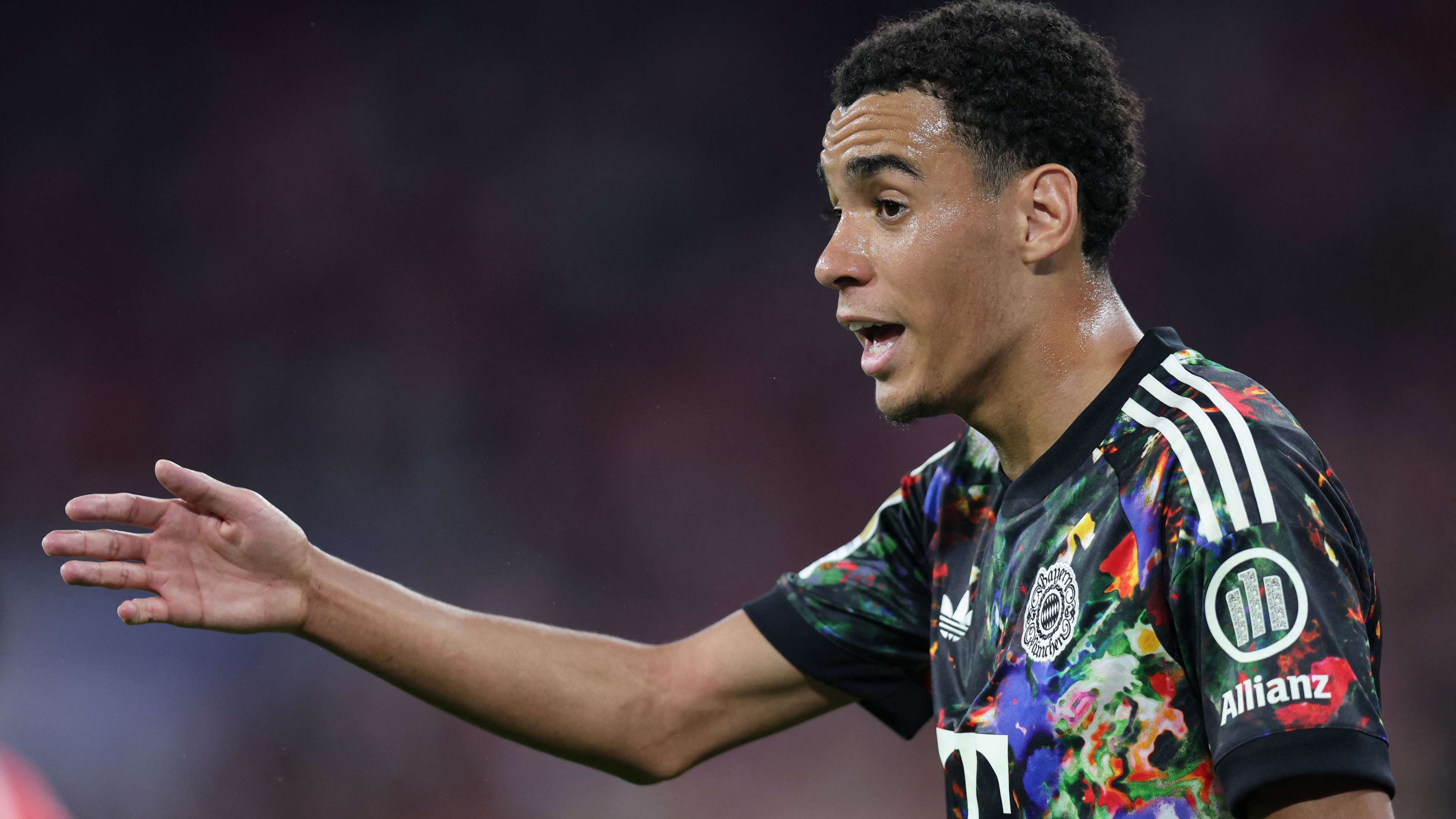
Bayern Munich are continuing to manage Jamal Musiala’s recovery carefully, but the length of the attacking midfielder’s absence has prompted fresh concern. Germany legend Lothar Matthäus has questioned whether the injury keeping the 23-year-old out is more complicated than the club’s initial description suggested.
Musiala has not played since suffering a reported muscle-fibre tear while on international duty with Germany in September. The injury occurred shortly before the Nations League match against the Netherlands in Amsterdam, and Bayern have yet to provide a firm date for his return. For supporters following the latest football injury news, the uncertainty surrounding one of the club’s most influential players has become a major talking point.
Matthäus questions the length of Musiala’s absence
Writing for Sky Germany, Matthäus said the recovery appeared to be taking longer than expected for a straightforward muscle-fibre injury. He noted that the original diagnosis had been reported in September and argued that an absence approaching six weeks could indicate that something else had happened during the recovery process.
“It’s been dragging on for some time with Jamal Musiala,” Matthäus said. “In September in Amsterdam, the talk was of a torn muscle fibre. I suspect something else has happened in the meantime; a torn muscle fibre does not take six weeks to heal.”
His comments are speculation rather than confirmation of a new diagnosis. Bayern have not publicly announced that Musiala has suffered a second injury or complication, and the club’s medical team is best placed to assess his condition. Still, the extended timeline has naturally encouraged questions about why the midfielder remains unavailable.
Why muscle injuries can take longer than expected
Recovery from a muscle injury varies according to its severity, location and the demands placed on the affected area. Some players can begin light rehabilitation within a few weeks, while returning to full training and competitive football may take longer. A player’s previous injury history, fitness levels and response to treatment can also influence the schedule.
That distinction matters for Musiala, whose game depends on sharp changes of direction, acceleration and close control. A return to running or ball work does not necessarily mean a player is ready for the intensity of a Bundesliga or Champions League match. Bayern will want him to withstand repeated sprints and physical challenges before considering a full competitive comeback.
The club’s approach also reflects the risks of rushing a key player back. If a muscle is not fully prepared for match demands, the original problem can recur or lead to compensatory strain elsewhere. For Bayern, a cautious rehabilitation plan may be frustrating in the short term, but it could help protect Musiala’s availability over the rest of the season.
Bayern say they are taking a careful approach
Max Eberl, Bayern’s board member for sport, has stressed that the club wants to ease Musiala back gradually and avoid setbacks. Eberl has also pointed to the difficult circumstances surrounding the player’s start to the season, including his recent fitness problems and history of injuries.
Musiala has already missed time this campaign after dealing with an ankle issue and the lingering effects of a fibula fracture sustained last year. Those setbacks make it especially important for Bayern to judge his progress on more than a calendar date. The club is likely to assess his workload, movement and response to training before deciding when he can return to the squad.
That cautious strategy may also be shaped by Bayern’s demanding schedule. The German champions compete across domestic and European competitions, where matches arrive quickly and the physical intensity is high. Having Musiala available for the long run could be more valuable than gaining a few minutes from him before he is fully ready.
Musiala’s health and the importance of accurate information
Musiala has also spoken publicly about experiencing absence seizures after collapsing twice during friendly matches against RB Leipzig and 1. FC Heidenheim. This form of seizure can involve a brief interruption in awareness, such as staring or momentarily “zoning out,” and differs from the convulsive seizures many people associate with epilepsy.
The neurological issue is separate from the muscle injury currently keeping him out of Bayern’s team. There is no indication in the available information that it is responsible for his present absence. Even so, Musiala’s overall wellbeing is an important part of any discussion about his fitness, and speculation should not be confused with a confirmed medical update.
When could Musiala return to Bayern’s lineup?
Recent reports suggest Musiala has resumed training and is performing exercises with the ball. That is an encouraging development, but it does not guarantee an immediate return. Players commonly progress through individual work, controlled team training and full sessions before being considered for match selection.
He is expected to make a full return during the upcoming international break, which could put him in contention for Bayern’s match against 1. FC Köln on 20 November. That date should be viewed as a possible target rather than a confirmed comeback. Bayern’s medical staff and coaching team will make the final decision based on his progress and how he responds to increased training demands.
Before his latest injury, Musiala had made four appearances in all competitions this season, scoring two goals and providing one assist. Those numbers underline how quickly he can influence a match, even with limited minutes. His ability to carry the ball through crowded areas, create chances and arrive in scoring positions gives Bayern a dimension that is difficult to replace.
What Musiala’s absence means for Bayern
Without Musiala, Bayern lose one of their most creative players and a midfielder capable of changing the rhythm of a game. His close control and direct running can unsettle compact defences, while his flexibility allows him to operate between midfield and attack. His return would therefore strengthen both Bayern’s attacking options and their ability to adapt during matches.
For now, the most reliable prediction is that Bayern will continue to prioritise a complete recovery over a rushed appearance. Matthäus’s comments have added pressure for clarity, but they do not establish that Musiala has suffered another injury. Until the club issues a more definitive update, the key signs will be his progress in training and whether he can build up to full sessions without discomfort.
Bayern supporters will hope the next stage of rehabilitation brings Musiala closer to competitive action. If he returns on schedule and regains his sharpness, the 23-year-old could provide a timely boost for the club’s Bundesliga and European ambitions. The precise date remains uncertain, but a careful comeback may be the best outcome for both the player and Bayern Munich.