
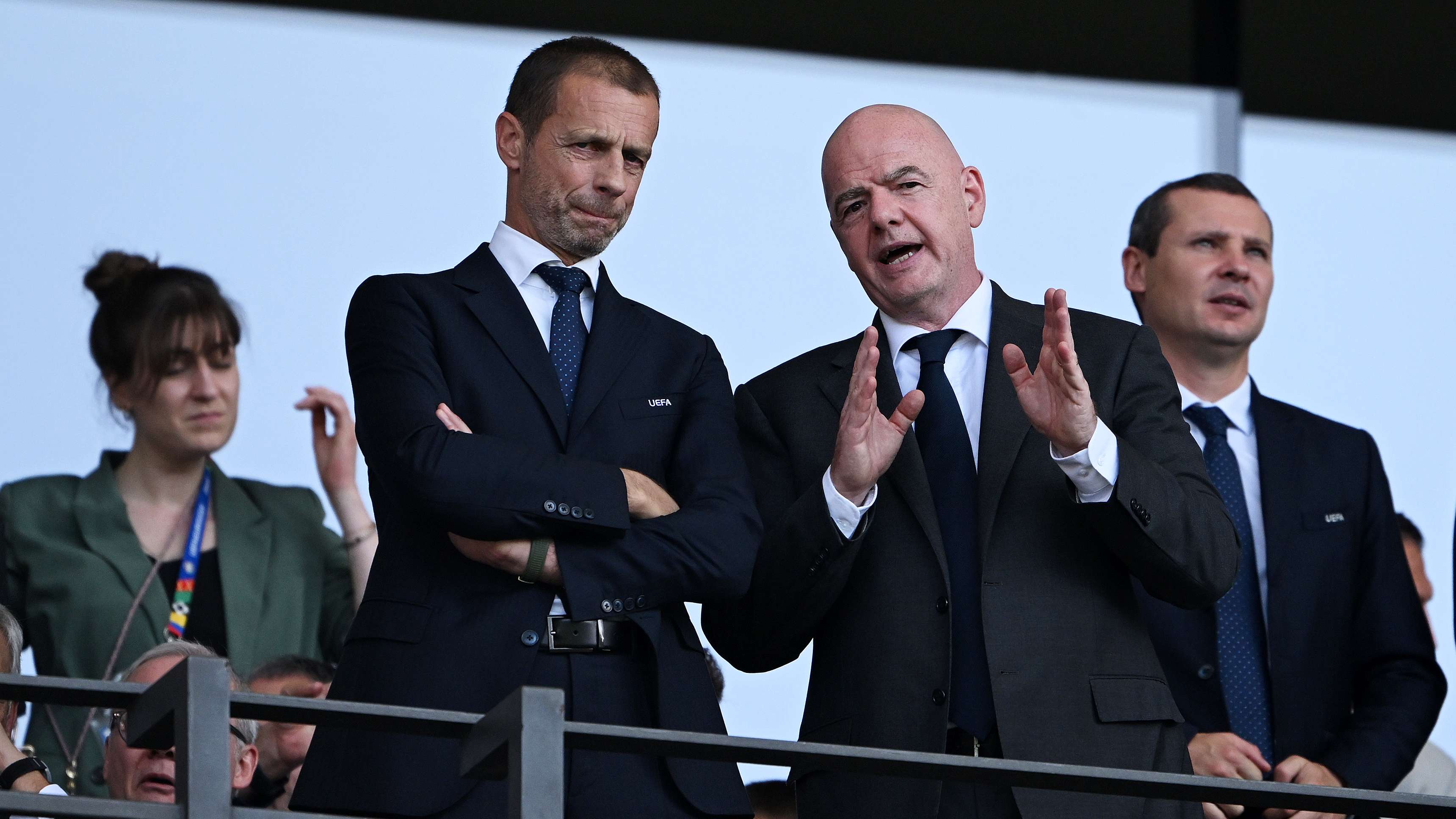

Major Crisis Erupts in World Football
Trump’s Involvement in FIFA’s Controversial Plans
A major crisis has recently unfolded in the world of football, involving FIFA and UEFA, the European football governing body. The tension escalated shortly after Spain’s victory in the 2026 World Cup, with FIFA president Gianni Infantino’s controversial plans taking center stage.
According to a report by “The Times,” Infantino is considering selling shares of the World Cup to private-sector investors, essentially transforming the prestigious tournament into a commercial venture. This move would see Infantino taking on a role similar to a commissioner in overseeing the newly formed company.
The news of Infantino’s proposal has sparked outrage from UEFA, helmed by Aleksander Ceferin, who strongly condemned the idea, stating that it goes against the principles that football’s governing bodies should uphold. In response to the controversy, UEFA issued a stern warning to all involved parties, emphasizing the importance of preserving the integrity of the sport.
UEFA’s urgent statement, as reported by The Times, emphasized that football and its governance should not be treated as commodities up for sale. The lack of transparency regarding the beneficiaries of this potential deal raised concerns among various stakeholders, including national football associations, leagues, clubs, players, fans, and governments.
Infantino’s Proposed Deal and Trump’s Consultation
Reports suggest that Infantino is exploring the option of selling stakes in the World Cup to private-sector investors through a new company. The deal, rumored to be valued at over 17 billion euros, would involve FIFA maintaining the majority stake while allowing private investors to acquire minority stakes worth billions of euros.
JP Morgan is reportedly overseeing the process, with even former US President Donald Trump being consulted on the matter. The Times hinted at the possibility of Infantino assuming the role of president in the new entity once his term as FIFA president concludes.
While details of the proposal remain scarce, the potential expansion of the World Cup to include more than 48 teams has been speculated. Additionally, the idea of hosting the tournament more frequently than once every four years is also being considered as part of the controversial plan.
As the football world awaits further developments on this contentious issue, the implications of such a deal could have far-reaching consequences for the sport’s future. The clash between FIFA and UEFA underscores the challenges faced in balancing the commercial interests of the game with its traditional values and principles.
Stay tuned for more updates on this unfolding crisis as football’s governing bodies navigate through this turbulent period.
The Evolution of Football Predictions
Amidst the turmoil in the world of football governance, another aspect of the sport has been steadily gaining popularity – football predictions. With the rise of technology and the internet, fans and enthusiasts now have access to a plethora of platforms and tools that offer insights, analysis, and predictions on upcoming matches.
Football prediction websites, forums, and apps have become valuable resources for fans looking to stay informed and potentially make informed bets on games. These platforms use a combination of statistical analysis, historical data, expert opinion, and sometimes even artificial intelligence to generate predictions on match outcomes, goal scorers, and various other aspects of the game.
What sets football predictions apart is the element of uncertainty and excitement it adds to the sport. While no prediction can guarantee the outcome of a match, the analysis and discussions around possible scenarios can enhance the overall viewing experience for fans. Additionally, as the predictions are based on data and analysis, they provide a unique perspective on the dynamics of teams and players, offering a deeper understanding of the game.
The Role of Predictions in the FIFA Controversy
As FIFA faces backlash over President Infantino’s proposed deal, football predictions could offer some insights into the potential impact of such a move on the sport. Analysts and experts in the prediction community may weigh in on how commercializing the World Cup could affect team performances, player motivation, fan engagement, and overall integrity of the tournament.
Furthermore, predictions could also shed light on the possible outcomes of expanding the World Cup to include more teams or hosting the tournament more frequently. By analyzing historical data, trends, and patterns, prediction models may offer a glimpse into how these changes could shape the future of football on a global scale.
While football predictions may not provide definitive answers to the FIFA crisis, they can certainly spark discussions, debates, and alternative viewpoints on the matter. As fans, analysts, and stakeholders grapple with the implications of Infantino’s proposal, the predictive aspect of the sport could serve as a valuable tool for exploring different scenarios and understanding the potential ramifications of such a controversial deal.
Looking Ahead: The Intersection of Football, Predictions, and Governance
As the drama unfolds in the world of football governance, the integration of predictions into the discourse presents a fascinating intersection of sports, data, and speculation. Whether it’s forecasting match results, player performances, or the future of major tournaments, predictions offer a dynamic lens through which to view and interpret the complexities of the sport.
While the FIFA controversy continues to dominate headlines, the world of football predictions remains a vibrant and evolving aspect of the sport. With advancements in technology, data analytics, and predictive modeling, football enthusiasts can look forward to a more nuanced and informed approach to understanding and engaging with the game they love.
As fans eagerly await the resolution of the FIFA crisis, the role of predictions in shaping the narrative and fostering discussions around football’s future cannot be overlooked. Whether it’s predicting the winner of the next World Cup or analyzing the impact of commercialization on the sport, predictions offer a unique avenue for exploration and discovery in the ever-evolving world of football.