
Walid Regragui Unveils Secrets Behind Morocco’s Historic World Cup Run
From Underdog to Semi-Finalists: The Journey of Moroccan Football
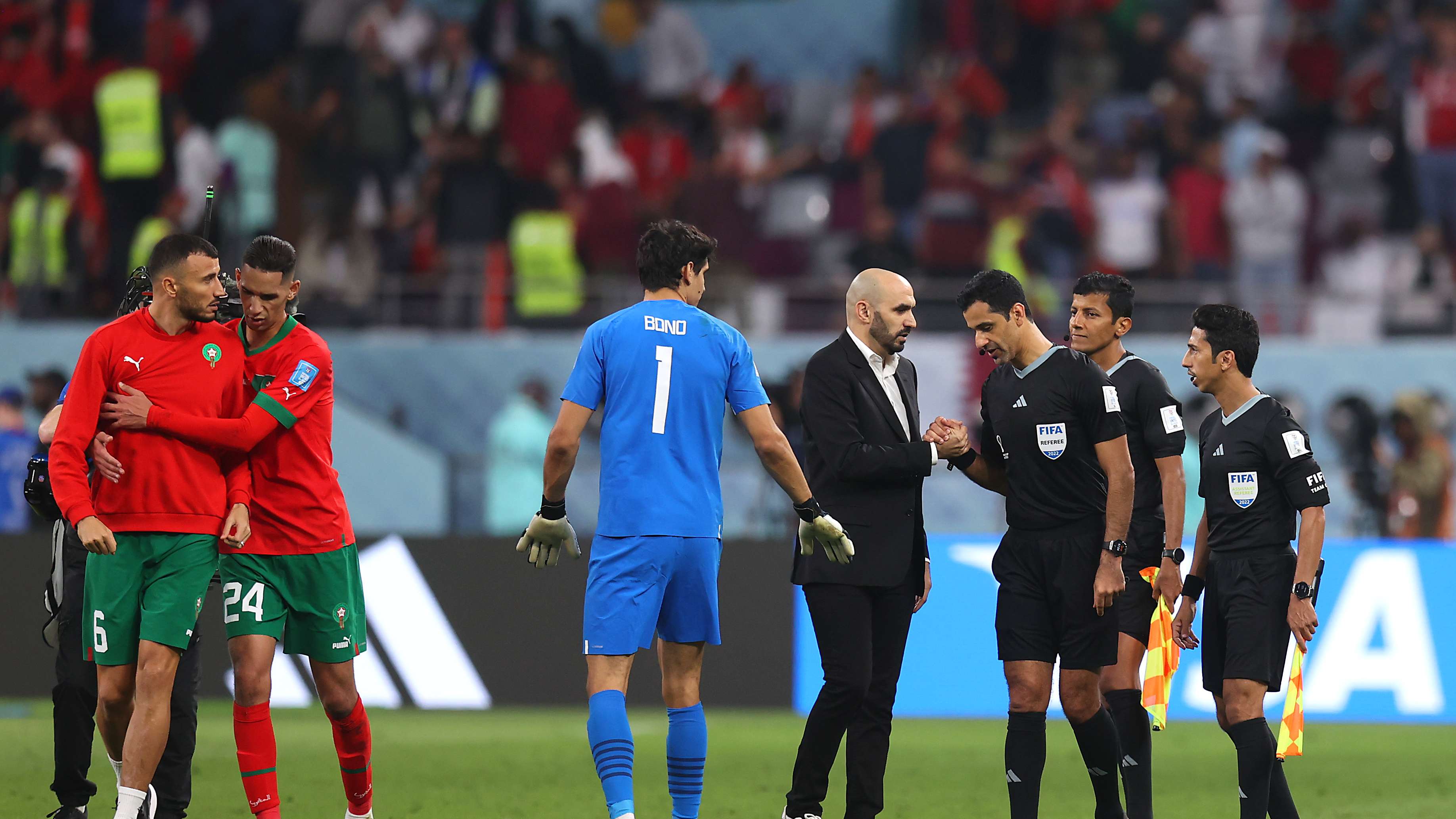
Walid Regragui, the former coach of the Moroccan national team, has finally opened up about the incredible journey that led Morocco to the semi-finals of the 2022 World Cup in Qatar. In a recent interview with Moroccan website Al-Botola, Regragui revealed the challenges, ambitions, and triumphs that marked this historic campaign.
Regragui made it clear that Morocco did not just aim to participate in the World Cup but to compete with the best teams in the world. “Morocco should not go to the World Cup just to be present, but to be a team capable of competing,” he stated. With only three months to prepare before the tournament, Regragui had to quickly build a team, establish tactics, and form a technical staff to face the world’s heavyweights.
Changing the Narrative
The turning point came in Morocco’s first match against Croatia, where they managed to secure a crucial point. This result boosted the players’ confidence, leading to a historic victory over Belgium. Regragui emphasized that reaching the second round was just the beginning.
After eliminating Spain and Portugal in the knockout stages, the goal shifted to writing Africa’s history by reaching the semi-finals. Regragui instilled a sense of pride in his players, urging them to understand the significance of their journey in the memories of Moroccans and Africans.
A New Era for Moroccan Football
Despite falling to France in the semi-finals, Regragui sees the World Cup as a pivotal moment for Moroccan football. He believes that the legacy of their remarkable run lies in the transformation of mindset both within the team and among the supporters.
Regaragui expressed his joy in witnessing a shift in mentality, where the once-impossible dream of winning the World Cup is now seen as a realistic goal by Moroccans. He emphasized that reaching the semi-finals should be seen as a beginning rather than an end, signaling a new era for Moroccan football.
Looking Towards the Future
As Regragui reflects on the incredible journey in Qatar, he acknowledges that the true victory was in changing the perception of what is possible for Moroccan football. The historic run in the World Cup has not only elevated the team’s status but has also inspired a nation to believe in their potential on the global stage.
With Regragui’s revelations shedding light on the inner workings of Morocco’s World Cup campaign, football fans around the world are left in awe of the determination, resilience, and triumph that marked this unforgettable journey.
The Impact of Prediction Models on Football
One aspect that has played a significant role in football tournaments like the World Cup is the use of prediction models. These models have become increasingly popular among analysts, coaches, and fans alike. By leveraging historical data, player statistics, and various metrics, these models can provide insights into team performance, player matchups, and potential outcomes of matches.
When it comes to predicting the outcomes of football matches, several factors come into play. These can include the form of the teams, injuries, weather conditions, home advantage, and even psychological factors. Prediction models take into account these variables to generate probabilities for different scenarios, helping teams and fans make informed decisions.
The Evolution of Football Prediction
In recent years, the use of advanced analytics and machine learning algorithms has revolutionized the way football matches are predicted. These models can analyze vast amounts of data in real-time, providing up-to-date insights and forecasts. By incorporating elements like expected goals (xG), ball possession, pass completion rates, and defensive strategies, prediction models have become more accurate and sophisticated.
Moreover, the emergence of sports betting and fantasy football has further fueled the demand for accurate predictions. Fans and bettors rely on these models to make informed bets and optimize their fantasy teams. The ability to predict match outcomes with high accuracy has become a valuable asset in the world of football analysis and fandom.
The Role of Prediction Models in World Cup Campaigns
During major tournaments like the World Cup, prediction models play a crucial role in forecasting match results and potential winners. Coaches and teams can use these insights to strategize, adjust tactics, and prepare for upcoming opponents. By analyzing data trends, player performances, and historical matchups, prediction models offer a competitive edge in high-stakes competitions.
For fans and spectators, prediction models add an element of excitement and engagement to the viewing experience. Whether participating in prediction contests, fantasy leagues, or simply discussing match probabilities, these models spark conversations, debates, and predictions among football enthusiasts worldwide.
Enhancing the Fan Experience
Ultimately, prediction models have the power to enhance the fan experience by providing a deeper understanding of the game, player dynamics, and potential outcomes. Whether celebrating a successful prediction or analyzing match statistics post-game, fans can engage with football in a more interactive and informed manner.
As football continues to evolve, the integration of prediction models into the sport’s fabric will likely become more prevalent. From coaching decisions to fan engagement, these models offer a glimpse into the future of football analysis and prediction.
With the insights shared by Walid Regragui shedding light on Morocco’s historic World Cup run, the role of prediction models in football’s success stories becomes even more apparent. As teams strive to achieve greatness on the world stage, the use of data-driven analytics and forecasting tools will continue to play a crucial role in shaping the future of the beautiful game.