
UEFA Threatens Legal Action Against FIFA Over World Cup Stake Sale
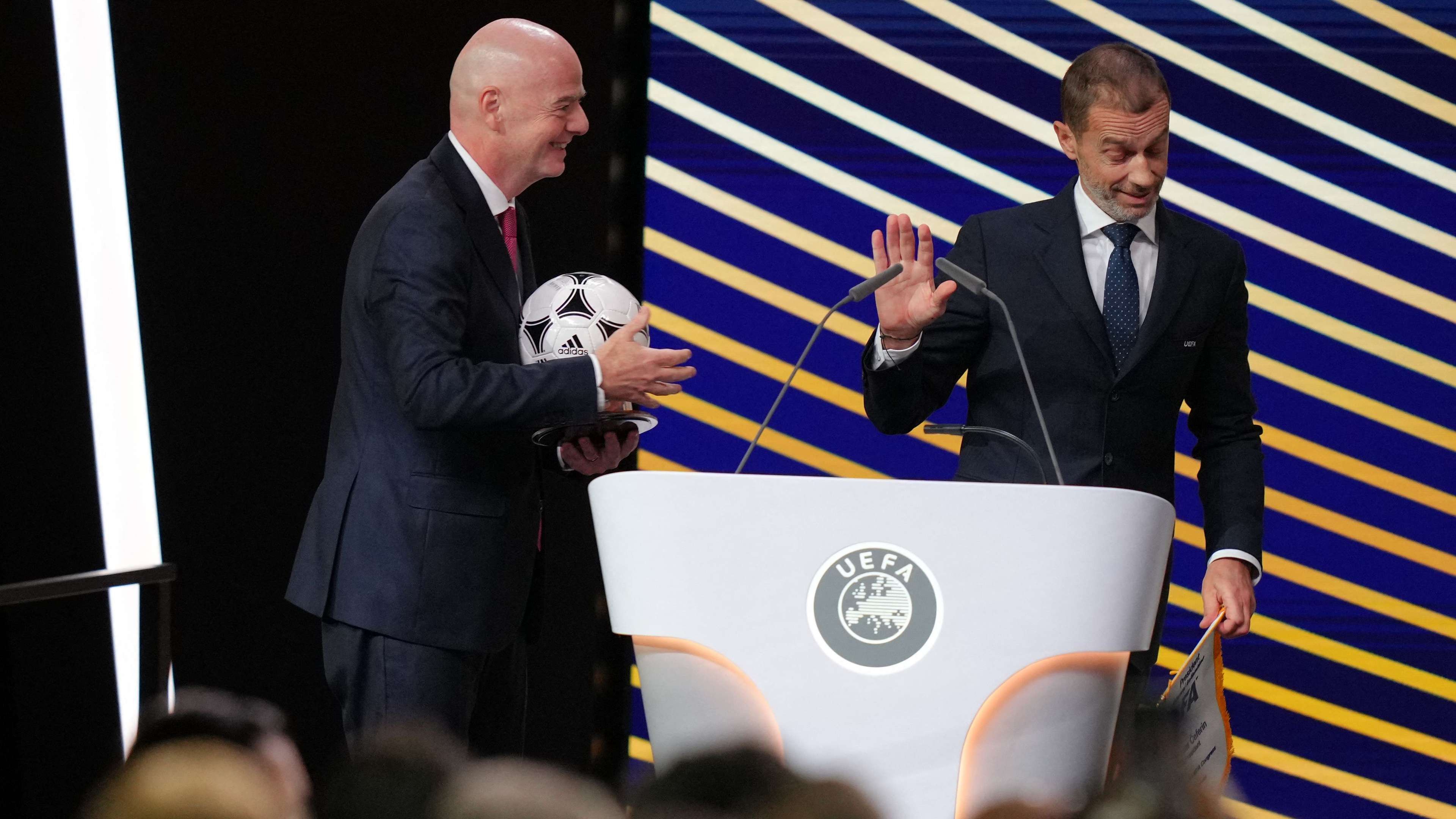
In a shocking turn of events, the world of football is currently embroiled in a crisis as the Union of European Football Associations (UEFA) and the International Federation of Association Football (FIFA) find themselves at odds over a controversial project involving the sale of stakes in World Cup tournaments. The dispute has escalated to the point where legal action is now on the table, with UEFA issuing formal warnings to FIFA president Gianni Infantino and other key figures associated with the initiative.
UEFA’s Formal Warning to FIFA
According to a report by the “Telegraph,” UEFA sent an official letter to Infantino threatening legal action over the contentious plan to sell stakes in the World Cup and other FIFA tournaments to private-sector investors. The letter also named individuals such as Joshua Kushner, Greg Maffei, the bank “JP Morgan,” and the company “Open Economics,” indicating that UEFA is seriously considering litigation, arbitration, or regulatory complaints in response to the “FIFA Forward Enterprise” (FFE) project.
Infantino had initially proposed the sale of stakes in FIFA tournaments but backtracked on the plan after facing widespread backlash from various federations, particularly after it was revealed that individuals close to American president Donald Trump were involved in the project. UEFA took a strong stance against the initiative, announcing that all 55 member federations would boycott the World Cup should FIFA proceed with the project, and even hinted at working to end Infantino’s term as the head of FIFA.
UEFA’s Demand for Preservation of Evidence
The “Telegraph” obtained a copy of the letter in which UEFA formally notified Infantino of its intention to pursue legal action, arbitration, or regulatory complaints related to the FFE project. UEFA emphasized the immediate need to identify and preserve all documents and electronic data associated with the project, cautioning against any deletion or destruction of evidence, regardless of FIFA’s internal policies.
UEFA’s letter also included a list of individuals believed to hold relevant materials, including Infantino, Arsène Wenger, head of the global football development department at FIFA, FIFA secretary general Mattias Grafström, and chief operating officer Kevin Lamour. Lamour’s inclusion came after his admission that he and other FIFA officials were misled regarding the project.
Penalties for Destruction of Evidence
UEFA warned that any deletion, alteration, or destruction of materials after the receipt of its notice could be considered the destruction of evidence, potentially leading to claims for compensation and legal action. The governing body reserved the right to demand legal penalties and impose adverse inferences against those responsible for any destruction of documents, along with holding them liable for legal costs.
Participants in the Project
FIFA had previously disclosed the details of the FFE project, which involved individuals such as Joshua Kushner, Greg Maffei, the bank “JP Morgan,” and the company “Open Economics.” Kushner, brother of Jared Kushner, son-in-law of Donald Trump, was expected to lead the group of investors, with Maffei, a Trump campaign donor, also playing a significant role in the project.
Despite attempts to reach FIFA for an official comment on the situation, no response has been received as of yet. The football world remains on edge as the crisis between UEFA and FIFA continues to unfold, with the threat of legal action looming large over the future of the World Cup and other FIFA tournaments.
Impact on the Football Community
The rift between UEFA and FIFA over the controversial sale of stakes in World Cup tournaments has sent shockwaves through the football community. Fans, players, and officials alike are closely monitoring the situation, as the outcome could have far-reaching implications for the future of the sport. The threat of legal action and the potential boycott of the World Cup by UEFA member federations have created a sense of uncertainty and tension in the footballing world.
Ethical Concerns Raised by the Project
One of the main reasons behind the backlash against the FIFA Forward Enterprise project was the ethical concerns raised by the involvement of individuals with close ties to political figures. The inclusion of Joshua Kushner, brother of Jared Kushner, who served as a senior advisor to former President Donald Trump, and Greg Maffei, a Trump campaign donor, raised questions about the project’s transparency and motives. Critics argued that the project could be influenced by political interests rather than the best interests of football.
Transparency and Accountability in Football Governance
The conflict between UEFA and FIFA highlights the importance of transparency and accountability in football governance. As two of the most prominent governing bodies in the sport, UEFA and FIFA have a responsibility to uphold the integrity of the game and act in the best interests of football stakeholders. The pushback against the sale of stakes in World Cup tournaments underscores the need for clear communication, ethical decision-making, and a commitment to serving the footballing community.
Future of FIFA Under Scrutiny
The legal action threatened by UEFA against FIFA raises questions about the future of the world’s governing body for football. The reputational damage caused by the controversy surrounding the FFE project and the potential boycott of the World Cup could have lasting consequences for FIFA and its leadership. The outcome of this dispute will likely shape the direction of FIFA in the coming years and may lead to significant changes in the organization’s policies and decision-making processes.
Collaboration for the Greater Good of Football
As the standoff between UEFA and FIFA continues, there is an opportunity for the two organizations to come together and work towards a resolution that serves the greater good of football. Collaboration, transparency, and open dialogue will be crucial in addressing the underlying issues that have led to this conflict. By putting aside differences and focusing on the core values of the sport, UEFA and FIFA can rebuild trust and demonstrate their commitment to upholding the integrity of football on a global scale.
Overall, the dispute over the sale of stakes in World Cup tournaments has exposed the complexities and challenges facing the world of football governance. It serves as a reminder of the importance of ethical decision-making, transparency, and accountability in ensuring the long-term sustainability and success of the sport.