
Kobel’s apology to Saibari highlights the human side of football
Rivalries can shape the drama of football, but a serious injury can quickly put the result into perspective. Borussia Dortmund goalkeeper Gregor Kobel showed that spirit after Bayern Munich forward Ismael Saibari suffered a major ankle injury during the teams’ 2-2 draw, reaching out with a personal message of apology and support.
Bayern confirmed on Sunday that the 25-year-old Morocco international had torn ligaments in his right ankle. He has since undergone successful surgery and now faces a lengthy rehabilitation period. While the club has not publicly set out a precise return date, German media reports suggest Saibari could be sidelined for at least three months.
Kobel, 28, contacted Saibari before the full extent of the injury had been confirmed. In a message shared through Instagram Stories, the Swiss goalkeeper wrote: “I am truly sorry about what happened. I wish you all the best, recover quickly, Ismael!”
Saibari responded by resharing Kobel’s note and thanking him: “Thank you, I really appreciate it!” The brief exchange offered a warm contrast to the intensity of one of German football’s biggest fixtures. It also served as a reminder that players can acknowledge one another’s wellbeing even when they represent competing clubs.
How Saibari suffered the ankle injury
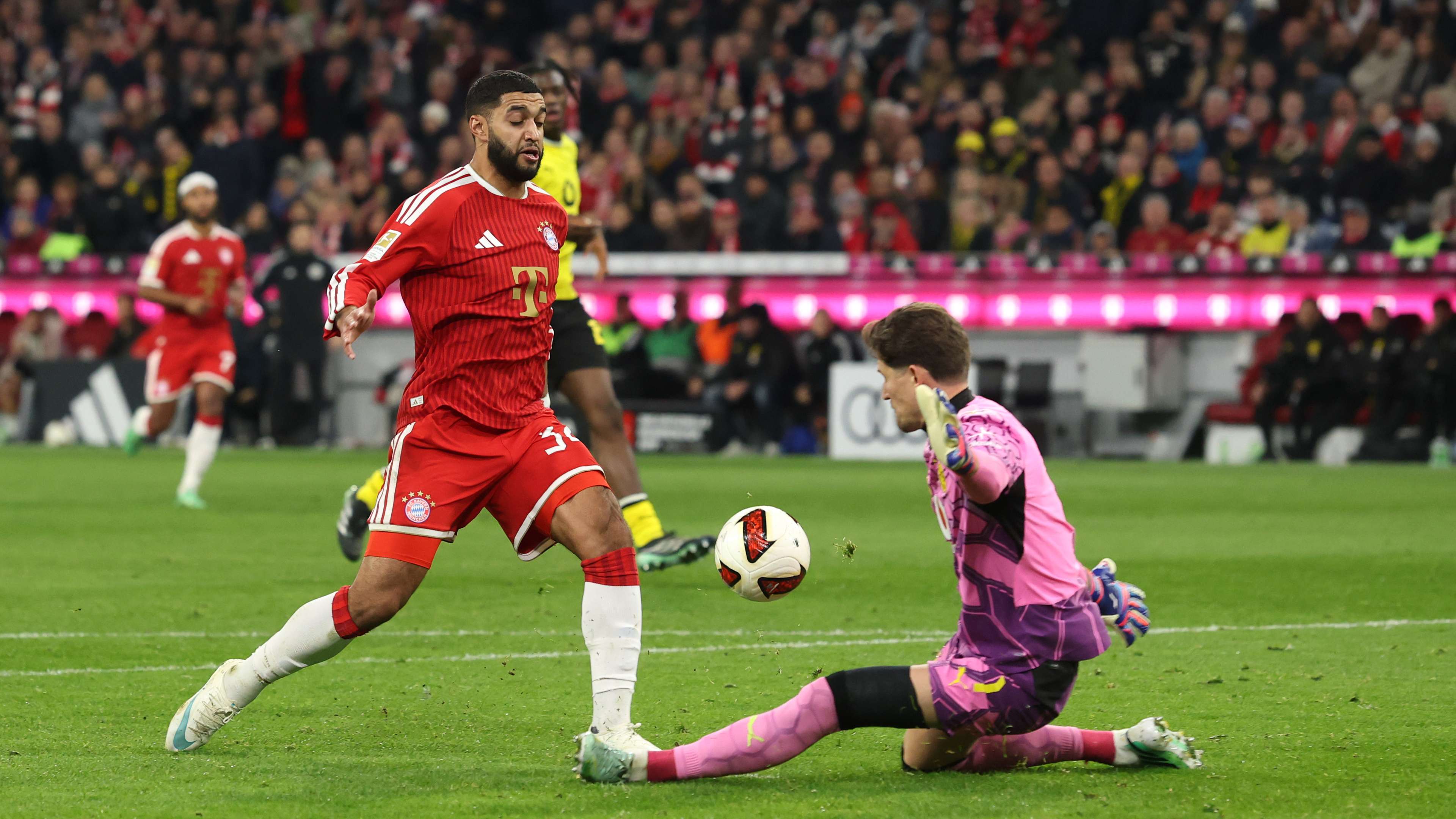
The incident occurred in the 26th minute of the match between Bayern Munich and Borussia Dortmund. Saibari and Kobel went for a loose ball, and the Bayern attacker landed awkwardly, badly twisting his right ankle. The collision came shortly after Saibari had missed a promising opportunity in front of goal.
Saibari was unable to continue. Bayern’s medical staff helped him off the pitch, with club doctor Professor Dr Peter Ueblacker and physiotherapist Stephan Wickert assisting him. Images of the forward leaving the stadium on crutches after the final whistle heightened concerns among supporters, and medical examinations the following day confirmed the seriousness of the injury.
Ligament damage in the ankle can require a careful, staged recovery. After surgery, a player typically needs time to manage swelling and restore movement before progressing to strength work, running and football-specific training. The exact timetable depends on the injury’s severity and how the ankle responds, so any prediction about Saibari’s return remains provisional until Bayern provide further updates.
If the reported three-month absence proves accurate, Saibari could miss a substantial stretch of Bayern’s campaign and be unavailable for the remainder of the calendar year. His recovery will be closely followed by the club and Morocco supporters, particularly as he works towards regaining match fitness rather than simply returning to training.
More injury concerns for Bayern Munich
Saibari was not the only Bayern player to leave the Dortmund match with an injury. Serge Gnabry suffered a muscle problem in his left hamstring, adding another concern to an attack already dealing with several absences. According to Bild, the 31-year-old Germany international could be out for between four and six weeks.
The additional setback leaves Bayern’s coaching staff with fewer options at a demanding point in the season. Injuries to attackers can affect more than team selection: they may force changes to the formation, reduce the ability to rotate players and place extra responsibility on those who remain available. The challenge is especially significant when fixtures arrive in quick succession across domestic and European competitions.
Champions League test arrives at a difficult time
Bayern are preparing for a high-profile UEFA Champions League meeting with Atlético Madrid on Tuesday, but the club is expected to be without four prominent attacking players. Luis Díaz is recovering from a torn fibre in his left hamstring, while Jamal Musiala has a torn fibre in his right hamstring. Saibari’s ankle injury and Gnabry’s hamstring problem add to that list.
The absences could influence Bayern’s approach against Atlético, a side known for its organisation and ability to make matches difficult in tight spaces. Bayern may need to rely on available forwards, adjust their attacking combinations or give greater responsibility to players who would otherwise have had more time to recover between appearances. The final selection will depend on fitness assessments and the coach’s tactical priorities.
For supporters looking ahead to the game, any football prediction should account for Bayern’s depleted attacking options without treating injuries as the only factor. Home advantage, defensive discipline, midfield control and the quality of the players who are fit can all shape the contest. Atlético’s own form and team news will matter just as much, making the match a complex test rather than a straightforward forecast.
A gesture that goes beyond the scoreline
The 2-2 draw between Bayern Munich and Borussia Dortmund will be remembered for its competitive moments, but Saibari’s injury and Kobel’s response have given the match another dimension. Kobel’s apology did not change the result or the physical consequences of the collision, yet it showed empathy at a moment when the injured player and his club were facing difficult news.
For Bayern, the immediate priority is supporting Saibari through surgery and rehabilitation while managing a growing list of attacking injuries. For Saibari, the road back will require patience and careful medical guidance. And for football fans, the exchange between the two players is a timely reminder that respect can endure beyond club loyalties, fierce competition and the final whistle.